
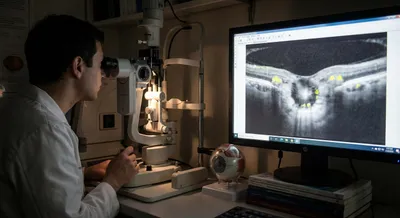
Why Is It So Hard to Prove a Treatment Protects the Optic Nerve in Glaucoma?
For example, imagine a treatment that boosts the survival of optic nerve fibers or blocks harmful chemical processes in the nerve. If such a...
Deep research and expert guides on maintaining your visual health.
For example, imagine a treatment that boosts the survival of optic nerve fibers or blocks harmful chemical processes in the nerve. If such a...
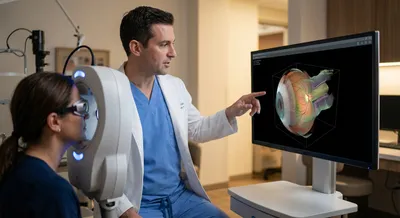
To check the RNFL, doctors commonly use optical coherence tomography (OCT), a non-invasive imaging test that takes cross-sectional “slice” pictures...
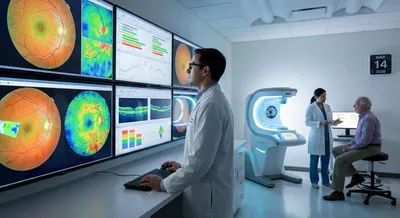
Doctors don’t judge an OCT scan in isolation. Instead, the scan machine compares your eye measurements to a built-in reference database of healthy...
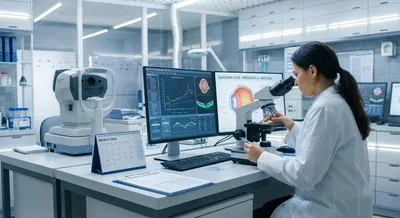
Intraocular pressure (often simply called eye pressure) is the force created by fluid inside your eye () (). Your eyes constantly make a clear fluid...
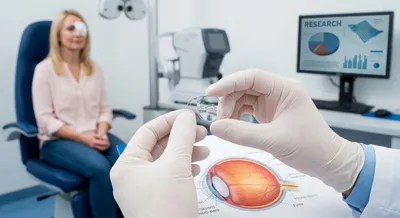
In March 2026, SpyGlass Pharma reported early results from a trial of their BIM-IOL System. This news is exciting but should be read carefully. The...
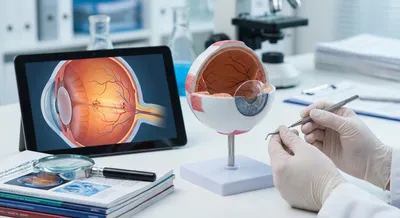
Even in cases like age-related macular degeneration or diabetic retinopathy, the optic nerve often stays healthy, so restoring vision means fixing or...
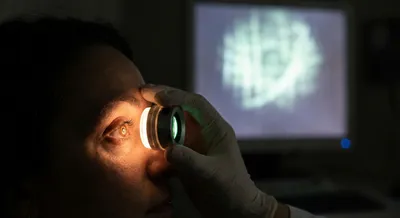
Because the therapy makes cells respond to ambient light (rather than electrical implants or goggles), patients don’t need to wear any special device...

Researchers are exploring new ways to one day fix this problem by replacing or protecting those lost nerve cells. One exciting idea is to transplant...
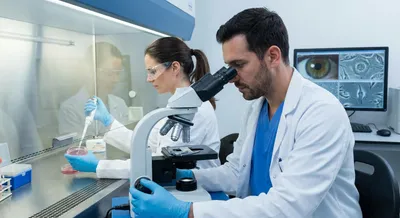
Scientists have long dreamed of replacing lost RGCs by transplanting new cells into the retina. If new ganglion cells could be made to survive and...
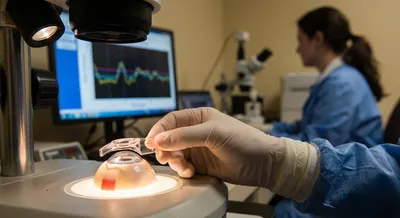
The NT-501 implant is a small capsule (about 1×6 mm) that a surgeon places inside the eye (in the gel-like vitreous near the retina) during a minor...
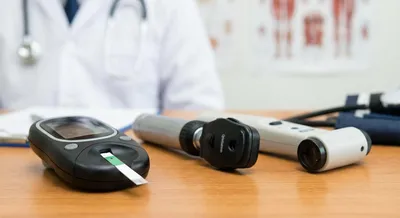
Specifically, large epidemiologic studies and meta-analyses have found that people with diabetes carry roughly a 36–50% higher risk of developing...
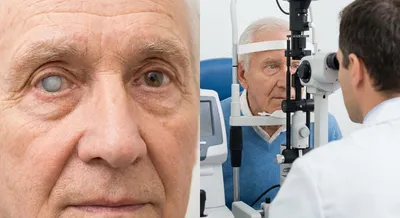
Yet cataracts and glaucoma both become more common with age and often occur together, so understanding their differences matters for any patient....

That said, some forms of glaucoma do cause head pain. Below we contrast the painless “slow” glaucoma with the painful “fast” glaucomas and other...

OPTN (optineurin) and TBK1 (TANK-binding kinase 1). These two genes are linked to normal‐tension glaucoma (NTG), a form of open-angle glaucoma that...
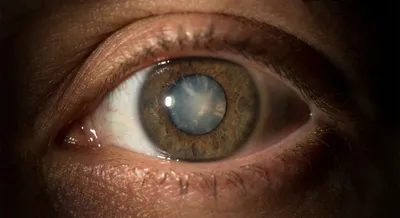
Early stage. In early glaucoma, most vision—especially central vision—is normal, so patients usually feel fine. The earliest signs are subtle blind...
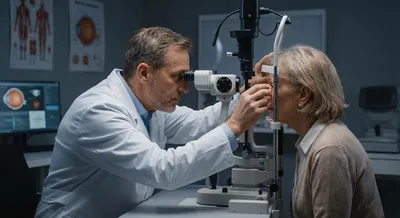
Early detection is crucial. By the time a typical visual field test catches glaucoma, roughly half of the retinal nerve cells (retinal ganglion...

This article reviews all human studies on magnesium in glaucoma. Specifically, we look at trials and reports of magnesium levels or supplementation...

In contrast, the evidence in glaucoma is sparse and mixed. No large clinical trial has proven that taking antioxidant pills improves glaucoma...
Screen your peripheral vision from home — no downloads, no waiting rooms. Sign up for a free trial and test in under 5 minutes.
Glaucoma is a group of eye conditions that damage the optic nerve, which carries visual information from the eye to the brain. The damage is often linked to higher pressure inside the eye, but it can also happen when pressure is normal. At first, vision loss is usually gradual and affects side vision, so many people do not notice it until the condition is advanced. Left untreated, glaucoma can cause permanent blindness because nerve cells in the retina and their connections are lost. Doctors diagnose glaucoma with eye pressure checks, optic nerve exams, and tests that measure peripheral vision. Treatments focus on slowing or stopping nerve damage, most commonly by lowering eye pressure with drops, lasers, or surgery. Because nerve damage is usually irreversible, early detection and regular eye exams are very important. Researchers are also exploring treatments that protect nerve cells directly and improve blood flow to the optic nerve. Lifestyle steps such as controlling blood pressure and avoiding smoking may help lower risk, but medical follow-up is essential. Understanding glaucoma matters because it is a leading cause of preventable blindness worldwide and can often be managed when found early.