
Introduction
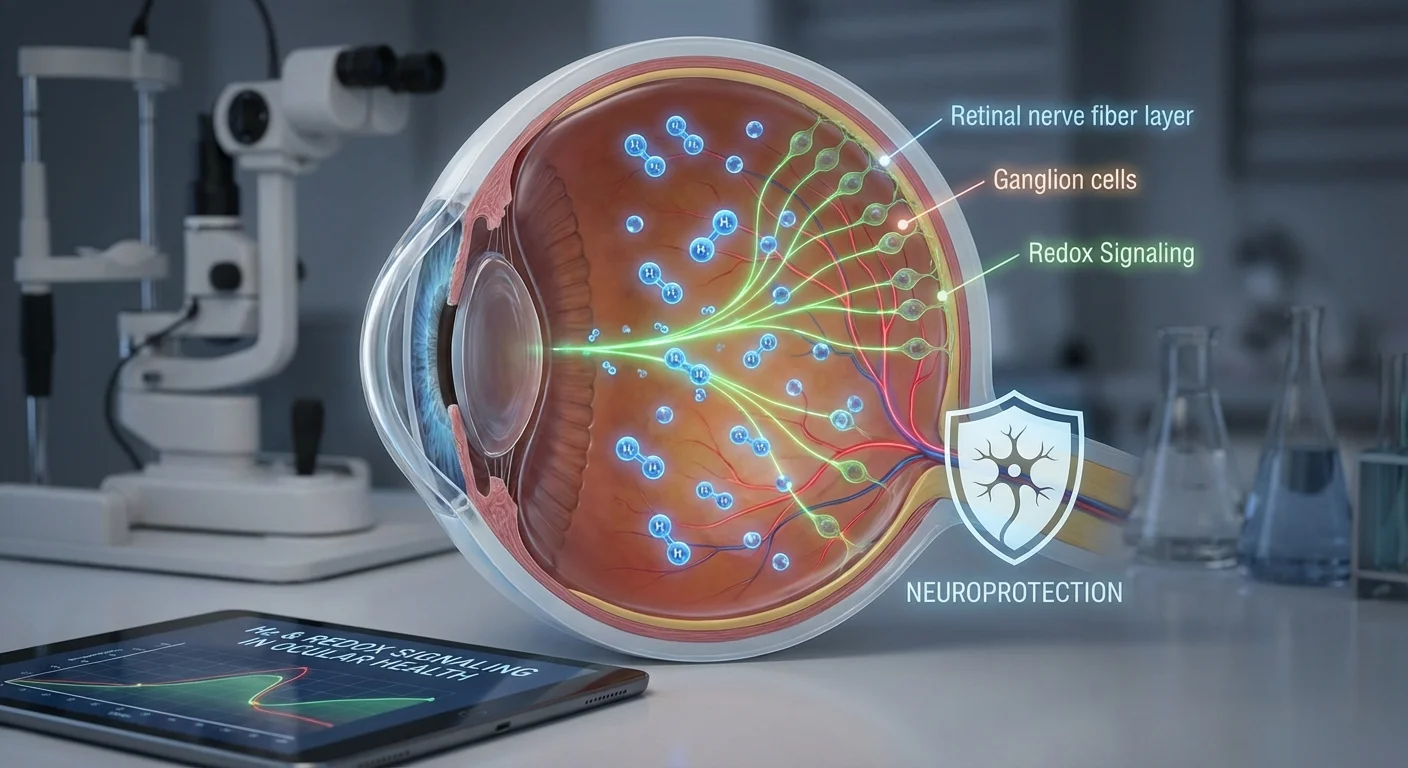
Eye diseases like glaucoma, diabetic retinopathy and age-related macular degeneration share a common culprit: oxidative stress from harmful reactive oxygen species (ROS). Excess ROS can damage DNA, lipids and proteins in the retina and optic nerve, driving vision loss (pmc.ncbi.nlm.nih.gov) (pmc.ncbi.nlm.nih.gov). Molecular hydrogen (H₂) has emerged as a unique antioxidant therapy. H₂ is a tiny, tasteless gas that easily penetrates cell membranes and ocular barriers (pmc.ncbi.nlm.nih.gov). It selectively neutralizes only the most toxic ROS (like hydroxyl radicals •OH and peroxynitrite ONOO⁻) while leaving normal signaling ROS intact (pmc.ncbi.nlm.nih.gov). In doing so, H₂ restores cellular redox balance without blocking beneficial biochemical signals. In addition, H₂ can trigger protective pathways – for example, it upregulates antioxidant enzymes (superoxide dismutase, catalase, glutathione systems) via Nrf2 signaling and suppresses pro-inflammatory factors (pmc.ncbi.nlm.nih.gov) (pmc.ncbi.nlm.nih.gov). These properties suggest H₂ could guard retinal neurons (and the optic nerve) by modulating redox signaling in ophthalmic tissues.
Mechanisms of H₂ Action in Ocular Tissues
The therapeutic appeal of H₂ lies in its physical properties. As the smallest molecule, it diffuses rapidly through tissues and bio-barriers (pmc.ncbi.nlm.nih.gov). For example, inhaled H₂ or hydrogen-saturated water (HRW) quickly elevates H₂ levels in the blood and eyes. Once inside cells, H₂ “soaks up” highly reactive radicals. Unlike general antioxidants, H₂ does not indiscriminately scavenge all ROS – it reacts preferentially with the strongest oxidants (pmc.ncbi.nlm.nih.gov). This means normal ROS signaling (needed for cell function) is preserved while damaging radicals are detoxified. In practice, studies show H₂ lowers oxidative biomarkers (like 4-hydroxynonenal and malondialdehyde) and inflammatory mediators in ocular cells and tissues.
Importantly, H₂ also modulates signaling pathways. It has been shown to activate the master antioxidant regulator Nrf2 (boosting cellular defenses) and inhibit inflammatory cascades (for example suppressing NF-κB and pro-inflammatory cytokines) (pmc.ncbi.nlm.nih.gov) (pmc.ncbi.nlm.nih.gov). In the eye, this translates to reduced microglial activation and cell death after injury (pmc.ncbi.nlm.nih.gov) (pmc.ncbi.nlm.nih.gov). In short, H₂ acts as a gentle, “tunable” antioxidant that changes the redox environment and gene expression in a protective direction.
Experimental Ocular Neuroprotection
A growing body of animal research supports H₂’s neuroprotective role in the eye. In rodent glaucoma models (e.g. acute intraocular pressure spikes), H₂ treatment consistently preserved retinal neurons. For instance, one study gave rats continuous H₂-enriched eye drops during pressure-induced ischemia, and found the vitreous H₂ level rose quickly. This intervention suppressed I/R-induced oxidative stress and sharply reduced retinal ganglion cell (RGC) apoptosis (pmc.ncbi.nlm.nih.gov). Similarly, intraperitoneal injection of hydrogen-rich saline (HRS) in rats limited retinal DNA oxidation and blunted over-activation of PARP-1 (a DNA repair enzyme that can trigger cell death). As a result, fewer RGCs died after injury (pmc.ncbi.nlm.nih.gov). In another experiment, inhaling H₂ gas for one hour daily (7 days) significantly lessened RGC loss in a rat retinal ischemia-reperfusion model (pmc.ncbi.nlm.nih.gov). Notably, measured inflammatory mediators (IL-1β, TNF-α) and oxidative byproducts (4-HNE) were much lower in H₂-treated eyes (pmc.ncbi.nlm.nih.gov). These findings highlight that H₂ can mitigate the oxidative and inflammatory cascades underlying glaucomatous neurodegeneration.
Beyond pressure-related injury, H₂ has shown benefit in other eye models. In diabetic-like rodents, oral H₂ water improved abnormal retinal blood flow and reduced gliosis and oxidative stress markers. H₂ also protected photoreceptors in models of retinal degeneration (e.g. blue-light or toxic injury) by reducing lipid peroxidation and apoptosis signals. Collectively, these animal studies suggest that H₂ can preserve neural structures in glaucoma and related ocular conditions by blocking oxidative damage and inflammation (pmc.ncbi.nlm.nih.gov) (pmc.ncbi.nlm.nih.gov).
Clinical Observations and Small Trials
Human data on ocular H₂ therapy are just emerging. No large glaucoma trials exist yet, but early reports illustrate both promise and caution. One randomized crossover trial in healthy adults compared acute intake of 1.26 liters of HRW versus plain water. Both drinks caused a small but significant rise in intraocular pressure (IOP), likely reflecting fluid intake and parasympathetic effects (www.prolekare.cz). Importantly, the IOP increase was similar between H₂ water and regular water – though the H₂ water caused more individuals to experience clinically notable spikes (www.prolekare.cz). The authors warned that, paradoxically, gulping large volumes of HRW can transiently raise IOP just like ordinary water (www.prolekare.cz). This suggests caution: patients with glaucoma or ocular hypertension should monitor IOP if using H₂ water (especially in large doses) until more is known.
On the positive side, early small-scale studies hint at vision benefits in degenerative eye disease. In a 2023 pilot study of retinitis pigmentosa (RP) patients, participants drank HRW (400–500 mL twice daily) for four weeks. Researchers observed a modest but statistically significant improvement in best-corrected visual acuity after H₂ therapy (pmc.ncbi.nlm.nih.gov). Detailed retinal testing (electroretinograms) showed higher amplitude responses under various conditions after treatment, indicating strengthened photoreceptor and inner retinal function (pmc.ncbi.nlm.nih.gov). In contrast, no changes were seen in IOP or retinal thickness, suggesting the effect was functional. While uncontrolled and short-term, this trial suggests H₂ might subtly improve retinal function in chronic degeneration (pmc.ncbi.nlm.nih.gov).
Another exploratory trial targeted dry eye disease, a condition with surface inflammation. In a small crossover study, healthy adults received an H₂-producing dietary supplement (or control) and were evaluated over hours. H₂ treatment significantly stabilized the tear film (longer break-up time) and reduced dry-eye symptoms compared to control (pmc.ncbi.nlm.nih.gov). H₂ also rapidly boosted tear secretion in normal mice and prevented tear loss in a mouse model of dry eye (pmc.ncbi.nlm.nih.gov). These results imply that H₂’s anti-inflammatory action can improve ocular surface hydration (a related form of neuroprotection for corneal nerves and glands).
In summary, preliminary human findings are encouraging but limited. Aside from necessary note on IOP spikes with large water intake (www.prolekare.cz) (www.prolekare.cz), small trials have reported slight visual function improvements in RP (pmc.ncbi.nlm.nih.gov) and better tear metrics in dry eye (pmc.ncbi.nlm.nih.gov). No serious side effects were noted in these short studies. Larger controlled trials (for glaucoma or optic neuropathies) are still needed to confirm efficacy.
Systemic Anti-Aging and Metabolic Evidence
The potential of H₂ in the eye is mirrored by broader anti-aging and metabolic research. Oxidative stress and chronic inflammation are hallmarks of aging and metabolic syndrome, and H₂ has been tested in these contexts. For example, a 24-week randomized trial in patients with metabolic syndrome (obesity, dyslipidemia, hypertension) gave high-dose HRW (>5.5 mmol/day). Compared to placebo, the H₂ group showed lower triglycerides and LDL cholesterol, a reduced total/HDL cholesterol ratio, and decreased markers of inflammation and lipid peroxidation (pmc.ncbi.nlm.nih.gov). Remarkably, the treated patients also had slight decreases in body mass index and waist circumference, plus a 12% drop in fasting glucose (pmc.ncbi.nlm.nih.gov). These systemic benefits echo what might be needed to protect vascular and neural tissues over time.
In aging research, some evidence suggests even molecular-level effects. In a randomized pilot trial of healthy elderly adults, regular HRW consumption modestly lengthened leukocyte telomeres (by ~4%) and favorably altered DNA methylation patterns (pmc.ncbi.nlm.nih.gov). Since telomeres erode with oxidative stress and aging, these changes hint that H₂ can dampen systemic oxidative damage and cellular senescence (pmc.ncbi.nlm.nih.gov). Such findings strengthen the idea that H₂ therapy might broadly counteract the metabolic/inflammatory processes that also affect the eye in age-related diseases.
Taken together, studies in diabetes, obesity, and aging show H₂’s antioxidative and anti-inflammatory effects translate into clinical biochemical improvements (pmc.ncbi.nlm.nih.gov) (pmc.ncbi.nlm.nih.gov). While these are not ocular trials, they provide plausibility: a medicine that safely lowers systemic oxidative stress and inflammation could have parallel neuroprotective effects in the retina and optic nerve.
Delivery Methods, Safety, and Quality Considerations
Hydrogen can be administered several ways. The most common are oral water (H₂ dissolved in drinking water), inhalation of H₂ gas, or hydrogen-rich saline injections. In research, water is often electrolyzed or pressurized to load about 0.6–1.6 mM H₂, then sealed in gas-tight bottles to preserve the concentration . For example, clinical-grade HRW is made by infusing pure H₂ under high pressure into purified water and packaging it in special 420 mL aluminium pouches . These preparations keep H₂ dissolved until use. Inhalation therapy delivers H₂ gas (e.g. 1–4% in air or oxygen) through a mask or nasal cannula – this swiftly raises blood/eye H₂ levels. Emerging methods include electrolytic H₂ baths or H₂-producing molecules (e.g. tablets that generate H₂ in the stomach or gut). In ophthalmology specifically, experimental approaches have also included topical H₂-rich drops or irrigation solutions, which directly bathe the cornea and anterior eye in H₂.
Importantly, H₂ therapy has an excellent safety profile. At the doses used therapeutically, H₂ is non-toxic. It has been administered to divers to prevent decompression sickness (inhaling H₂ gas mix) with no adverse effects (pmc.ncbi.nlm.nih.gov). Even high concentrations (below flammability limits) are well tolerated because H₂ is inert in the body (pmc.ncbi.nlm.nih.gov). No serious side effects have been reported in clinical studies of H₂ use. One caution is physical: excessive rapid drinking (1–1.5 L over 15 minutes) can raise IOP just by volume effect (www.prolekare.cz) (www.prolekare.cz), so glaucoma patients should sip gradually. As a gas, H₂ is flammable above ~4% in air, so safety protocols are needed for gas delivery (but medical systems use very low non-flammable concentrations).
Quality control is key with H₂ products. Since H₂ is volatile, manufacturers use specialized packaging (aluminum or clad containers) that are impermeable to gas . Concentrations should be measured by gas chromatography or dissolution sensors. Currently there are no universal standards, so variability exists in H₂ content among products. Clinicians and patients should ensure the H₂ source (water, inhaler, tablet) has verified concentration and purity of water. Standardization and clear dosing guidelines are needed as research progresses.
Conclusion
Molecular hydrogen represents a novel strategy for ocular neuroprotection by harnessing redox signaling pathways. Its small size and selective chemistry allow H₂ to quench the worst reactive oxygen species in eye tissues, reducing inflammation and cell death (pmc.ncbi.nlm.nih.gov) (pmc.ncbi.nlm.nih.gov). Animal models of glaucoma, retinal injury and degeneration have consistently shown that H₂ therapy preserves neurons and lowers oxidative markers (pmc.ncbi.nlm.nih.gov) (pmc.ncbi.nlm.nih.gov). Early human case series and trials, although limited in scale, report modest visual improvements (e.g. in retinitis pigmentosa) and improved ocular surface measures, without safety concerns (pmc.ncbi.nlm.nih.gov) (pmc.ncbi.nlm.nih.gov). Meanwhile, extensive research in metabolic and aging contexts demonstrates that H₂ can favorably shift systemic oxidative and inflammatory markers (pmc.ncbi.nlm.nih.gov) (pmc.ncbi.nlm.nih.gov). Together these findings suggest hydrogen could become an adjunctive treatment to support retinal health in glaucoma and other age-related eye diseases. Rigorous clinical trials are needed to confirm visual benefits and optimal dosing. Given its safety profile (no toxicity in trials) and multiple delivery options, H₂ therapy is an intriguing candidate for future ophthalmic applications.