

Oxidative Stress, Hormesis, and the Hyperoxia Paradox in Glaucoma
In theory, brief exposure to high oxygen (like short HBOT sessions) could activate protective pathways inside eye cells. One key pathway involves the...
Deep research and expert guides on maintaining your visual health.
In theory, brief exposure to high oxygen (like short HBOT sessions) could activate protective pathways inside eye cells. One key pathway involves the...

Scientists have long dreamed of replacing lost RGCs by transplanting new cells into the retina. If new ganglion cells could be made to survive and...
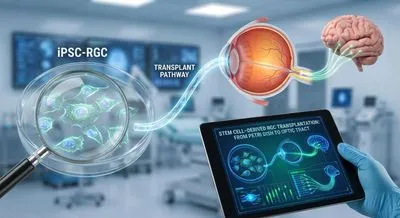
RGCs are not a uniform cell type. Dozens of RGC subtypes exist (e.g. motion-sensitive direction-selective cells, on/off center cells, intrinsically...
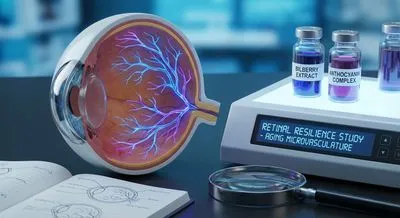
Animal research confirms that bilberry anthocyanins protect retinal cells by enhancing antioxidant systems and damping inflammation. In a rabbit...
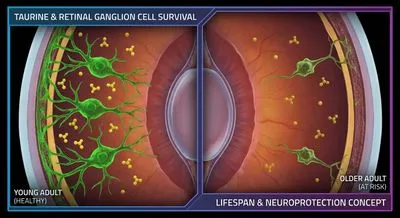
Taurine plays key cellular roles beyond being a nutrient. In the retina it acts as an organic osmolyte, helping cells adjust their volume under...
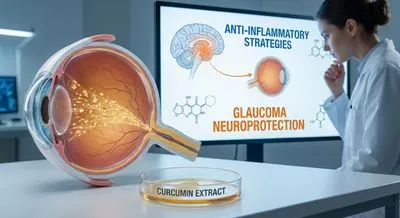
In the eye, microglia (resident immune cells) amplify inflammation when activated. Curcumin dampens microglial over-activation and cytokine release....
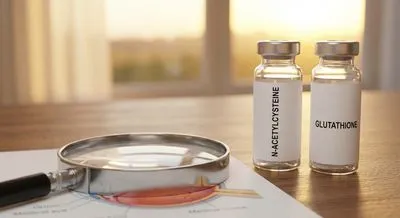
NAC is a lipid-soluble cysteine source that crosses cell membranes and is quickly converted to cysteine, the rate-limiting building block for...
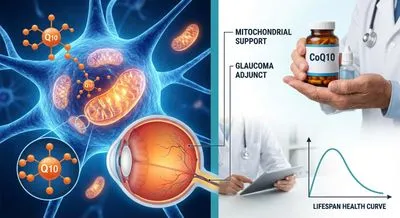
Notably, in the topical CoQ10 trial (), all eyes were also on standard drugs (timolol/dorzolamide), and CoQ10-treated eyes fared better. Thus, CoQ10...
Visual field loss from conditions like glaucoma can go unnoticed. Start a free trial and screen for potential blind spots in minutes.
The retina is the thin layer of tissue that lines the back of the eye and turns light into the electrical signals your brain uses to form images. It contains millions of light-sensitive cells: rods for low-light and peripheral vision, and cones for color and fine detail, especially in the central area called the macula. When light hits these cells, chemical changes trigger nerve signals that travel along the optic nerve to the brain, where they become the pictures you see. Because the retina is metabolically active and exposed to light, it needs a steady blood supply and protective systems to prevent damage from oxidants and inflammation. Problems in the retina, such as age-related degeneration, diabetic changes, or inherited disorders, can seriously reduce vision or cause blindness. Early signs of trouble can include blurriness, dark spots, or changes in color perception, so regular eye checkups are important for detecting issues early. Maintaining overall health — controlling blood sugar, protecting eyes from excessive sunlight, not smoking, and eating a nutrient-rich diet — can help preserve retinal health. Advances in treatments, including medications, lasers, and nutrition-based approaches, can slow or sometimes reverse damage when detected in time.