

Senolytics and the Glaucoma Niche: Clearing Old Cells for Longer-Life Signals
Indeed, multiple studies have found senescence markers in RGCs and optic nerve tissue in glaucoma models. Notably, removing those old RGCs has been...
Deep research and expert guides on maintaining your visual health.
Indeed, multiple studies have found senescence markers in RGCs and optic nerve tissue in glaucoma models. Notably, removing those old RGCs has been...
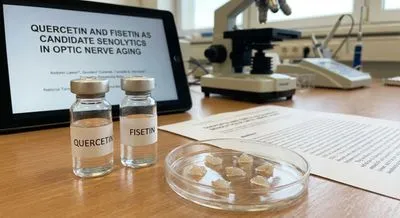
Senescent cells build up in key eye tissues. In the trabecular meshwork (TM), senescence stiffens the meshwork and increases resistance to fluid...
Our visual field test is inspired by the perimetry methods eye care professionals use. Check for blind spots and track changes over time.
Test Your VisionQuercetin is a plant compound found in many fruits, vegetables, and beverages—common sources include onions, apples, berries, and tea. It belongs to a class of molecules called flavonoids, which often act as antioxidants and help plants deal with stress. In humans, quercetin can reduce inflammation, scavenge harmful molecules, and influence cell signaling pathways that affect immune responses. Because of these actions, people study it for possible benefits in allergies, heart health, and general inflammation-related conditions. Quercetin has also been investigated for its ability to help clear certain stressed or damaged cells, a property that has drawn interest in aging research. It is available as a dietary supplement, but its absorption from the gut can be limited, so product quality and formulation matter. While dietary quercetin from foods is generally safe, concentrated supplements can interact with medicines and are not risk-free, so medical advice is wise before high-dose use. Overall, quercetin matters because it is a widely available, biologically active compound that may support health through antioxidant and anti-inflammatory effects, and it continues to be studied for more specific therapeutic roles.