
Is Glaucoma an Energy Failure Disease? Mitochondria, Aging, and the Optic Nerve
Retinal ganglion cells are the nerve cells in the eye that send visual signals from the retina to the brain. They have an especially high energy...
Deep research and expert guides on maintaining your visual health.
Retinal ganglion cells are the nerve cells in the eye that send visual signals from the retina to the brain. They have an especially high energy...

Current research has focused on three NAD precursors: nicotinamide (vitamin B₃), nicotinamide riboside (NR), and nicotinamide mononucleotide (NMN)....

Even if you load up on pyruvate, an inactive body won’t convert it to extra ATP unless it’s needed. Instead, the surplus pyruvate enters normal...
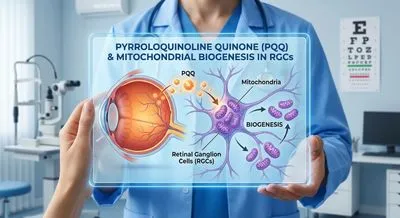
PQQ was first discovered as a cofactor for certain bacterial enzymes, but later found to be important in animal nutrition. Because animals cannot...
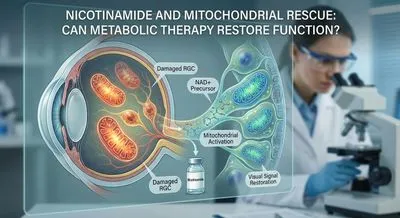
RGCs have extremely high metabolic demands and rely on robust mitochondrial function. In glaucoma, aging and chronic stress trigger progressive NAD+...

NAD<sup>+</sup> is a ubiquitous coenzyme that facilitates ATP production via glycolysis and oxidative phosphorylation, and serves as a substrate for...
Screen your peripheral vision from home — no downloads, no waiting rooms. Sign up for a free trial and test in under 5 minutes.
NAD+ stands for nicotinamide adenine dinucleotide and is a small molecule that cells use to carry electrical charges during chemical reactions. It acts as an electron carrier in many metabolic processes, helping convert food into the energy cells can use. Beyond energy, NAD+ is a required helper for enzymes that repair damaged DNA and control how genes are turned on and off. Levels of NAD+ tend to fall as people get older, and that decline is linked to poorer cell function and slower repair processes. Because many repair and longevity-related enzymes need NAD+, its availability affects how well cells respond to stress and age. Scientists study ways to raise NAD+ levels with dietary precursors or other interventions, because boosting it may help energy production and tissue health. However, increasing NAD+ is not a guaranteed cure; effects vary by tissue and by individual health. Supplements and treatments should be approached carefully and, when relevant, discussed with a healthcare professional to weigh benefits and risks.