
Introduction
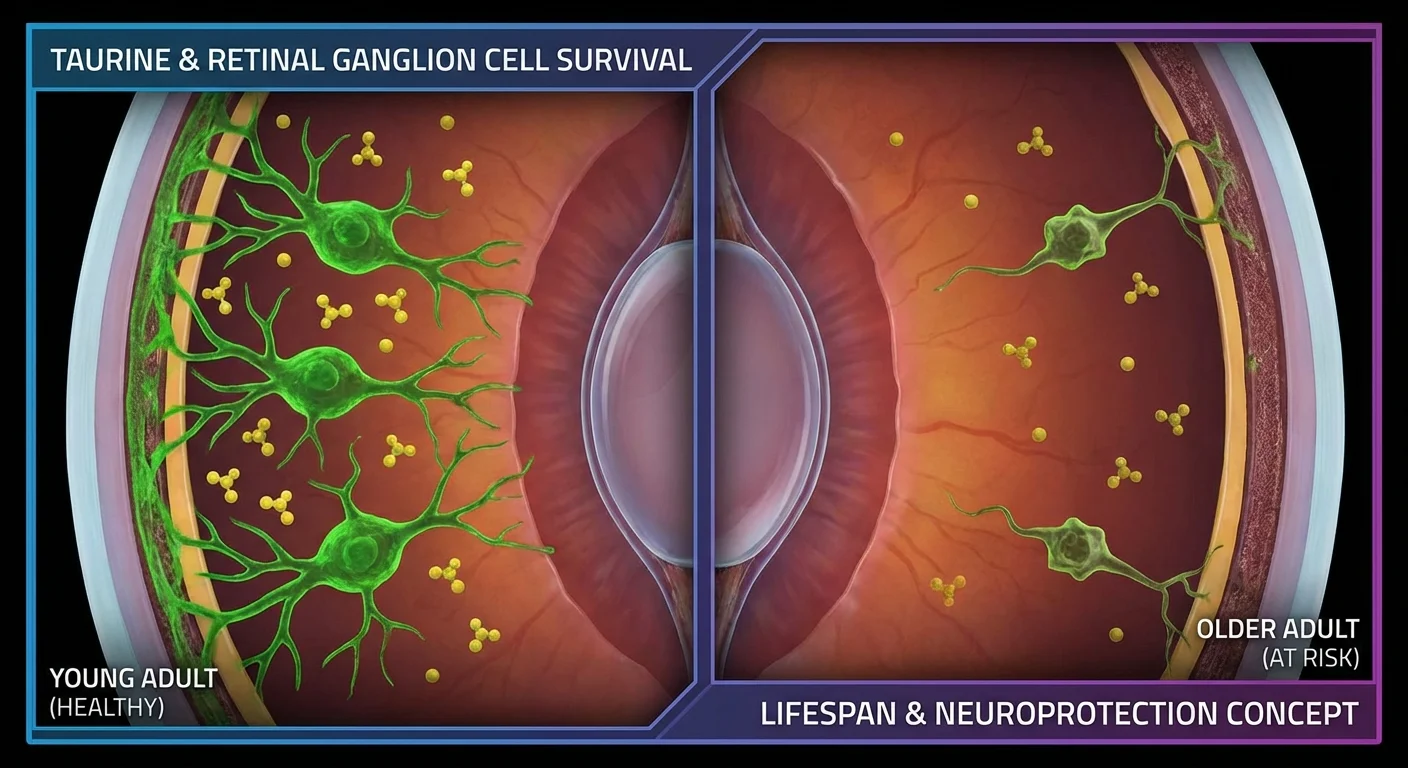
Taurine is a nutrient-rich amino sulfonic acid found in high concentrations in the retina and other neural tissues. In fact, taurine levels in the retina are higher than in any other body tissue, and its depletion causes retinal cell damage (pmc.ncbi.nlm.nih.gov). Adequate taurine is known to be essential for retinal neurons, especially the photoreceptors and retinal ganglion cells (RGCs). RGC degeneration underlies vision loss in glaucoma and other optic neuropathies. Preclinical research now suggests that taurine can help maintain RGC health. This article reviews how taurine regulates cell volume and calcium to protect RGCs, the evidence from laboratory models that taurine promotes RGC survival, and the limited clinical data hinting at vision benefits. We also discuss how diet and aging affect taurine levels, related health outcomes, and what is known about safe taurine supplementation and priorities for future trials.
Taurine in the Retina: Osmoregulation and Calcium Homeostasis
Taurine plays key cellular roles beyond being a nutrient. In the retina it acts as an organic osmolyte, helping cells adjust their volume under stress. Retinal cells (including RPE, RGCs, and Müller glia) express the taurine transporter (TauT) to import taurine. Under hyperosmotic stress (such as high salt or sugar conditions), TauT expression and activity increase, causing cells to uptake more taurine and water. This protects retinal cells from shrinkage or swelling (pmc.ncbi.nlm.nih.gov) (pmc.ncbi.nlm.nih.gov). In other tissues (like brain astrocytes) taurine effluxes out in hypotonic conditions, allowing cells to maintain osmotic balance. Thus, taurine is fundamental to osmoregulation in the retina, buffering RGCs against fluid stress that can occur in diabetes or infarction (pmc.ncbi.nlm.nih.gov) (pmc.ncbi.nlm.nih.gov).
Taurine also helps regulate intracellular calcium (Ca2+), a critical factor in neuron survival. Excess cytosolic Ca2+ can trigger mitochondrial damage and cell death. Taurine influences calcium by several mechanisms. In RGCs and other neurons, taurine has been shown to increase the capacity of mitochondria to sequester Ca2+, thereby lowering harmful free cytosolic Ca2+ (pmc.ncbi.nlm.nih.gov). It also modulates calcium influx through voltage-gated Ca2+ and sodium channels, acting somewhat like a natural calcium channel regulator (pmc.ncbi.nlm.nih.gov). By reducing intracellular calcium spikes, taurine prevents the opening of mitochondrial permeability pores and the apoptotic cascades they can trigger (pmc.ncbi.nlm.nih.gov). In short, taurine helps keep RGC calcium homeostasis in check, which in turn protects mitochondria and prevents calcium-driven injury (pmc.ncbi.nlm.nih.gov) (pmc.ncbi.nlm.nih.gov).
Oxidative Stress and Neuroprotection
Beyond osmoregulation and calcium, taurine is a potent antioxidant and neuroprotectant. It can directly scavenge reactive molecules such as hypochlorous acid, and it helps preserve the activity of key antioxidant enzymes. In retinal models, taurine supplementation boosts glutathione levels and enzymes like superoxide dismutase and catalase (pmc.ncbi.nlm.nih.gov) (pmc.ncbi.nlm.nih.gov). By reducing oxidative stress, taurine helps prevent the oxidative damage that is a major cause of retinal degeneration. Taurine has also been linked to anti-apoptotic pathways: it tends to down-regulate pro-death proteins and up-regulate survival proteins in neurons (pmc.ncbi.nlm.nih.gov) (pmc.ncbi.nlm.nih.gov). For example, in CNS cells taurine inhibits caspases and calpains (enzymes involved in apoptosis) and maintains a healthy balance of Bcl-2 family proteins (pmc.ncbi.nlm.nih.gov). In summary, taurine’s neuroprotective actions include antioxidant defense, reduction of cell stress, and suppression of cell death signals, all of which can help retinal neurons resist injury.
Preclinical Evidence for RGC Protection
Numerous laboratory studies support taurine’s ability to protect RGCs from degeneration. In cell culture, purified adult rat RGCs survive much better when taurine is present. For instance, Froger et al. found that adding 1 mM taurine to serum-deprived RGC cultures increased RGC survival by about 68% compared to controls (pmc.ncbi.nlm.nih.gov). This effect depended on taurine uptake by the cells. Likewise, taurine was shown to significantly prevent NMDA-induced excitotoxicity in retinal explants, preserving more RGCs when challenged with glutamate agonists (pmc.ncbi.nlm.nih.gov) (pmc.ncbi.nlm.nih.gov).
Animal models of glaucoma and retinal injury further confirm taurine’s benefits. In DBA/2J mice (a genetic glaucoma model) or rats with induced retinal vein occlusion, taurine given in drinking water led to higher RGC densities than in untreated animals (pmc.ncbi.nlm.nih.gov). In a rat model of retinitis pigmentosa (P23H), which causes secondary RGC loss, taurine supplementation preserved RGC layers as well as photoreceptor structure (pmc.ncbi.nlm.nih.gov). In diabetic retinopathy models, taurine protected both photoreceptors and ganglion cells, reduced retinal gliosis, and improved ERG responses (pmc.ncbi.nlm.nih.gov) (pmc.ncbi.nlm.nih.gov). In each case, animals receiving extra taurine showed less neuronal death and better retinal function than controls.
Mechanistic studies match these observations. In RGC cultures and explants, taurine prevented glutamate excitotoxicity by limiting the excessive calcium influx caused by NMDA receptor activation (pmc.ncbi.nlm.nih.gov). Taurine also reduced markers of oxidative stress and apoptosis in these models. For example, in rat eyes exposed to NMDA or endothelin-1 (to mimic injury), taurine pretreatment resulted in fewer TUNEL-positive (apoptotic) cells and lower caspase-3 activation in the inner retina (pmc.ncbi.nlm.nih.gov). Taurine was found to blunt apoptosis pathways (like Bax/Bcl-2 imbalance) triggered by injury (pmc.ncbi.nlm.nih.gov). In one study, taurine completely prevented the NMDA-induced thinning of the ganglion cell layer and optic nerve damage in rodents (pmc.ncbi.nlm.nih.gov).
Overall, animal and cell studies provide strong mechanistic evidence that taurine’s osmotic, anti-Ca, antioxidant and anti-apoptotic actions act together to keep RGCs alive under stress (pmc.ncbi.nlm.nih.gov) (pmc.ncbi.nlm.nih.gov).
Clinical Hints in Glaucoma and Retinal Disease
Despite compelling laboratory data, human evidence of taurine’s benefit on vision is still emerging. No large controlled trials have yet tested taurine for glaucoma or retinal diseases. However, a few clinical observations offer clues. Metabolomic analysis of aqueous humor from glaucoma patients revealed lower taurine levels compared to controls (pubmed.ncbi.nlm.nih.gov). This suggests that glaucoma eyes may be taurine-deficient, pointing to a possible role in disease.
In other eye disorders, bitesize evidence has appeared. An uncontrolled study in retinitis pigmentosa patients found that a combination of taurine, a calcium-channel blocker (diltiazem), and vitamin E led to modest vision improvement (pmc.ncbi.nlm.nih.gov). While the effect was attributed to better photoreceptor health, it raises the idea that taurine-containing supplements may help preserve vision. More strikingly, a recent case series reported that children with a rare genetic defect in the taurine transporter gene (SLC6A6) had progressive retinal degeneration; after two years of high-dose taurine supplementation their retinal structure stabilized and vision actually improved (pmc.ncbi.nlm.nih.gov). This strong anecdotal result — in essence, treating an inherited taurine deficiency — hints that maintaining taurine levels can be critical for human retinal health.
Outside the eye, population studies have so far been disappointing for outcomes like cognitive decline. In a large Swedish cohort followed for 25 years, midlife dietary taurine intake or blood taurine concentrations did not predict Alzheimer’s or dementia risk (pmc.ncbi.nlm.nih.gov). Similarly, one recent report found no clear link between blood taurine and markers of aging or physical function in adults (pmc.ncbi.nlm.nih.gov). These findings suggest that for complex conditions like stroke or Alzheimer’s, taurine may not have a strong protective effect — or that the typical dietary variation is too small to matter. However, specific studies in glaucoma or macular degeneration patients are lacking. In summary, the human data so far is largely negative or anecdotal, underscoring the need for dedicated clinical trials on vision outcomes.
Dietary Intake and Age-Related Changes
Dietary sources of taurine are primarily animal products. Meats, fish, shellfish and dairy contain significant taurine, whereas plant foods are very low. A balanced diet that includes meat and fish generally provides adequate taurine (pmc.ncbi.nlm.nih.gov). For example, shellfish like oysters and clams contain hundreds of milligrams per 100 g, while red meat has tens of milligrams (pmc.ncbi.nlm.nih.gov). The average adult on a mixed Western diet obtains roughly 40–400 mg of taurine per day (pmc.ncbi.nlm.nih.gov). Vegetarians and especially vegans have much lower intake, although outright deficiency from diet alone is rare in humans (pmc.ncbi.nlm.nih.gov). (Interestingly, popular endurance supplements like beta-alanine compete with taurine uptake and can deplete taurine if taken in high doses (pmc.ncbi.nlm.nih.gov).)
Taurine levels also change with age. Animal studies show that tissue taurine declines over the lifespan. For example, aged rats have lower retinal taurine, which correlates with declines in ERG rod/cone responses (pmc.ncbi.nlm.nih.gov). A monumental recent study reported that taurine also falls with age in blood across species, including humans: elderly humans had ~80% less plasma taurine than the young (pmc.ncbi.nlm.nih.gov). In worms and mice, restoring taurine to youthful levels extended lifespan and reduced molecular aging markers (pmc.ncbi.nlm.nih.gov) (pmc.ncbi.nlm.nih.gov). In theory, aging eyes might similarly suffer from taurine loss, weakening their defense against oxidative stress and contributing to common retinal diseases. In fact, one review noted that reduced retinal taurine in older rodents was linked to poorer oxidative control, and suggested that supplementation could help age-related vision changes (pmc.ncbi.nlm.nih.gov).
However, human evidence on taurine and healthy aging is mixed. The recent cohort studies cited above found no correlation between circulating taurine and age or functional health in adults (pmc.ncbi.nlm.nih.gov). Likewise, a prospective diet analysis found no link between midlife taurine and later dementia (pmc.ncbi.nlm.nih.gov). These inconsistencies may reflect species differences or the complexity of human diets and genetics. Nonetheless, taurine’s decline with age in many animals, plus its broad physiological roles, make it a candidate for further study in aging vision and overall health.
Systemic Health Effects Beyond the Eye
While this article focuses on RGCs, it is worth noting taurine’s broader health associations. In experimental models, taurine supplementation lowers blood pressure, improves heart function, and reduces metabolic stress, likely due to its antioxidant and anti-inflammatory actions (nutritionj.biomedcentral.com) (pubmed.ncbi.nlm.nih.gov). Some meta-analyses suggest taurine can modestly reduce pulse and blood pressure in people, but human trials are small and mixed (nutritionj.biomedcentral.com). On the other hand, high taurine intake has not clearly shown disease prevention in population studies. For example, large dietary surveys in Asia hint that regions with higher seafood (and thus taurine) consumption have lower stroke, but definitive evidence is lacking (pubmed.ncbi.nlm.nih.gov). In muscle health, taurine is essential for development and exercise performance in animals, but human trials of taurine on strength or metabolism have yielded inconsistent results.
Overall, long-term systemic outcomes in humans are not yet clearly tied to normal dietary taurine levels. Unlike in carefully controlled animal experiments, average human diets may not vary enough in taurine to show strong effects. Still, any chronic deficiency (as in the transporter gene defects) can lead to multi-system problems.
Safety and Research Priorities
Taurine is generally considered safe at typical dietary levels. Most people on mixed diets get well under 1 gram per day, and this has no known toxicity (pmc.ncbi.nlm.nih.gov). Supplements are commonly sold in 500–2000 mg doses. Side effects are rare when taurine is taken moderately. Very high intakes (above 3 grams per day) have mostly caused mild issues like diarrhea or nausea (pmc.ncbi.nlm.nih.gov). A risk review concluded that 3 g/day can be considered an upper limit, with gastrointestinal upset as the main dose-limiting adverse effect (pmc.ncbi.nlm.nih.gov). Some caution is warranted: taurine can enhance the effects of blood-pressure or calcium-channel drugs, so patients on such medications or with certain conditions (e.g. bipolar disorder, epilepsy, kidney disease) should consult a doctor before supplementing (pmc.ncbi.nlm.nih.gov). Overall, however, moderate taurine supplementation (1–3 g/day) is deemed safe in healthy adults (pmc.ncbi.nlm.nih.gov) (pmc.ncbi.nlm.nih.gov).
Given taurine’s promising biology, the key gap is clinical evidence. Controlled trials in patients with glaucoma or other retinal degenerations are urgently needed. Future studies could test whether daily taurine supplements (for example 1–3 g/day) added to standard therapy can slow visual field loss or preserve retinal nerve fiber layer thickness. Trials should include relevant outcomes like perimetry, OCT imaging, electroretinography, or even retinal metabolite levels. Similar trials could be designed for retinitis pigmentosa or diabetic retinopathy to see if taurine helps sustain vision. The optimal dose, timing, and formulation of taurine also need study: does fluid intake, diet composition, or genetics affect how much taurine is needed? Experts have explicitly called for human trials to probe taurine’s potential as a neuroprotective agent (pmc.ncbi.nlm.nih.gov) (pmc.ncbi.nlm.nih.gov).
In summary, while laboratory and animal research strongly support taurine’s role in RGC survival, evidence in patients is still just emerging. Well-designed clinical trials will be essential to determine if taurine supplementation can indeed preserve vision in glaucoma or retinal disease.
Conclusion
Taurine is a multifaceted nutrient in the eye that helps retinal cells maintain volume, control calcium, and resist oxidative injury. Preclinical studies clearly show that taurine supports retinal ganglion cell survival under stress, whereas taurine deficiency is linked to RGC loss. Although human data are limited, there are intriguing hints—from metabolomics to rare genetic cases—that taurine might influence vision health. Dietary taurine comes mainly from seafood and meat, and intake or blood levels can decline with age, potentially affecting retinal health in the elderly. For now, taurine supplements up to about 3 grams daily appear safe for most adults, but controlled clinical trials are needed to test whether this simple dietary intervention can truly slow vision loss in glaucoma or other retinal diseases.