
Why Vision Restoration Is So Much Harder in Glaucoma Than in Some Other Eye Diseases
Even in cases like age-related macular degeneration or diabetic retinopathy, the optic nerve often stays healthy, so restoring vision means fixing or...
Deep research and expert guides on maintaining your visual health.
Even in cases like age-related macular degeneration or diabetic retinopathy, the optic nerve often stays healthy, so restoring vision means fixing or...
Recent work (for example, Andrej Karpathy’s “autoresearch” project () ()) suggests that AI agents can autonomously run hundreds of small experiments...

Researchers are exploring new ways to one day fix this problem by replacing or protecting those lost nerve cells. One exciting idea is to transplant...
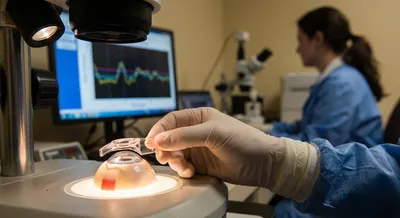
The NT-501 implant is a small capsule (about 1×6 mm) that a surgeon places inside the eye (in the gel-like vitreous near the retina) during a minor...

There is no single answer to “how fast does glaucoma progress?” – rates vary enormously. Major studies show untreated glaucoma often worsens...
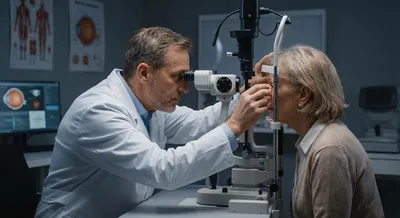
Early detection is crucial. By the time a typical visual field test catches glaucoma, roughly half of the retinal nerve cells (retinal ganglion...

New Eye Drops and Supplements: Beyond GLP-1 drugs, other novel compounds are under study. For example, Ocular Neuroenhancement: Early trials of...
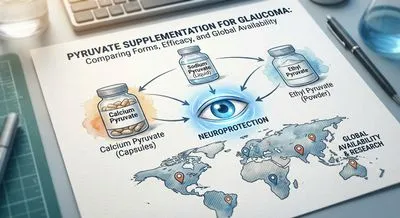
Pyruvate is a three-carbon compound our bodies make when sugars are broken down for energy (). Think of it as a key fuel molecule: it can enter cells...
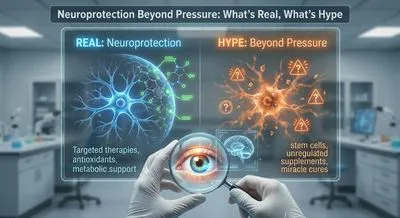
A recent review reminds us that after decades of work, “only a handful of neuroprotective therapies have succeeded clinically” (). In other words,...
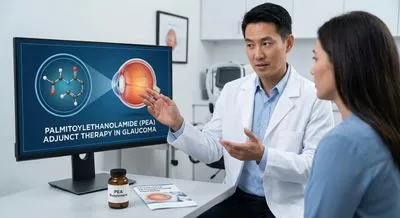
Several clinical trials have tested whether oral PEA can help lower IOP in glaucoma or ocular hypertension. In these studies, patients usually...
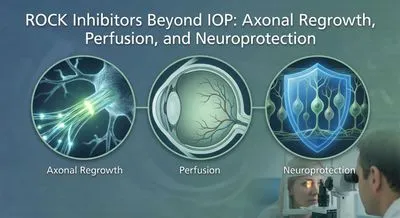
Likewise, general ROCK inhibition (with other agents like Y-27632) can encourage neurite extension when growth factors are present (). In an adult...
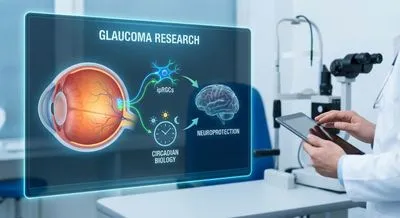
In simple terms: because glaucoma hurts the very cells that tell our body when to wake and sleep, a vicious cycle can start where bad sleep and...
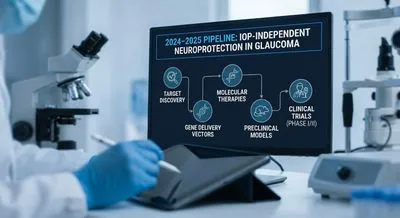
Gene therapies are also under study to deliver neurotrophic signals. One innovative approach engineered a permanently active version of the BDNF...
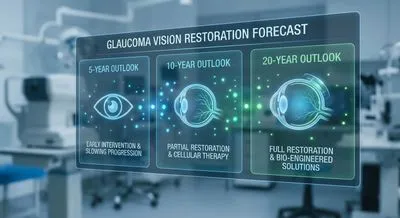
In the next few years, the emphasis will be on neuroprotection/neuroenhancement – therapies that aim to preserve or slightly improve the function of...
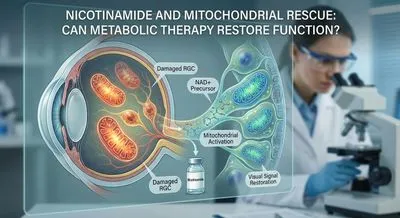
RGCs have extremely high metabolic demands and rely on robust mitochondrial function. In glaucoma, aging and chronic stress trigger progressive NAD+...
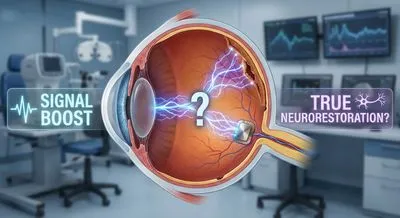
Experimental work suggests several ways brief currents can boost neural survival and plasticity. One class of effects is neurotrophic upregulation:...
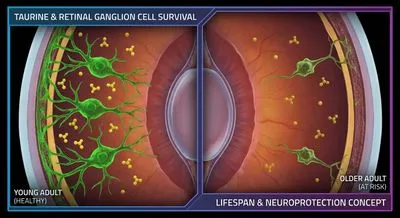
Taurine plays key cellular roles beyond being a nutrient. In the retina it acts as an organic osmolyte, helping cells adjust their volume under...
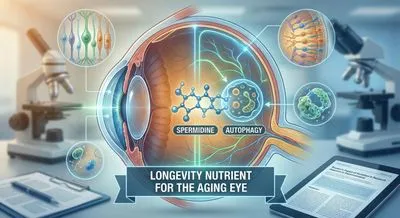
By inducing autophagy, spermidine helps cells clear damaged components and maintain mitochondrial health. For example, chronic spermidine feeding in...
Our visual field test is inspired by the perimetry methods eye care professionals use. Check for blind spots and track changes over time.
Test Your VisionNeuroprotection refers to strategies and treatments meant to protect nerve cells from damage, slow their degeneration, or help them recover after injury. In the context of the eye, it means trying to keep retinal ganglion cells and the optic nerve healthy so vision is preserved even when other risk factors, like eye pressure, are present. Approaches to neuroprotection include drugs that reduce harmful chemical reactions, improve energy production in cells, reduce inflammation, or boost blood flow and oxygen delivery to nerve tissue. Lifestyle measures, such as good cardiovascular health, healthy diet, and avoiding smoking, also support nerve health. Scientists are testing many ideas for neuroprotection, from medications and nutritional supplements to devices and gene therapies, but evidence varies and research is ongoing. Neuroprotection matters because once nerve cells are lost, they do not regrow easily, so preventing damage is often the best way to preserve function. In conditions where standard treatments do not fully stop progression, adding neuroprotective strategies could help maintain vision or slow decline. Discussing neuroprotection with a healthcare provider can help people understand realistic expectations and available options for protecting nerve health.