Curcumin and Curcuminoids for Glaucoma Neuroprotection
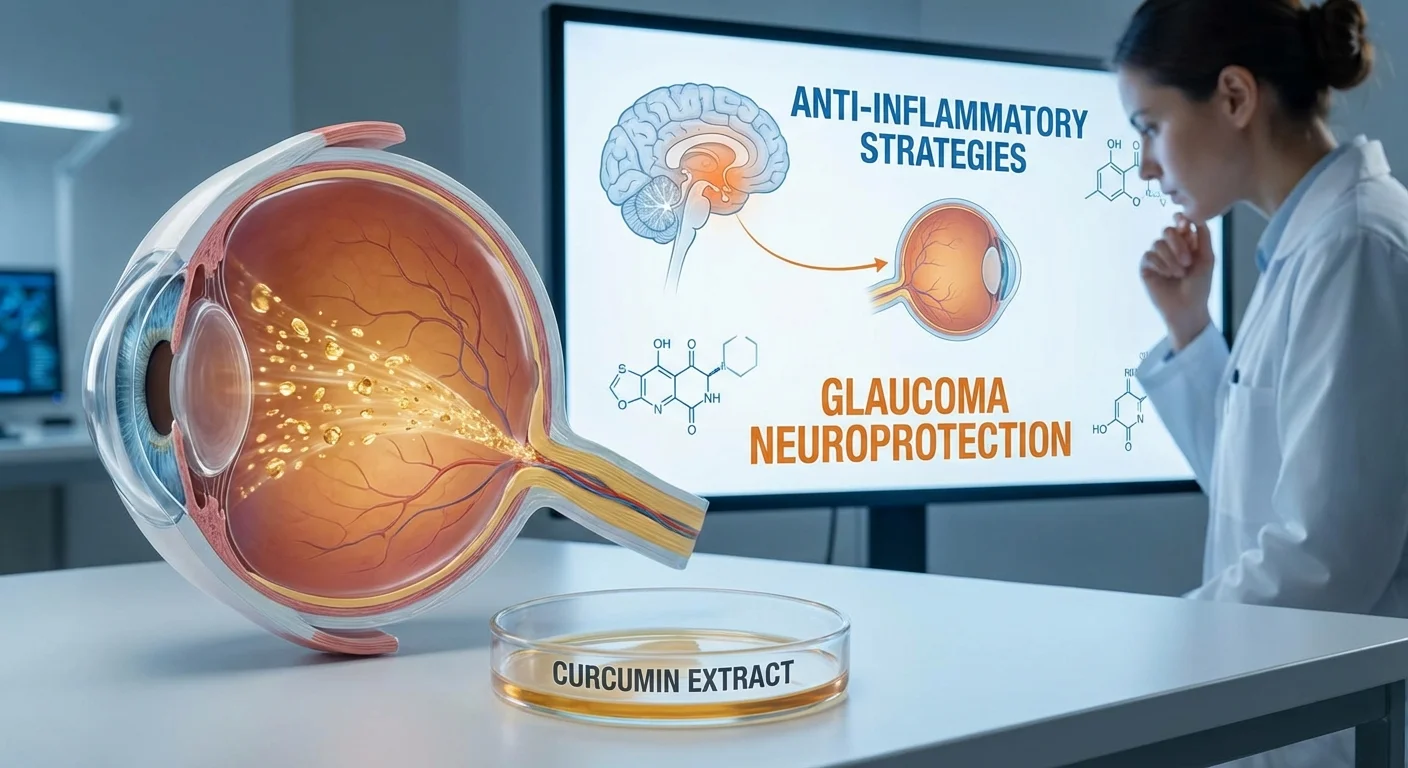
Glaucoma is an age-related optic neuropathy marked by progressive retinal ganglion cell (RGC) loss and vision impairment. Chronic inflammation and oxidative stress are central to glaucomatous damage, suggesting anti-inflammatory antioxidants as neuroprotectants. Curcumin (the major curcuminoid from turmeric) has potent anti-inflammatory and antioxidant properties. It inhibits NF-κB (a pro-inflammatory transcription factor) and can activate Nrf2 (a master antioxidant regulator) (pubmed.ncbi.nlm.nih.gov) . These pleiotropic effects make curcumin a candidate for optic nerve protection.
In the eye, microglia (resident immune cells) amplify inflammation when activated. Curcumin dampens microglial over-activation and cytokine release. In high-pressure glaucoma models, curcumin improved microglial survival and reduced oxidative damage (www.mdpi.com). In a retinal degeneration model (rd1 mice), curcumin suppressed microglial activation and chemokine secretion, decreasing apoptotic photoreceptors and improving function (pubmed.ncbi.nlm.nih.gov). Thus, by modulating NF-κB, Nrf2, and microglial pathways, curcumin blunts the neuroinflammatory cascade in optic neuropathies (iovs.arvojournals.org) (www.mdpi.com) (pubmed.ncbi.nlm.nih.gov).
Mechanisms: NF-κB, Nrf2, and Microglia
NF-κB inhibition: In models of glaucoma-related stress (e.g. oxidative insult to trabecular meshwork), curcumin dramatically reduced inflammatory markers. For example, curcumin (20 µM) nearly abolished H₂O₂-induced increases in NF-κB–driven cytokines IL-6, IL-1α, IL-8 and adhesion molecule ELAM-1 in trabecular cells (iovs.arvojournals.org). This demonstrates curcumin’s ability to suppress NF-κB–mediated inflammation in ocular cells. Other studies corroborate that curcumin reduces proinflammatory mediators (e.g. TNF-α, IL-1β) in diverse neural tissues by NF-κB blockade (pubmed.ncbi.nlm.nih.gov).
Nrf2 activation: Curcumin also boosts the antioxidant response. In oxidative stress models of the trabecular meshwork, curcumin activated the Nrf2/Keap1 pathway (www.mdpi.com), upregulating downstream antioxidant defenses. While specific ocular Nrf2 data are limited, curcumin is well-known to elevate Nrf2 and cytoprotective enzymes in CNS models. By tilting the balance toward antioxidation, curcumin helps neutralize reactive oxygen species that drive glaucomatous damage.
Microglial modulation: Microglia-mediated inflammation is a key feature of optic neuropathy. Curcumin calms microglia through multiple mechanisms. In vitro, curcumin prevented oxidative stress–induced death of BV-2 microglia and reduced induction of caspase-3 and cytochrome c (pubmed.ncbi.nlm.nih.gov). In a rat glaucoma model (chronic ocular hypertension), curcumin treatment preserved microglial viability, suggesting it counteracts glaucomatous oxidative injury to retinal glia (pubmed.ncbi.nlm.nih.gov). In vivo, curcumin attenuated microglial activation and migration in degenerating retina: a study in rd1 mice showed significantly fewer amoeboid (activated) microglia after curcumin treatment, with concomitant reduction in chemokines and MMP-9 (pubmed.ncbi.nlm.nih.gov) (karger.com). Together, these findings indicate curcumin suppresses glial inflammation, stabilizing the retinal microenvironment.
Neuroprotective Effects in Optic Neuropathy Models
Preclinical models of glaucoma and optic nerve injury demonstrate curcumin’s neuroprotection. In an ex vivo optic nerve–cut model, eyeballs incubated for 24 hours exhibited marked RGC layer thinning and apoptosis. Curcumin pre-treatment prevented these changes: apoptotic caspases (Caspase-3/9) and stress kinases (p-JNK, p-ERK) did not rise, and RGC markers (BRN3A) remained high (pmc.ncbi.nlm.nih.gov). Thus curcumin preserved RGC count and retinal layer thickness in acute injury (pmc.ncbi.nlm.nih.gov). This protective effect likely stems from its anti-apoptotic, antioxidant signaling (e.g. rescuing caspase/BAX levels and maintaining BCL-2) (pmc.ncbi.nlm.nih.gov).
Comparable neuroprotection is seen in other models. For example, rodent studies of chronic ocular hypertension (IOP elevation) found that systemic curcumin treatment downregulated pro-apoptotic markers and upregulated BCL-2 in retina (pubmed.ncbi.nlm.nih.gov), suggesting it forestalled RGC death. Indirect data also support this: curcumin is reported to improve RGC survival in ischemic/reperfused retina and to block glutamate excitotoxic pathways that mimic glaucoma injury. Overall, curcumin’s multimodal action – reducing oxidative stress, inflammation and cell death cascades – attenuates RGC degeneration in glaucoma models (pmc.ncbi.nlm.nih.gov) (pubmed.ncbi.nlm.nih.gov).
Ready to check your vision?
Take a visual field test from home — results in about 5 minutes per test.
Get StartedClinical Studies with Enhanced Bioavailability
Due to poor solubility, curcumin has limited oral bioavailability. Several formulations (phytosomes, nanoparticles, curcumin–phospholipid complexes, or co-administration with absorption enhancers) have been developed. Clinical trials in retinal disorders (diabetic retinopathy/macular edema) shed light on possible benefits and limitations.
In a small randomized trial (Garcea et al., 2012), diabetic patients received Meriva® (a lecithinized curcumin) 200 mg twice daily for 4 weeks versus standard care (pubmed.ncbi.nlm.nih.gov). The curcumin group showed significant improvement in retinal microcirculation and edema: optical Doppler of retinal flow improved, and a steigerwalat scale of retinal edema improved along with better visual acuity. No changes occurred in controls. This suggests short-term curcumin phytosome may reduce retinal fluid and modestly improve vision (pubmed.ncbi.nlm.nih.gov), although the study size was small (n≈38) and lacked masked control.
A pilot study on chronic diabetic macular edema (n=12 eyes) gave Meriva® (as Norflo® tablets) for 3 months (pubmed.ncbi.nlm.nih.gov). Visual acuity improved in 84% of eyes (mean VA gain significant, p<0.01), and 92% showed reduced central macular thickness on OCT (pubmed.ncbi.nlm.nih.gov). These open-label results hint that high-bioavailability curcumin could stabilize or improve vision and anatomy in macular edema. However, without a masked control group, placebo effect and spontaneous fluctuation cannot be ruled out.
In contrast, a recent double-blind RCT in non-proliferative diabetic retinopathy (60 patients) tested curcumin (500 mg) with piperine (5 mg) BID for 12 weeks (pmc.ncbi.nlm.nih.gov). Compared to placebo, curcumin markedly improved systemic antioxidant markers (total antioxidant capacity, SOD) and lowered lipid peroxidation (MDA) (pmc.ncbi.nlm.nih.gov). However, OCT and OCT-angiography metrics (retinal thickness, vascular density) showed no significant changes (pmc.ncbi.nlm.nih.gov) (the primary outcomes). Visual acuity and inflammation markers also were unchanged. This suggests that while curcumin+piperine can boost antioxidant defenses, short-term use did not appreciably alter retinal structure in mild DR (pmc.ncbi.nlm.nih.gov).
Other clinical observations: In acute ocular conditions (e.g. non-infectious uveitic macular edema), a high-bioavailability curcumin supplement (BCM-95® complex) improved edema and vision over 1 year in an open study. Also, an emerging pilot in retinal detachment (PVR risk) infused curcumin–albumin postoperatively and found it safe without clear efficacy due to small sample (pmc.ncbi.nlm.nih.gov). Overall, human data are sparse and preliminary. Notably, no dedicated clinical trial in glaucoma patients has been reported. The DR/DME studies suggest potential benefit on visual outcomes, but sample sizes are small, endpoints vary, and many lack placebo controls (pubmed.ncbi.nlm.nih.gov) (pmc.ncbi.nlm.nih.gov). Methodological limitations (open designs, short duration, confounders) preclude firm conclusions. Large, well-controlled trials in glaucoma or optic neuropathy models are needed to confirm any functional benefit.
Curcumin, Inflammaging, and Mitochondria
Aging and chronic low-grade inflammation (“inflammaging”) drive diseases like glaucoma. Curcumin targets aging-related pathways: it inhibits pro-senescence signals and promotes mitochondrial health (pmc.ncbi.nlm.nih.gov) (pubmed.ncbi.nlm.nih.gov). For example, gerontological studies show curcumin modulates longevity factors — increasing sirtuins (SIRT1) and AMPK activity while inhibiting mTOR and NF-κB (pmc.ncbi.nlm.nih.gov). In cellular models of mitochondrial dysfunction, curcumin extended lifespan in yeast by inhibiting TORC1 (the mTOR equivalent) and boosting ATP production (pubmed.ncbi.nlm.nih.gov). It also upregulated mitochondrial electron-chain genes and enhanced cellular energy levels (pubmed.ncbi.nlm.nih.gov). By promoting mitochondrial biogenesis and antioxidant defenses, curcumin may counteract the age- and stress-related degeneration of RGCs. Thus, curcumin’s pleiotropic effects intersect with longevity biology, potentially mitigating glaucomatous damage through anti-inflammaging and improved cellular energetics (pmc.ncbi.nlm.nih.gov) (pubmed.ncbi.nlm.nih.gov).
Like this research?
Subscribe to our newsletter for the latest eye care insights, longevity and visual health guides.
Absorption, Bioavailability, and Safety
Curcumin’s clinical utility hinges on formulation. Absorption enhancers like piperine (from black pepper) are often co-administered; piperine can increase curcumin bioavailability several-fold by inhibiting its metabolism (pmc.ncbi.nlm.nih.gov). Phytosome complexes (e.g. Meriva®) or nanoparticles similarly enhance serum levels, prolonging free curcumin availability (pmc.ncbi.nlm.nih.gov). These formulations are key to achieving therapeutic tissue levels in the eye.
In general, curcumin is safe at dietary and supplemental doses. Trials have administered up to 8 grams daily for months without serious harm (pmc.ncbi.nlm.nih.gov). Rarely, high doses (>4 g/day) may cause mild gastrointestinal upset (nausea, diarrhea) (pmc.ncbi.nlm.nih.gov). Allergic reactions and yellow stool have also been noted. Curcumin is metabolized extensively in the gut and liver, yielding glucuronides that may have lower activity. Formulations like curcumin–galactomannoside or liposomal can further improve blood levels while maintaining tolerability.
A special concern is anticoagulation. Curcumin has mild blood-thinning effects: it prolongs prothrombin and aPTT times and reduces platelet aggregation (pmc.ncbi.nlm.nih.gov). While this could theoretically benefit vascular health, it raises bleeding risk if combined with warfarin or antiplatelet drugs. One study reported a ~1.5-fold increase in warfarin levels with curcumin co-administration. Thus, patients on anticoagulants or with coagulopathy should use curcumin with caution. Other interactions (e.g. with anti-VEGF or antibiotics) are less well-defined but warrant monitoring. Notably, curcumin’s breakdown products (ferulic acid, vanillin) may also contribute to effects.
Conclusion
Curcumin and its analogues have compelling anti-inflammatory and antioxidant actions that could, in theory, protect the optic nerve in glaucoma. Preclinical models consistently show curcumin preserves RGCs, suppresses NF-κB inflammation and glial activation, and enhances cell survival pathways (iovs.arvojournals.org) (pmc.ncbi.nlm.nih.gov) (pubmed.ncbi.nlm.nih.gov). These effects align with its roles in inhibiting inflammaging and bolstering mitochondrial function (pmc.ncbi.nlm.nih.gov) (pubmed.ncbi.nlm.nih.gov). However, clinical evidence is still emerging and underpowered. Early trials in retinal diseases suggest high-bioavailability curcumin might improve visual acuity and reduce edema (pubmed.ncbi.nlm.nih.gov) (pubmed.ncbi.nlm.nih.gov), but many are open-label or small with mixed results. To date, no robust human trial has demonstrated neuroprotective benefit in glaucoma specifically.
While curcumin is generally safe, attention to dosing, formulation, and drug interactions is essential. Co-formulating with piperine or phospholipids can greatly enhance absorption and efficacy (pmc.ncbi.nlm.nih.gov). Users should be warned about possible GI upset and blood-thinning effects (pmc.ncbi.nlm.nih.gov) (pmc.ncbi.nlm.nih.gov). In summary, curcumin represents an intriguing candidate in the neuroprotection toolkit. Its use should be guided by ongoing research: given current data, it remains a hopeful adjunct rather than a proven therapy. Future well-designed trials – especially in glaucoma patients – are needed to validate whether curcumin’s multiple molecular benefits can translate into preserved vision.