
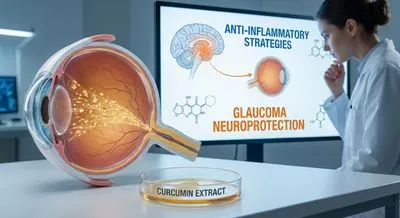
Curcumin and Curcuminoids: Anti-inflammatory Strategies for Glaucoma Neuroprotection
In the eye, microglia (resident immune cells) amplify inflammation when activated. Curcumin dampens microglial over-activation and cytokine release....
Deep research and expert guides on maintaining your visual health.
In the eye, microglia (resident immune cells) amplify inflammation when activated. Curcumin dampens microglial over-activation and cytokine release....
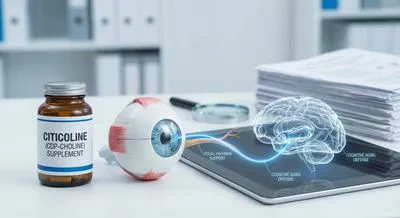
Citicoline (cytidine-5′-diphosphocholine) is metabolized into cytidine and choline in the body. Choline feeds into the synthesis of...
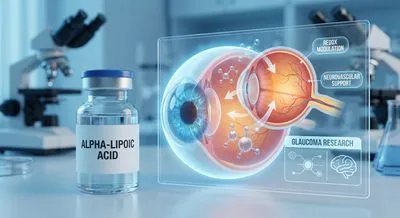
Alpha-lipoic acid (ALA), also known as thioctic acid, is a short-chain sulfur-containing fatty acid synthesized in mitochondria. In its reduced form...
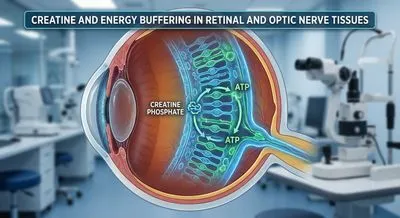
Importantly, this system exists not only in muscle but in nerve cells. Neurons (including RGCs) express CK isoforms that enable them to use creatine....
However, combining many compounds also has pitfalls. Overlapping mechanisms can lead to diminishing returns. The so-called “antioxidant paradox”...
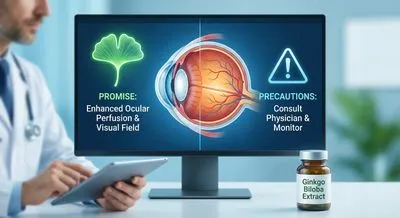
By contrast, larger reviews find no clear benefit on field metrics. A 2025 systematic review of 8 trials (428 subjects) concluded that GBE did not...
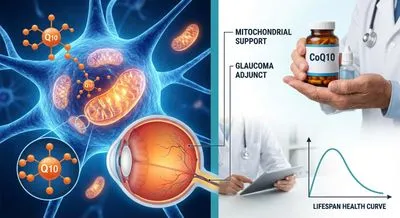
Notably, in the topical CoQ10 trial (), all eyes were also on standard drugs (timolol/dorzolamide), and CoQ10-treated eyes fared better. Thus, CoQ10...
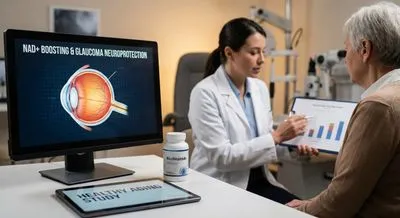
NAD<sup>+</sup> is a ubiquitous coenzyme that facilitates ATP production via glycolysis and oxidative phosphorylation, and serves as a substrate for...
Our visual field test is inspired by the perimetry methods eye care professionals use. Check for blind spots and track changes over time.
Test Your VisionNeuroprotection refers to strategies and treatments meant to protect nerve cells from damage, slow their degeneration, or help them recover after injury. In the context of the eye, it means trying to keep retinal ganglion cells and the optic nerve healthy so vision is preserved even when other risk factors, like eye pressure, are present. Approaches to neuroprotection include drugs that reduce harmful chemical reactions, improve energy production in cells, reduce inflammation, or boost blood flow and oxygen delivery to nerve tissue. Lifestyle measures, such as good cardiovascular health, healthy diet, and avoiding smoking, also support nerve health. Scientists are testing many ideas for neuroprotection, from medications and nutritional supplements to devices and gene therapies, but evidence varies and research is ongoing. Neuroprotection matters because once nerve cells are lost, they do not regrow easily, so preventing damage is often the best way to preserve function. In conditions where standard treatments do not fully stop progression, adding neuroprotective strategies could help maintain vision or slow decline. Discussing neuroprotection with a healthcare provider can help people understand realistic expectations and available options for protecting nerve health.