
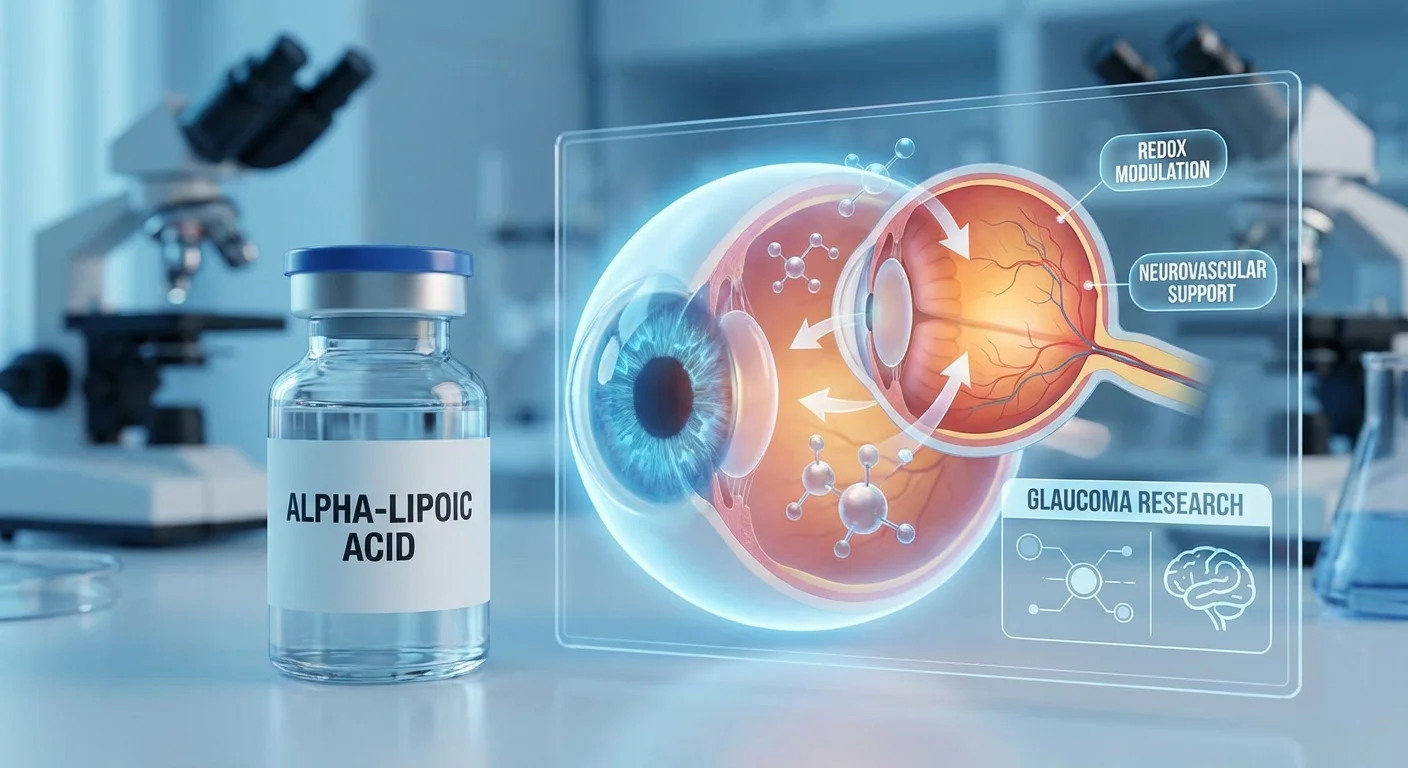
Alpha-Lipoic Acid in Glaucoma: A Neurovascular Antioxidant Strategy
Glaucoma is a progressive optic neuropathy in which elevated intraocular pressure, vascular insufficiency, and oxidative stress contribute to retinal ganglion cell (RGC) damage (pmc.ncbi.nlm.nih.gov) (www.sciencedirect.com). In glaucoma, excessive reactive oxygen species (ROS) and impaired antioxidant defenses lead to DNA, protein, and lipid oxidation in the retina and optic nerve (pmc.ncbi.nlm.nih.gov). Augmenting the antioxidant system is therefore of great interest. Alpha-lipoic acid (ALA) is a potent, naturally occurring antioxidant that can modulate redox balance and support neurovascular health. It has gained attention for its effects in neurodegenerative and vascular diseases, including diabetic neuropathy and age-related disorders (pmc.ncbi.nlm.nih.gov) (pubmed.ncbi.nlm.nih.gov). Here we review evidence that ALA may reduce oxidative stress, improve endothelial function, and protect optic nerve structure, drawing on animal glaucoma models, human data, and insights from diabetes and aging research.
Mechanisms of Alpha-Lipoic Acid as an Antioxidant
Alpha-lipoic acid (ALA), also known as thioctic acid, is a short-chain sulfur-containing fatty acid synthesized in mitochondria. In its reduced form (dihydrolipoic acid), it scavenges ROS and reactive nitrogen species, repairs oxidized lipids and proteins, and regenerates endogenous antioxidants like glutathione and vitamins C/E (pmc.ncbi.nlm.nih.gov) (pubmed.ncbi.nlm.nih.gov). ALA is unique in being both fat- and water-soluble, allowing it to distribute widely in tissues and cellular compartments. It also serves as a cofactor in mitochondrial energy metabolism, supporting ATP production in high-demand cells like neurons. Together, these properties suggest ALA can bolster the aging retinal antioxidant defenses and mitigate glaucomatous oxidative damage (pmc.ncbi.nlm.nih.gov) (pmc.ncbi.nlm.nih.gov).
Notably, ALA interacts with key aging pathways. A classic study showed that age-related decline in the antioxidant regulator Nrf2 and glutathione synthesis in rat liver was reversed by ALA administration (pmc.ncbi.nlm.nih.gov). ALA increased nuclear Nrf2 and expression of glutathione-synthesizing enzymes in old animals, restoring redox balance (pmc.ncbi.nlm.nih.gov). More broadly, ALA levels decline with age, and supplementation has demonstrated benefits in models of age-related disorders (e.g. Parkinson’s and Alzheimer’s diseases) (pubmed.ncbi.nlm.nih.gov). Thus ALA may counteract oxidative pathologies common to aging and glaucoma.
Neuroprotection and Retinal Ganglion Cells
Animal models of glaucoma and optic nerve injury provide direct evidence that ALA supports RGC health. In the DBA/2J mouse (a genetic glaucoma model), dietary ALA markedly protected against glaucomatous RGC loss. Mice given ALA (either preventively or after glaucoma onset) showed more surviving RGCs and preserved axonal transport than untreated controls (pmc.ncbi.nlm.nih.gov). ALA diets also upregulated antioxidant gene/protein expression and reduced retinal markers of lipid peroxidation, protein nitration, and DNA oxidation (pmc.ncbi.nlm.nih.gov). In short, ALA slowed glaucoma progression in mice by bolstering antioxidant defenses and directly shielding RGCs (pmc.ncbi.nlm.nih.gov).
In a rat optic nerve crush model (an acute injury that mimics aspects of glaucoma), prophylactic ALA injection increased RGC survival by 39% (versus ~28% when given after injury) (pmc.ncbi.nlm.nih.gov). ALA-treated rats had significantly higher counts of RGCs and upregulation of neuroprotective factors (erythropoietin receptor and neurotrophin-4/5) in the retina (pmc.ncbi.nlm.nih.gov). These findings underscore ALA’s neuroprotective efficacy for optic nerve injury: it promotes RGC survival and may engage endogenous repair pathways.
Synergy with Other Antioxidants
ALA does not act alone; it synergizes with vitamins and other antioxidants. It can regenerate oxidized vitamin C and glutathione, enhancing the overall antioxidant network (pmc.ncbi.nlm.nih.gov). In experimental settings, co-administering ALA with vitamin E yielded greater reductions in oxidative markers than either alone (pubmed.ncbi.nlm.nih.gov). Animal studies combining ALA with vitamins C and E (plus insulin treatment) showed protection of brain lipid integrity in diabetic models (pubmed.ncbi.nlm.nih.gov). In glaucoma specifically, a 6-month trial gave patients a supplement containing R-ALA with vitamin C/E, lutein, zeaxanthin, zinc, copper and DHA (an omega-3 fatty acid). This regimen significantly increased systemic antioxidant capacity (higher total antioxidant status) and reduced lipid peroxides, stabilizing ocular health parameters in glaucoma patients without adverse effects (www.sciencedirect.com). Patients reported improved tear function and fewer dry eye symptoms, suggesting ALA + co-antioxidants can benefit the ocular surface as well (www.sciencedirect.com) (www.sciencedirect.com).
Omega-3 fatty acids may also complement ALA. Several groups note that glaucoma patients have lower plasma DHA levels, and supplementation with DHA plus vitamins improved visual field indices (www.sciencedirect.com). Taken together, these data imply that multi-ingredient antioxidant strategies—combining ALA with vitamins E/C or omega-3s—could exercise additive protection for the neurovascular retina (www.sciencedirect.com) (pubmed.ncbi.nlm.nih.gov).
Endothelial and Vascular Effects
Vascular dysregulation and poor optic nerve perfusion are important in glaucoma. ALA’s vasoprotective actions may thus support optic nerve health. In diabetic and metabolic disease models, ALA restores endothelial function. For example, aged diabetic rats fed a high-fat diet develop nitric oxide (NO) deficits and endothelial dysfunction, but ALA treatment “fully reversed” the rise in oxidative damage markers (malondialdehyde, nitrotyrosine) and ameliorated vascular dysfunction and microalbuminuria (pmc.ncbi.nlm.nih.gov) (pmc.ncbi.nlm.nih.gov). The mechanism involved recoupling of endothelial nitric oxide synthase (eNOS) and increased NO bioavailability (pmc.ncbi.nlm.nih.gov). Similarly, in mice subjected to chronic intermittent hypoxia (a model of sleep apnea and vascular stress), dietary ALA (0.2% w/w) reversed endothelial dysfunction and prevented eNOS uncoupling (pubmed.ncbi.nlm.nih.gov). ALA lowered systemic oxidative stress and inflammation in those animals, preserving NO signaling (pubmed.ncbi.nlm.nih.gov).
By analogy, in the eye ALA could improve ocular blood flow and capillary health. In fact, improved microcirculation is one proposed mechanism for ALA’s benefit in diabetic neuropathy (where small nerve vessels are damaged) (pubmed.ncbi.nlm.nih.gov). These vascular effects may help sustain optic nerve delivery of nutrients and oxygen, further slowing glaucomatous damage. Although direct studies on ocular perfusion in glaucoma are lacking, the known vasodilatory and antioxidant synergy of ALA suggests a neurovascular protective role relevant to glaucoma.
Animal Models vs. Human Data
Animal data strongly support ALA’s neuroprotective role in glaucoma-like conditions. As noted, chronic antioxidant therapy with ALA in glaucoma-model mice increased RGC survival and reduced retinal oxidative stress (pmc.ncbi.nlm.nih.gov). In acute injury models, ALA significantly preserved RGC counts after optic nerve crush (pmc.ncbi.nlm.nih.gov). These structural outcomes point to an ability to slow progression of damage at the cellular level.
In humans, evidence is much more limited. No large randomized clinical trial has tested ALA specifically for glaucoma visual field progression or optic nerve structure. One open-label study gave glaucoma patients an ALA-containing supplement (as above) for 6 months and found stable ocular measurements with improved oxidative stress markers (www.sciencedirect.com). Visual fields were not specifically reported, but the authors noted “stabilizing” of glaucoma parameters (www.sciencedirect.com). In essence, there was no worsening of disease over 6 months (against expectations in progressive glaucoma), and no side effects noted (www.sciencedirect.com).
Another related human trial studied acute optic neuritis (in multiple sclerosis patients) with high-dose oral ALA (1200 mg daily for 6 weeks) (pmc.ncbi.nlm.nih.gov). In that controlled trial, ALA was safe and well-tolerated, but the study was underpowered to demonstrate neuroprotection and found no significant difference in retinal nerve fiber layer thinning (pmc.ncbi.nlm.nih.gov). Notably, even with ALA, the affected eye’s RNFL thinned from ~108 µm to ~79 µm over 24 weeks (comparable to placebo) (pmc.ncbi.nlm.nih.gov).
At present, no evidence shows ALA can regenerate visual fields or reverse optic nerve damage in glaucoma patients. Most endorsement for its use rests on analogy to other neurodegenerative conditions. Nonetheless, the lack of adverse effects in human studies (and its long-term use in metabolic disorders) is encouraging (pmc.ncbi.nlm.nih.gov) (www.sciencedirect.com). Well-designed glaucoma trials would be needed to confirm any benefit to visual function or structural preservation in patients.
Relation to Diabetic Neuropathy and Aging
Alpha-lipoic acid is well-studied in diabetic sensorimotor neuropathy, a condition sharing oxidative and metabolic stress with glaucoma. Multiple trials and meta-analyses show that ALA (typically 600–1200 mg/day) improves neuropathic symptoms and nerve function (pmc.ncbi.nlm.nih.gov) (pubmed.ncbi.nlm.nih.gov). For instance, a large meta-analysis of oral ALA in diabetic neuropathy reported significant reductions in pain scores and sensory complaints (dose-dependently), likely via accelerating glucose utilization and improving microcirculation (pubmed.ncbi.nlm.nih.gov) (pubmed.ncbi.nlm.nih.gov). Intravenous ALA (600–1200 mg) has also been repeatedly shown to speed nerve conduction recovery (pmc.ncbi.nlm.nih.gov). These results highlight ALA’s role enhancing nerve health in metabolic disease. The mechanisms (reduced oxidative stress, improved blood flow) are directly analogous to those needed in glaucoma, so the neuropathy literature reinforces ALA as a neuroprotective agent.
From an aging perspective, ALA is considered a geroprotective antioxidant. As noted, intracellular ALA declines with age, leaving cells more vulnerable to oxidative damage (pubmed.ncbi.nlm.nih.gov). Supplementation has been proposed to ameliorate age-related decline. In fact, by boosting Nrf2 and reversing the age-related loss of glutathione, ALA counteracts a classic hallmark of aging (pmc.ncbi.nlm.nih.gov). Chronic ALA treatment in aged animal models has also been linked to improved cognitive and retinal function (pubmed.ncbi.nlm.nih.gov) (pmc.ncbi.nlm.nih.gov). This connection suggests that in elderly glaucoma patients, ALA might address both disease-specific oxidative stress and the generalized decline in antioxidant capacity that comes with aging.
Safety and Dosage Considerations
Alpha-lipoic acid is generally well tolerated at doses studied. Oral doses up to 1200 mg daily have been used safely in trials (pmc.ncbi.nlm.nih.gov) (pmc.ncbi.nlm.nih.gov). For example, the optic neuritis study gave 1200 mg/day for 6 weeks with good compliance and no serious adverse events (pmc.ncbi.nlm.nih.gov). Likewise, the glaucoma supplement trial (combining ALA with other nutrients) reported no treatment-related side effects over 6 months (www.sciencedirect.com). Common mild effects of ALA can include gastrointestinal upset or skin rash, but these are infrequent.
A unique safety issue is hypoglycemia risk. By enhancing glucose uptake, ALA can lower blood sugar. More rarely, ALA has been linked to insulin autoimmune syndrome (IAS) in susceptible individuals. IAS is a condition where autoantibodies bind insulin, causing fluctuating hypoglycemia. Multiple case reports (mostly from East Asia) describe patients developing severe hypoglycemia weeks after starting ALA supplements, with high insulin antibody titers (pmc.ncbi.nlm.nih.gov). These patients often carried HLA-DR4 alleles and recovered after stopping ALA. Health authorities note this rare but serious reaction: ALA may induce insulin autoimmune hypoglycemia in genetically predisposed people (www.canada.ca). Therefore, patients of certain ethnicities (e.g. Asian descent) or those with known autoimmune conditions should be monitored closely if taking ALA. Patients with diabetes especially should watch for low blood sugars, particularly if on hypoglycemic therapy. Overall, these events are uncommon, but awareness is important.
Dosing in clinical contexts typically ranges from 300 mg to 1200 mg per day. In diabetic neuropathy, 600 mg/day is common and appears effective (pubmed.ncbi.nlm.nih.gov). Trials have explored up to 1800 mg/day, with some dose-dependent benefit (pubmed.ncbi.nlm.nih.gov). For neuroprotection, many investigators favor 600–1200 mg/day orally. The R-enantiomer of ALA (active form) is available in some supplements, but most clinical studies use racemic ALA. Given its short half-life, some experts split higher doses (e.g. 600 mg twice daily). There is no established optimal dosing for glaucoma, but by analogy with neuropathy and neuroprotection trials, 600–1200 mg daily appears reasonable if well tolerated (pmc.ncbi.nlm.nih.gov) (pmc.ncbi.nlm.nih.gov). Long-term use beyond a few months has not been well studied in glaucoma patients.
In summary, the safety profile of ALA is favorable. It is approved in Europe for diabetic neuropathy and has been used long-term with minimal issues (pmc.ncbi.nlm.nih.gov). Aside from rare hypoglycemia, no major toxicities are known. As always, patients with kidney or liver disease should use caution and consult physicians before high-dose antioxidant therapy.
Conclusion
Alpha-lipoic acid is a multifaceted antioxidant compound with promising neurovascular support potential in glaucoma. Preclinical studies demonstrate that ALA significantly reduces retinal oxidative damage, preserves retinal ganglion cells, and improves neuronal transport in glaucoma models (pmc.ncbi.nlm.nih.gov) (pmc.ncbi.nlm.nih.gov). It also restores endothelial function and nitric oxide signaling in diabetic models (pmc.ncbi.nlm.nih.gov) (pubmed.ncbi.nlm.nih.gov), suggesting benefits for optic nerve perfusion. ALA’s synergy with other antioxidants (vitamins C/E, DHA) may further amplify its protective effects (www.sciencedirect.com) (pubmed.ncbi.nlm.nih.gov). Moreover, ALA’s proven efficacy in diabetic neuropathy and its engagement of aging pathways (via Nrf2 and glutathione) hint at broad neuroprotective roles (pubmed.ncbi.nlm.nih.gov) (pmc.ncbi.nlm.nih.gov).
However, clinical data in glaucoma patients are sparse. Limited human trials using ALA-containing supplements report stable ocular status and good tolerability (www.sciencedirect.com) (pmc.ncbi.nlm.nih.gov), but no definitive evidence yet shows slowed visual field loss or structural improvement. Given its excellent safety record (aside from rare hypoglycemia in predisposed individuals) and the theoretical rationale, ALA could be considered as an adjunctive therapy in glaucoma. Future randomized trials are needed to determine whether ALA actually slows glaucoma progression or augments standard treatments. Until then, patients and clinicians should weigh the potential antioxidant benefits of ALA against its minimal risks, particularly in those at risk for hypoglycemia (pmc.ncbi.nlm.nih.gov) (www.canada.ca).