
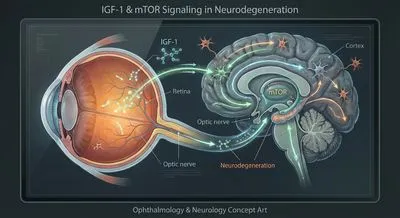
IGF-1, mTOR Signaling, and Neurodegeneration Across Eye and Brain
IGF-1 is a small protein hormone closely related to insulin. It is made in the liver (and in some tissues) under the influence of growth hormone. In...
Deep research and expert guides on maintaining your visual health.
IGF-1 is a small protein hormone closely related to insulin. It is made in the liver (and in some tissues) under the influence of growth hormone. In...
HRV stands for heart rate variability, which is a measure of how much the time between your heartbeats changes from one beat to the next. Even when your heart rate looks steady, tiny variations are normal and reflect how well your nervous system can adapt to stress, activity, and rest. A higher HRV generally means your body can switch smoothly between relaxation and action, while a lower HRV often shows the opposite—less flexibility and greater strain. HRV is influenced by breathing, sleep, fitness, age, medications, and emotional state, so it can change day to day. Devices like chest straps, some smart watches, and specific apps can estimate HRV during rest or sleep. People and clinicians find HRV useful because it gives a quick window into recovery and overall resilience without invasive tests. It is used to monitor training load in athletes, to assess stress and recovery in workers, and sometimes to help guide lifestyle changes like sleep, exercise, and breathing techniques. Low HRV is linked to higher risk of heart problems and poorer outcomes in some illnesses, but it is only one piece of the picture and must be interpreted alongside other information. Simple steps that often raise HRV include improving sleep, managing stress, regular aerobic exercise, and slow deep breathing. HRV is a helpful, noninvasive tool for tracking trends in health, but it should not replace medical diagnosis.