
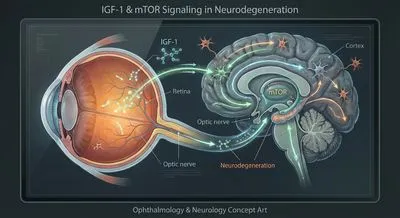
IGF-1, mTOR Signaling, and Neurodegeneration Across Eye and Brain
IGF-1 is a small protein hormone closely related to insulin. It is made in the liver (and in some tissues) under the influence of growth hormone. In...
Deep research and expert guides on maintaining your visual health.
IGF-1 is a small protein hormone closely related to insulin. It is made in the liver (and in some tissues) under the influence of growth hormone. In...
mTOR is a protein inside cells that acts like a central control switch to tell cells when to grow, make proteins, or conserve resources. Its full name is the mechanistic target of rapamycin, and it forms two main complexes that respond to different cues from the environment. These complexes sense nutrients, energy status, oxygen, and signals from growth factors to decide whether conditions are right for building and dividing. When mTOR is active, cells increase protein production and metabolism and reduce recycling processes called autophagy; when it is less active, cells conserve resources and focus on repair. Because mTOR controls such fundamental choices, it plays a big role in growth, immune function, how tissues respond to stress, and aging. Abnormal mTOR activity is linked to cancer, metabolic disease, and some neurodegenerative conditions because it can upset the balance between growth and repair. Drugs that affect mTOR, such as rapamycin and related compounds, are used experimentally and sometimes clinically to influence immune responses, cell growth, and aging-related processes. Studying mTOR helps researchers understand how cells decide between building up and breaking down, which is central to both health and disease.