
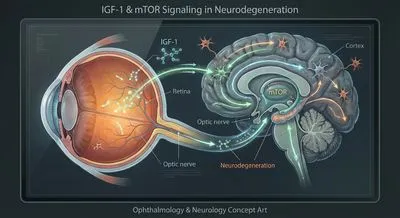
IGF-1, mTOR Signaling, and Neurodegeneration Across Eye and Brain
IGF-1 is a small protein hormone closely related to insulin. It is made in the liver (and in some tissues) under the influence of growth hormone. In...
Deep research and expert guides on maintaining your visual health.
IGF-1 is a small protein hormone closely related to insulin. It is made in the liver (and in some tissues) under the influence of growth hormone. In...
Our visual field test is inspired by the perimetry methods eye care professionals use. Check for blind spots and track changes over time.
Test Your VisionIGF-1 stands for insulin-like growth factor 1, a hormone that helps cells grow, divide, and survive. It is produced mainly by the liver but also by other tissues in response to growth hormone and the nutrients you eat. IGF-1 works by binding to a receptor on the surface of cells and activating internal signals that encourage protein building, cell division, and resistance to programmed cell death. These actions are important during childhood growth, tissue repair after injury, and for maintaining healthy cells through life. In the brain and eye, IGF-1 supports neurons and other cells, helping them function and recover from stress. Too much IGF-1 activity can promote excessive cell growth and raise the risk of some cancers, while too little can lead to poor growth, reduced tissue maintenance, and frailty. Levels of IGF-1 change with age, diet, illness, and hormonal status, so they connect nutrition and health to long-term outcomes. Doctors and researchers study IGF-1 because adjusting its levels or the signals it controls can affect growth disorders, metabolic health, and degenerative conditions. Understanding IGF-1 helps explain how the body balances growth and repair with long-term well-being.