
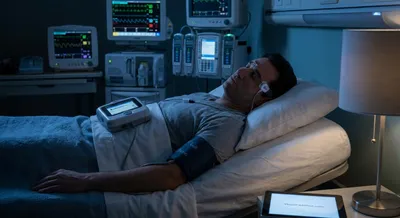
Nocturnal hypotension, sleep apnea, and ocular perfusion: continuous monitoring studies
Importantly, body position and sleep also matter. Normally, when you lie down, intraocular pressure (IOP) tends to rise (by 10–20%) because eye fluid...
Deep research and expert guides on maintaining your visual health.
Importantly, body position and sleep also matter. Normally, when you lie down, intraocular pressure (IOP) tends to rise (by 10–20%) because eye fluid...

In a rabbit glaucoma model (pressure raised by a gel in the eye), researchers injected NGF around the eye (retrobulbar) before damage. Those rabbits...

Earlier trial results. A recent Phase III study (NCX 470) and others confirmed that combined outflow enhancers can beat traditional drops. For...

Capturing slow changes in eye pressure and fields (monitoring). A recent study (the ADAGES group) looked at long-term glaucoma data and found that...
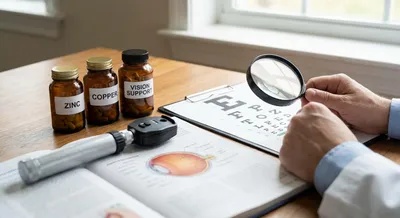
It’s worth noting that many people regularly exceed safe zinc intakes. The National Institutes of Health advise that healthy adults only need about...
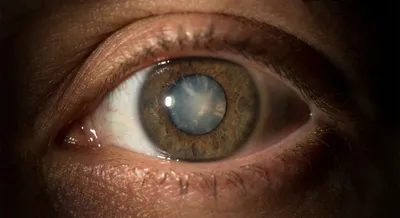
Early stage. In early glaucoma, most vision—especially central vision—is normal, so patients usually feel fine. The earliest signs are subtle blind...

This article reviews all human studies on magnesium in glaucoma. Specifically, we look at trials and reports of magnesium levels or supplementation...
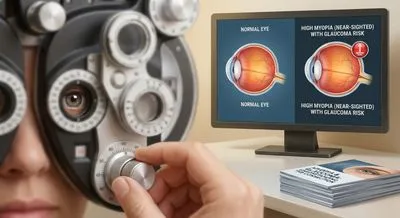
Diagnosing glaucoma in myopic eyes is tricky. Moderate-to-high myopia changes the eye’s shape and anatomy, making standard glaucoma tests harder to...
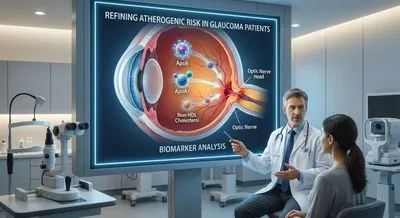
For example, a recent expert consensus noted that “ApoB…represents the total concentration of atherogenic lipoprotein particles” and “more accurately...
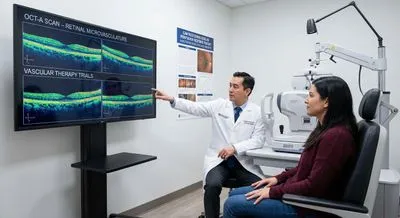
OCT-Angiography (OCT-A) captures images of blood flow by detecting moving red blood cells in the eye’s capillaries. Two key metrics are often...
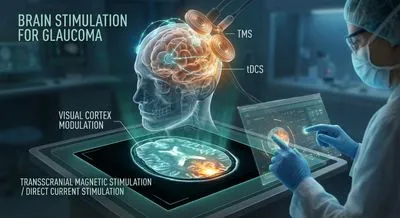
Vision outcomes: Measured outcomes have included visual field indices (e.g. detection accuracy or mean defect in perimetry) and sometimes contrast...
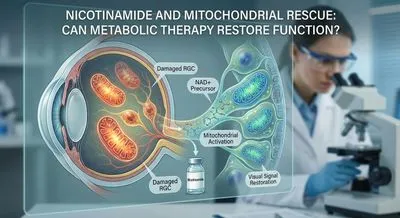
RGCs have extremely high metabolic demands and rely on robust mitochondrial function. In glaucoma, aging and chronic stress trigger progressive NAD+...
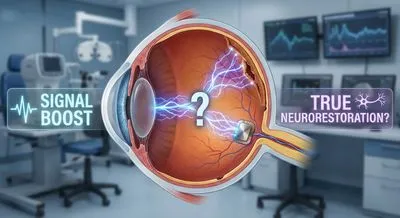
Experimental work suggests several ways brief currents can boost neural survival and plasticity. One class of effects is neurotrophic upregulation:...
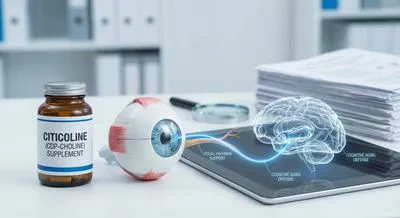
Citicoline (cytidine-5′-diphosphocholine) is metabolized into cytidine and choline in the body. Choline feeds into the synthesis of...

However, combining many compounds also has pitfalls. Overlapping mechanisms can lead to diminishing returns. The so-called “antioxidant paradox”...
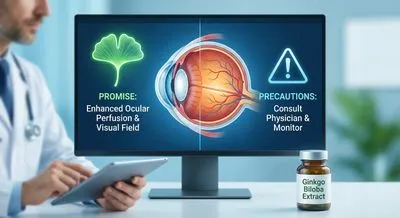
By contrast, larger reviews find no clear benefit on field metrics. A 2025 systematic review of 8 trials (428 subjects) concluded that GBE did not...
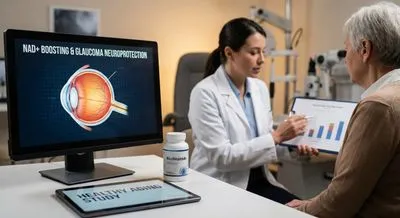
NAD<sup>+</sup> is a ubiquitous coenzyme that facilitates ATP production via glycolysis and oxidative phosphorylation, and serves as a substrate for...
Blind spots often develop gradually without symptoms. Start a free trial and take a quick visual field test to spot changes early.
Find Out NowVisual field is the full area you can see when your eyes are fixed on one point, including what’s straight ahead and what’s off to the sides. It includes central vision—the small area you use for reading and recognizing faces—and peripheral vision, which helps you notice movement and navigate around obstacles. Measured in degrees around a central point, the visual field varies from person to person and can change with age or eye conditions. Doctors check it because changes in the visual field often reveal problems with the eyes, optic nerve, or brain that might not be obvious from looking at the eye alone. Common problems include dim or blank spots called scotomas, loss of side vision that makes your world feel tunnel-like, and halves missing from one side, which can happen after a stroke. Testing can be as simple as a basic confrontation check or as detailed as automated exams that map exactly which areas are seen or missed. The results help eye care professionals diagnose conditions, track progression, and decide whether treatments are working. A shrinking visual field affects everyday life: it makes driving, walking in busy places, and reading harder, and it can increase the risk of falls. Knowing about changes early gives you the best chance to protect remaining vision through medical care, lifestyle steps, and low-vision aids. Rehabilitation options, such as orientation training and special lenses or devices, can help people adapt and stay independent when changes are permanent.