
Understanding Lipids and Atherosclerosis in Glaucoma
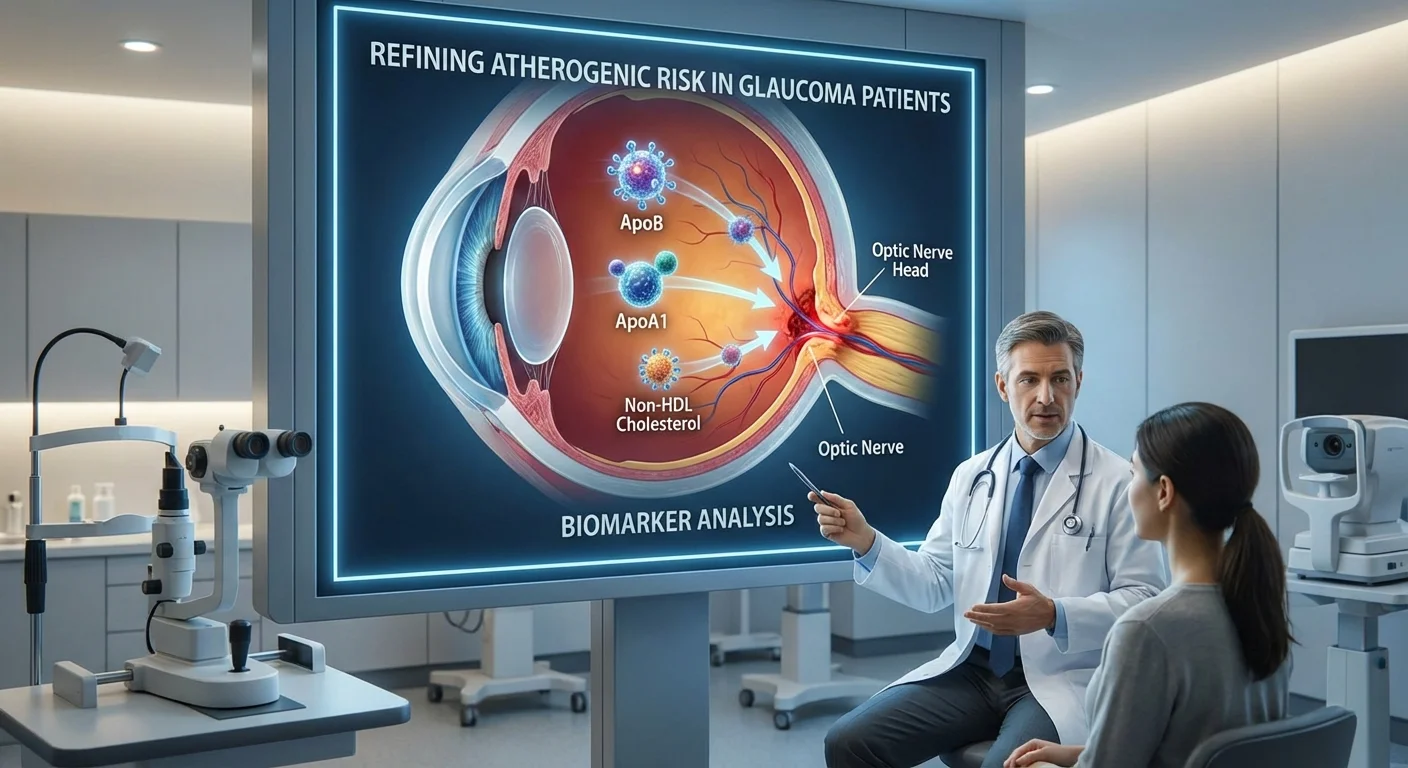
Glaucoma is best known as a disease of high eye pressure, but researchers are increasingly aware that vascular health also plays a role. In particular, cholesterol and related blood fats (lipids) can affect the tiny arteries supplying the optic nerve. Traditional cholesterol tests report LDL–cholesterol (LDL-C) – often called “bad” cholesterol – but newer measures like apolipoprotein B (ApoB) and non–HDL cholesterol may give a fuller picture of atherosclerotic risk. Each LDL particle carries one ApoB protein, so measuring ApoB essentially counts the number of potentially harmful particles. Non–HDL cholesterol (total cholesterol minus HDL “good” cholesterol) includes all the cholesterol in LDL and other artery-clogging particles. Studies show that these markers often better reflect heart (and vessel) disease risk than LDL-C alone (pmc.ncbi.nlm.nih.gov) (pmc.ncbi.nlm.nih.gov).
For example, a recent expert consensus noted that “ApoB…represents the total concentration of atherogenic lipoprotein particles” and “more accurately reflects the atherogenic burden” than LDL-C (pmc.ncbi.nlm.nih.gov). In other words, if you have many small LDL particles, your LDL-C (how much cholesterol they carry) might look normal, but ApoB would be high – a hidden risk. Likewise, non–HDL cholesterol covers all the cholesterol in LDL, VLDL and remnant particles, which also tracks risk better. One meta-analysis found that ApoB was the strongest cardiovascular risk predictor, followed by non–HDL-C, with LDL-C the weakest (pubmed.ncbi.nlm.nih.gov) (pmc.ncbi.nlm.nih.gov). In practice, if a person’s LDL-C and ApoB (or non–HDL-C) diverge, doctors consider the higher value as the true risk indicator (pmc.ncbi.nlm.nih.gov) (pmc.ncbi.nlm.nih.gov).
For patients, this means simple tests can be used more effectively. Standard lipid panels give total cholesterol, HDL, LDL (usually calculated), and triglycerides. You can then compute non–HDL cholesterol yourself (total minus HDL) with no extra lab order. ApoB can be measured by a blood test (though it may not be included by default), and ApoB levels directly reflect how many harmful particles are circulating. In contrast, ApoA1 – the main protein on HDL (the “good cholesterol”) – indicates protective particles. (A higher ApoB/ApoA1 ratio means more “bad” particles relative to “good.”) While IOP (eye pressure) is still the main modifiable risk in glaucoma, these lipoprotein measures help detect hidden vascular risk that might affect the optic nerve.
Evidence Linking Lipids to Glaucoma
Several studies have found that people with glaucoma often have less-favorable cholesterol profiles. In general, glaucoma patients tend to have higher total (“all”) cholesterol and lower HDL (“good”) cholesterol relative to people without glaucoma (pubmed.ncbi.nlm.nih.gov). For instance, a systematic review found glaucoma patients had about 8 mg/dL higher total cholesterol on average and about 2 mg/dL lower HDL (pubmed.ncbi.nlm.nih.gov). One imaging study showed that glaucoma patients had significantly higher LDL-C and total cholesterol levels than matched controls, along with lower ocular perfusion pressure and HDL (pmc.ncbi.nlm.nih.gov). In that study, color Doppler blood flow scans of the eye confirmed that people with glaucoma had slower blood velocities in the retinal vessels, suggesting reduced optic nerve perfusion (pmc.ncbi.nlm.nih.gov). Importantly, cholesterol differences were linked statistically to those blood-flow changes – as LDL-C and triglycerides went up, ocular blood flow went down. These findings suggest that high LDL and total cholesterol may go hand-in-hand with the underperfused optic nerve seen in glaucoma (pmc.ncbi.nlm.nih.gov) (pmc.ncbi.nlm.nih.gov).
More refined analyses of lipoprotein subtypes echo this pattern. In a recent study of Chinese patients, those with open-angle glaucoma and high LDL-C had significantly higher non–HDL cholesterol, small dense LDL, and oxidized LDL levels than controls with high LDL-C (pmc.ncbi.nlm.nih.gov). In simpler terms, among people already high in cholesterol, those with glaucoma had even more of the “bad” cholesterol fractions, including more small LDL particles that penetrate vessel walls. This study also found that these atherogenic particles correlated with thinner retinal nerve fiber layers – the structural marker of glaucoma damage.
On the flip side, protective HDL-related measures appear lacking in glaucoma. Genetic studies have linked cholesterol-handling genes (like ABCA1, which helps load HDL) to glaucoma risk (pmc.ncbi.nlm.nih.gov). And one analysis noted that the absence of healthy diet and exercise – key factors improving lipid profiles – was associated with higher glaucoma risk (pmc.ncbi.nlm.nih.gov). Indeed, a large Spanish cohort found that people who followed a “Mediterranean” healthy lifestyle (no smoking, exercise, good diet, etc.) had dramatically lower glaucoma rates: the healthiest group had half the risk of glaucoma compared to the least healthy group (pmc.ncbi.nlm.nih.gov). This suggests the same habits that cut heart disease (by improving blood fats) also seem to protect vision.
In summary, the evidence suggests that a heavy “atherogenic” lipoprotein burden – high apoB/non-HDL – may contribute to glaucoma. It’s plausible that when arteries throughout the body are unhealthy, the tiny vessels feeding the optic nerve are also compromised. Chronic high cholesterol can cause microvascular damage and narrowing, leading to ischemia (poor blood flow) in the optic nerve head (pmc.ncbi.nlm.nih.gov) (pmc.ncbi.nlm.nih.gov). Over time this microvascular insufficiency could add to the stress on retinal ganglion cells, potentially worsening visual field loss.
Cardiovascular Targets: What Levels Should We Aim For?
Because these lipid particles also drive heart disease, cardiology guidelines give us helpful targets. Traditionally, doctors set LDL cholesterol goals (e.g. <70 mg/dL for high-risk patients) in order to reduce cardiovascular events. More recent guidelines and expert panels also emphasize non–HDL cholesterol and ApoB. In practice, non–HDL targets are usually about 30 mg/dL higher than LDL goals (for example, if LDL goal is 70, non–HDL goal is ~100). Some expert bodies have suggested explicit ApoB thresholds. For instance, the National Lipid Association (NLA) recommends intensifying therapy if ApoB remains above roughly 60 mg/dL in very-high-risk patients (those with heart disease, stroke, or familial high cholesterol), 70 mg/dL in high-risk, and 90 mg/dL in moderate-risk patients (pmc.ncbi.nlm.nih.gov). (By comparison, the same guidelines suggest LDL goals of 55–100 mg/dL and non–HDL goals of 85–130 for those categories (pmc.ncbi.nlm.nih.gov).) As a practical example, an ApoB level above about 130 mg/dL is around the 90th percentile and is considered a risk-enhancing factor that would prompt aggressive treatment (pmc.ncbi.nlm.nih.gov).
For patients, these numbers mean: if your doctor runs an ApoB test, values much above ~80–90 mg/dL in a high-risk person would usually trigger a discussion about stronger lipid-lowering therapy (statins, ezetimibe, PCSK9 inhibitors, or lifestyle changes). Non–HDL cholesterol is easy to track on a standard lipid report (just total minus HDL). If your non–HDL is above about 100–160 mg/dL (depending on risk level), doctors will treat more aggressively. HDL cholesterol should ideally be higher (above 40–50 mg/dL), and an ApoB/ApoA1 ratio that is low (favoring more HDL relative to LDL) is considered better.
Importantly, anyone can work to improve these numbers. Standard blood tests easily give LDL, HDL, total cholesterol and triglycerides. Your lab or doctor can then compute non–HDL (no extra cost). ApoB testing may require a special request, but it is offered by many labs and increasingly covered by insurance. Once you have the results, you and your doctor can compare to guideline targets. If the values are above goal, lifestyle changes (diet, exercise, quitting smoking) and medications can be used to reach safer levels.
Better Vascular Health Helps Your Vision
Why does all this matter for glaucoma? Because good cardiovascular health supports steady blood flow to the optic nerve and retina. The optic nerve depends on tiny arteries (posterior ciliary and retinal arteries) to deliver oxygen. If large arteries get clogged, or if blood pressure drops too low, the nerve can suffer from poor perfusion. Indeed, many large studies have found that low ocular perfusion pressure (the difference between blood pressure and eye pressure) is a consistent risk factor for glaucoma development and progression (pmc.ncbi.nlm.nih.gov). In short, when the eye’s blood pressure is low (or its blood vessels are narrow), the risk of optic nerve damage goes up.
Improving vascular health can help stabilize the visual field. For example, studies using Doppler ultrasound have linked slower blood flow in the eye’s arteries to faster visual field loss in glaucoma (pmc.ncbi.nlm.nih.gov). This suggests that whatever clogs or constricts those small vessels – whether systemic atherosclerosis or spikes and dips in blood pressure – may accelerate vision loss. By contrast, keeping arteries clear (through healthy lipids and blood pressure) helps maintain optic nerve perfusion. In practical terms, patients who control their cholesterol, blood pressure, and blood sugar often have more stable glaucoma. One long-term study even showed that glaucoma patients with lower blood flow in eye arteries tended to worsen faster than those with healthier flow (pmc.ncbi.nlm.nih.gov).
Furthermore, managing systemic risk factors also protects against the cardiovascular disease that glaucoma patients are prone to. Patients with glaucoma are more likely to develop heart disease in coming years (www.nature.com), and a healthy lifestyle or treatment of hypertension, high cholesterol, or diabetes will reduce that risk. In the UK Biobank study, for instance, glaucoma patients had about a 19% higher chance of a major heart event over 9 years, but those with glaucoma who practiced healthy habits (diet, exercise, no smoking) cut that risk substantially (www.nature.com). Reducing strain on the heart typically means improving blood flow throughout the body, including the eyes.
In summary, aiming for better lipid profiles and overall vascular health is a win-win. Achieving LDL, non–HDL, and ApoB targets not only lowers aneurysm and heart attack risk, but may also ensure the optic nerve gets the blood it needs. While the main treatment for glaucoma remains lowering eye pressure, controlling atherogenic lipids can only help. Patients often find that once cholesterol and blood pressure are under control, their ophthalmologists see more stable visual fields on each exam.
What You Can Do
-
Get the right tests. A routine lipid panel (total, HDL, LDL, TG) is a good start. You can calculate non–HDL cholesterol yourself (total minus HDL). Ask your doctor for an ApoB blood test if you have high LDL or other risks; this can usually be ordered and covered by insurance nowadays. For context, very conservative targets for high-risk patients are ApoB <60–70 mg/dL; non–HDL <85–100 mg/dL; and LDL <55–70 mg/dL (pmc.ncbi.nlm.nih.gov). Less-stringent targets apply if overall risk is lower. Even if you start with higher values, working toward these guidelines has proven benefits for arteries.
-
Interpret results wisely. If your ApoB or non–HDL is disproportionately high compared to LDL, take it seriously. For example, some people have “normal” LDL-C but a high ApoB because their LDL particles are small and numerous; this is an unnoticed risk. Your doctor will consider the highest risk marker when choosing therapy. Many doctors now use statins or other drugs to lower LDL and non–HDL, which will also lower ApoB (since all atherogenic particles fall with treatment).
-
Focus on lifestyle. Diet, exercise, and habits matter. Eating a heart-healthy diet (mediterranean, low in saturated fat and sugars) can improve all lipid numbers. A diet high in fish, nuts, vegetables and whole grains, with olive oil instead of butter, tends to raise HDL and lower LDL/ApoB. Quitting smoking and maintaining a healthy weight also raise HDL (good cholesterol) and lower triglycerides. In one large study, participants with the healthiest lifestyles had about half the glaucoma risk of those with the least healthy habits (pmc.ncbi.nlm.nih.gov).
-
Monitor blood flow and pressure. Keep routine check-ups on blood pressure. Low blood pressure at night (nocturnal hypotension) can be a problem for glaucoma, so ensure your pressures do not dip too much (your doctor may advise on this). Some patients with glaucoma monitor their ocular perfusion; simple things like staying hydrated and avoiding sudden drops in blood pressure (e.g. from medications or dehydration) are sensible.
-
Work with your eye doctor. Let your ophthalmologist know your cholesterol and blood pressure status. If you have high LDL or ApoB, discuss how intensifying treatment (diet, statin, etc.) might help your eye health too. Share your vision field tests and mention any vascular issues – sometimes an ophthalmologist and primary doctor can coordinate to ensure targets like LDL or ApoB are aggressive enough.
In short, think of glaucoma care in tandem with heart care. Using refined lipid tests (non–HDL, ApoB) helps unmask hidden risks that LDL alone can miss (pmc.ncbi.nlm.nih.gov) (pmc.ncbi.nlm.nih.gov). Meeting heart-healthy lipid targets not only lowers the chance of stroke or heart attack, but also helps keep the optic nerve well perfused. When blood vessels are clear and pressures stable, glaucoma tends to progress more slowly, preserving visual fields. Work closely with your doctors to achieve these targets – paying attention to vascular health could help your eyes as much as your heart.
References: Studies linking cholesterol to glaucoma include overall cholesterol analyses (pubmed.ncbi.nlm.nih.gov) (pmc.ncbi.nlm.nih.gov), vascular imaging in glaucoma (pmc.ncbi.nlm.nih.gov), and large cohort analyses (pmc.ncbi.nlm.nih.gov) (www.nature.com). Expert reviews explain how ApoB and non–HDL capture particle number and risk (pmc.ncbi.nlm.nih.gov) (pmc.ncbi.nlm.nih.gov). Relevant cardiology guidelines and consensus documents give treatment thresholds (pmc.ncbi.nlm.nih.gov). (See inline links for details on each source.)
.