
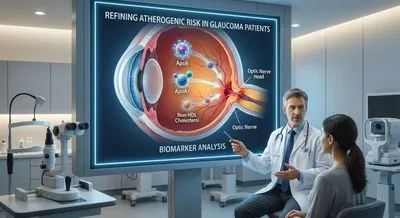
ApoB, ApoA1, and Non-HDL Cholesterol: Refining Atherogenic Risk in Glaucoma Patients
For example, a recent expert consensus noted that “ApoB…represents the total concentration of atherogenic lipoprotein particles” and “more accurately...
Deep research and expert guides on maintaining your visual health.
For example, a recent expert consensus noted that “ApoB…represents the total concentration of atherogenic lipoprotein particles” and “more accurately...
Visual field loss from conditions like glaucoma can go unnoticed. Start a free trial and screen for potential blind spots in minutes.
Non-HDL cholesterol is the total amount of cholesterol carried by all the lipoproteins that can clog arteries, calculated by subtracting good HDL cholesterol from total cholesterol. This measure includes LDL, VLDL, IDL, and other particles that carry cholesterol into artery walls and contribute to plaque formation. Because it captures every atherogenic particle, non-HDL cholesterol is often a better indicator of heart and vascular risk than LDL cholesterol alone, especially when triglycerides are high. It is easy to obtain from a standard lipid panel and does not require fasting in most cases, making it convenient for routine care. Clinicians use non-HDL targets to set treatment goals and to decide whether lifestyle changes or medications are needed. Lowering non-HDL cholesterol through diet, physical activity, weight loss, and cholesterol-lowering medications reduces the chance of heart attacks and strokes. Because it reflects a broader range of harmful cholesterol-carrying particles, monitoring non-HDL can give a clearer view of treatment progress. People with conditions like diabetes, obesity, or high triglycerides should pay particular attention to non-HDL levels because their LDL numbers can be misleading. As a simple and practical measure, non-HDL cholesterol helps both patients and clinicians make informed decisions about protecting long-term vascular health.