
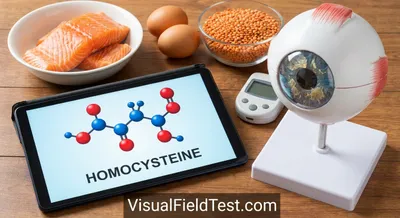
Protein Intake, Homocysteine, and Pseudoexfoliation Glaucoma Risk
Controlled diet studies in healthy volunteers show exactly this relationship: an 8-day high-protein diet (about 21% of energy from protein, versus...
Deep research and expert guides on maintaining your visual health.
Controlled diet studies in healthy volunteers show exactly this relationship: an 8-day high-protein diet (about 21% of energy from protein, versus...

Cells constantly balance between building up structures and recycling damaged parts. mTOR is a Master growth sensor: when nutrients are abundant,...

Current research has focused on three NAD precursors: nicotinamide (vitamin B₃), nicotinamide riboside (NR), and nicotinamide mononucleotide (NMN)....
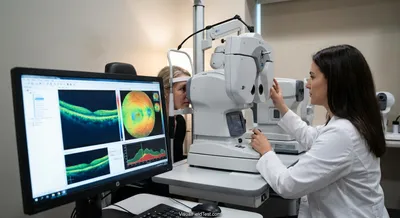
Each OCT result comes with color-coded maps and numbers. Green usually means “within normal limits,” yellow means “borderline,” and red indicates...

Below we explain how these new treatments work, who might benefit, and how they compare to traditional drops. We focus on the options most talked...

Endothelin-1 (ET-1) is made by cells lining blood vessels throughout the body, and it helps regulate normal blood pressure and flow. In the eye, ET-1...

Substance P (SP) is a signaling molecule made by nerve cells. When nerves are irritated or injured, they release Substance P into the surrounding...

In a rabbit glaucoma model (pressure raised by a gel in the eye), researchers injected NGF around the eye (retrobulbar) before damage. Those rabbits...

Evidence suggests that T cells (a type of white blood cell) reacting against HSPs can harm the optic nerve. For example, patient studies have found...

ET-1 is produced by many eye tissues (retina, ciliary body, trabecular meshwork, etc.). It normally helps regulate blood flow and aqueous humor...

In 2015, researchers discovered MOTS-c – a 16-amino-acid peptide encoded in mitochondrial DNA (mtDNA) (). It is produced from a short open reading...

Indeed, multiple studies have found senescence markers in RGCs and optic nerve tissue in glaucoma models. Notably, removing those old RGCs has been...

The retina, especially RGCs, is a highly active tissue that needs a lot of energy to work. This energy comes from tiny structures in cells called...

Even if you load up on pyruvate, an inactive body won’t convert it to extra ATP unless it’s needed. Instead, the surplus pyruvate enters normal...

What the study found: A new research report suggests that tiny leaks in tiny blood vessels in the eye may contribute to glaucoma damage. In simple...

One new idea is that damage to small retinal blood vessels might contribute to glaucoma. Normally, the tiny blood vessels in the retina have tight...

The April 2026 trials can be grouped by their main intervention modality:

Earlier trial results. A recent Phase III study (NCX 470) and others confirmed that combined outflow enhancers can beat traditional drops. For...
Screen your peripheral vision from home — no downloads, no waiting rooms. Sign up for a free trial and test in under 5 minutes.
Glaucoma is a group of eye conditions that damage the optic nerve, which carries visual information from the eye to the brain. The damage is often linked to higher pressure inside the eye, but it can also happen when pressure is normal. At first, vision loss is usually gradual and affects side vision, so many people do not notice it until the condition is advanced. Left untreated, glaucoma can cause permanent blindness because nerve cells in the retina and their connections are lost. Doctors diagnose glaucoma with eye pressure checks, optic nerve exams, and tests that measure peripheral vision. Treatments focus on slowing or stopping nerve damage, most commonly by lowering eye pressure with drops, lasers, or surgery. Because nerve damage is usually irreversible, early detection and regular eye exams are very important. Researchers are also exploring treatments that protect nerve cells directly and improve blood flow to the optic nerve. Lifestyle steps such as controlling blood pressure and avoiding smoking may help lower risk, but medical follow-up is essential. Understanding glaucoma matters because it is a leading cause of preventable blindness worldwide and can often be managed when found early.