
General Resistance Training and Glaucoma: Building Strength While Managing IOP Spikes
Introduction: Strength training is a proven way to boost fitness, control weight, improve blood sugar and blood pressure, and build muscle and bone – benefits that reduce risk of diabetes, heart disease, and falls in older adults (pmc.ncbi.nlm.nih.gov) (pmc.ncbi.nlm.nih.gov). However, for people with glaucoma (a disease caused by damage to the optic nerve, often from high eye pressure), heavy lifting can briefly spike intraocular pressure (IOP) inside the eye. Since high IOP is the main modifiable risk factor for glaucoma progression (pmc.ncbi.nlm.nih.gov), we must find a balance: enjoy the health perks of resistance exercise while keeping IOP under control.
Why Strength Training Matters
Resistance exercises (like lifting weights or using bands) help maintain metabolic health and strength as we age. Regular strength training lowers body fat and abdominal obesity, improves insulin sensitivity and blood sugar control, and even modestly reduces blood pressure (pmc.ncbi.nlm.nih.gov). This combats features of metabolic syndrome (which raises diabetes and heart disease risk). Strength workouts also fight sarcopenia (age-related muscle loss) and osteoporosis (bone thinning), keeping older adults stronger and more independent (pmc.ncbi.nlm.nih.gov) (pmc.ncbi.nlm.nih.gov). Importantly, studies show that stronger muscles and better balance from resistance training dramatically reduce fall risk in seniors (pmc.ncbi.nlm.nih.gov). In short, smart strength training can improve overall health, mood and quality of life while helping prevent fractures.
How Lifting Affects Eye Pressure
Although exercise often lowers IOP after a workout, heavy or strained lifting can acutely raise IOP. We briefly review key findings: dynamic (moving) versus isometric (static hold) lifts, load intensity, breath-holding, and head position.
-
Heavy vs. Moderate Loads: Multiple studies find that heavier weights cause bigger IOP spikes. For example, one review noted that lifting heavy loads and using multi-joint exercises (like squats or bench press) produced the greatest IOP increases (pmc.ncbi.nlm.nih.gov). In a leg-press study, lifting 95% of one’s max (1RM) caused IOP jumps of ~27 mmHg on average, reaching ~40 mmHg absolute (pmc.ncbi.nlm.nih.gov) – well above normal (often ~12–15 mmHg). Even moderate heavy sets (6 reps at 75% 1RM) raised IOP by ~24 mmHg (pmc.ncbi.nlm.nih.gov). By contrast, lighter weights cause smaller spikes. One analysis suggests that using only 20–30% of 1RM (often combined with blood-flow restriction) can still build muscle but with much lower pressure changes (pmc.ncbi.nlm.nih.gov). In practice, choosing moderate weights (e.g. starting around half to two-thirds of your 1RM) and doing more repetitions tends to produce smaller IOP rises than max-effort lifts.
-
Dynamic vs. Isometric Lifting: Both moving exercises and static holds can raise IOP, but their effects may differ. A study comparing three types of leg exercises found that maximal lifts (1 rep at 95% 1RM) and a static isometric push against an immovable load both caused similar large IOP spikes (≈27–29 mmHg increase), whereas multiple reps at 75% (6RM) caused slightly smaller spike (≈24 mmHg) (pmc.ncbi.nlm.nih.gov). In other words, holding a heavy weight still causes dramatic pressure jumps comparable to lifting heavy. Earlier work with bench press showed the same: just lifting a heavy weight caused IOP to rise by a few mmHg – but if the trainee held their breath (turning it into a quasi-isometric effort), the increase was even larger (jamanetwork.com). In summary, static straining (isometric effort) tends to raise IOP very sharply, often as much or more than dynamic lifts (pmc.ncbi.nlm.nih.gov) (jamanetwork.com).
-
The Valsalva Maneuver (Breath-Holding): Holding your breath while straining (the Valsalva maneuver) hugely increases IOP. Studies show that any effort involving a closed-glottis strain drives up chest and abdominal pressure, which transmits to the eye. In some reported cases, brief Valsalva maneuvers shot IOP over 40–50 mmHg (pmc.ncbi.nlm.nih.gov). One bench-press study found that breath-holding during the lift raised mean IOP by ~4.3 mmHg (range up to +17.7 mmHg), vs only +2.2 mmHg when breathing normally (jamanetwork.com). In practical terms, never hold your breath or strain forcefully while lifting: exhale on the exertion. Even gentle Valsalva (like a deep breath) can add several mmHg of pressure (pmc.ncbi.nlm.nih.gov), so staying relaxed and breathing steadily is critical.
-
Body Position (Head-Down Lifts): Inverted or head-down positions greatly elevate IOP. Yoga studies show that poses like downward dog or plow increase eye pressure substantially (glaucoma.org). One analysis noted that even a modest head-down tilt rapidly elevates IOP and keeps it high for minutes (pmc.ncbi.nlm.nih.gov). In practice, exercises that put your head below your heart (bending far forward, inverted lifts, or lying flat on back) should be minimized. For example, when performing lower-body lifts like leg presses, keep an upright neck and avoid deep forward bends. In yoga and other routines, avoid prolonged inverted poses (e.g., downward-facing dog, seated forward fold, headstands) (glaucoma.org) (glaucoma.org).
In summary: Strenuous lifting (heavy loads plus Valsalva plus poor head position) causes large IOP spikes. But controlled, moderate-intensity training (no breath-holds, upright posture) limits those spikes.
Safe Strength-Training Guidelines
The good news: you can still lift weights safely with glaucoma by following a careful protocol:
-
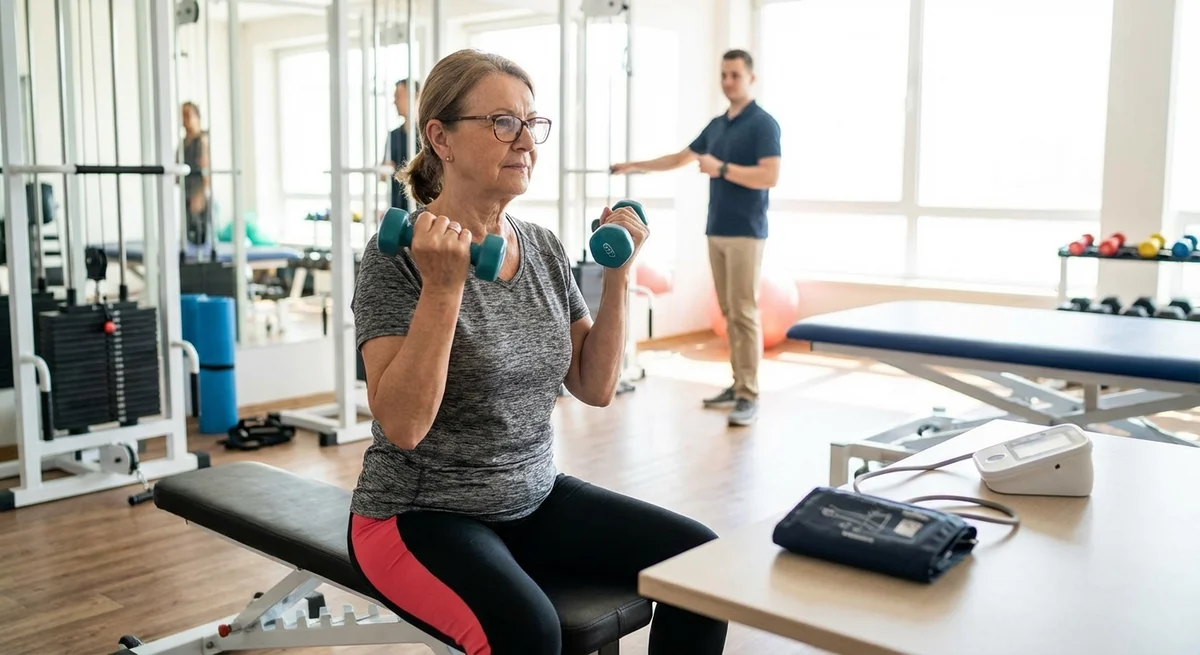
Moderate Loads & Higher Reps: Use submaximal weights (for example, weights you can lift 10–15 times instead of 1–5 times) (pmc.ncbi.nlm.nih.gov) (pmc.ncbi.nlm.nih.gov). A sensible target is 5–8 exercises for major muscle groups, performing 10–15 repetitions per set, at roughly 50–70% of your 1RM (pmc.ncbi.nlm.nih.gov) (pmc.ncbi.nlm.nih.gov). (In contrast, avoid very heavy singles or low-rep sets at 80–90% loads.) Moderate weight means the effort feels challenging but not maximal. For example, leg-pressing or squatting with half your maximum weight will cause far smaller pressure rises than straining with near-maximal loads (pmc.ncbi.nlm.nih.gov) (pmc.ncbi.nlm.nih.gov).
-
Breathing (No Valsalva): Exhale steadily during the lifting (strain) phase and inhale on the return. Never hold your breath. (A telling study found bench-press IOP increases went from ~2 mmHg to ~4 mmHg simply by breath-holding (jamanetwork.com).) Good rhythm (exhale when pushing/pulling) prevents the big pressure surges of breath-holding.
-
Avoid Straining or ‘Max Effort’: Stop each set well before “failure.” Do not push the last rep if it forces you to gasp or hold breath. Avoid maximal static holds entirely. (Even a 10-second all-out leg push spiked IOP ~28 mmHg in one study (pmc.ncbi.nlm.nih.gov).) In practice, choose weights that allow comfortable breathing and form throughout each set. If you find yourself gripping near-max and feeling pressure build-up, lighten the load or skip that set.
-
Proper Positioning: Keep your head level or higher than your heart. Perform exercises standing, seated, or lying face-up, not prone or inverted. Avoid exercises that tuck your chin to chest or tilt head down (e.g. deep forward barbell bends or certain plank variations). If using machines like a leg press or seated row, ensure you aren’t arching or bending low in a way that lowers the head too much.
-
Rest Between Sets: Allow at least 1–2 minutes of rest between sets. Research has shown that IOP spikes during a lift normalize within seconds after stopping (pmc.ncbi.nlm.nih.gov). Giving brief rest (and breathing calmly) lets your eye pressure return to baseline before the next set.
-
Monitor Effects: Pay attention to any symptoms like eye pain, blurred vision, or “halos” during or after exercise. These could signal unsafe pressure spikes. It’s wise to get a baseline IOP check and then discuss your exercise plan with your eye doctor. Portable home tonometers are uncommon, but be vigilant about eye symptoms and follow your doctor’s advice on regular pressure checks. Always stop the exercise if you feel strained and see a sudden change in vision.
Weighing Benefits vs. Risks
While heavy lifting can raise concern, remember the overall benefits of being active. Moderate strength training can lower IOP over time and help your general health. Some studies show that after completing an exercise session (even resistance), IOP often drops below baseline and stays lower for a while (pmc.ncbi.nlm.nih.gov). Plus, fitter individuals tend to have smaller pressure spikes (pmc.ncbi.nlm.nih.gov).
Nonetheless, nobody suggests weightlifting is completely risk-free for glaucoma. In fact, several reviews caution that abrupt IOP surges could contribute to glaucoma progression (pmc.ncbi.nlm.nih.gov) (pmc.ncbi.nlm.nih.gov). Therefore, glaucoma patients are encouraged to exercise with care. Regular cardiorespiratory exercise (walking, cycling, swimming) is clearly safe and beneficial (pmc.ncbi.nlm.nih.gov), and strength training can be included if done wisely.
Post-Surgery and Monitoring Advice
After any eye surgery (glaucoma surgery, cataract removal, retinal surgery, etc.), special care is needed:
-
Follow Your Surgeon’s Rules: Doctors vary by procedure, but common advice is to pause strenuous exercise for a period. For example, after refractive surgeries like LASIK, most surgeons recommend no heavy workouts for about 2 weeks (www.codetvision.com). After cataract surgery, patients are advised to avoid heavy lifting or head-below-waist activities for at least several days to a week (www.codetvision.com). After a trabeculectomy or glaucoma shunt, you might be told to avoid bending, straining or lifting any weight for several weeks (www.codetvision.com). These limits protect the healing eye from pressure spikes or strain that could disrupt surgical outcomes.
-
Gradual Return-to-Training: Once cleared by your eye doctor (often after 4–6 weeks), resume exercise very gradually. Start with light movements like walking or gentle cycling. You can then reintroduce very light weight/resistance sessions (e.g. bodyweight exercises or very light bands) after a month or so, checking in that you have no pain or visual issues. Only after about 6–8 weeks (or longer, depending on advice) should you attempt moderate weights, and only if your doctor confirms your eye is stable. When you re-start lifting, follow all the above safety guidelines (moderate load, careful breathing, etc.).
-
Ongoing Monitoring: Have your IOP and eye exams monitored regularly. It’s wise to discuss weight training with your ophthalmologist. They may advise more frequent pressure checks or pauses in training if your glaucoma is not fully controlled. Also, keep an eye out for warning signals: new blotches of vision (“floaters” or flashes), increasing blurriness, or eye pain mean you should stop exercise and seek care.
Conclusion
Resistance training can and should be part of a healthy lifestyle, even in glaucoma, because of its proven benefits for metabolism, strength and fall prevention (pmc.ncbi.nlm.nih.gov) (pmc.ncbi.nlm.nih.gov). The key is how you train. Avoid heavy, maximal lifts, breath-holding, and inverted positions, which cause IOP spikes (pmc.ncbi.nlm.nih.gov) (glaucoma.org). Instead, use moderate weights with more reps, breathe properly during each rep, rest adequately between sets, and steer clear of pushing to failure. By following a careful protocol, many people with glaucoma can safely build strength without unduly raising their eye pressure. Always communicate with your eye doctor about your workout routine, especially after any eye surgery, and watch your eyes for any changes. With smart training and monitoring, you can preserve both your vision and your health.