
A New Glaucoma Drug Study Is Starting: Could an Oral Cannabinoid Help Lower Eye Pressure?
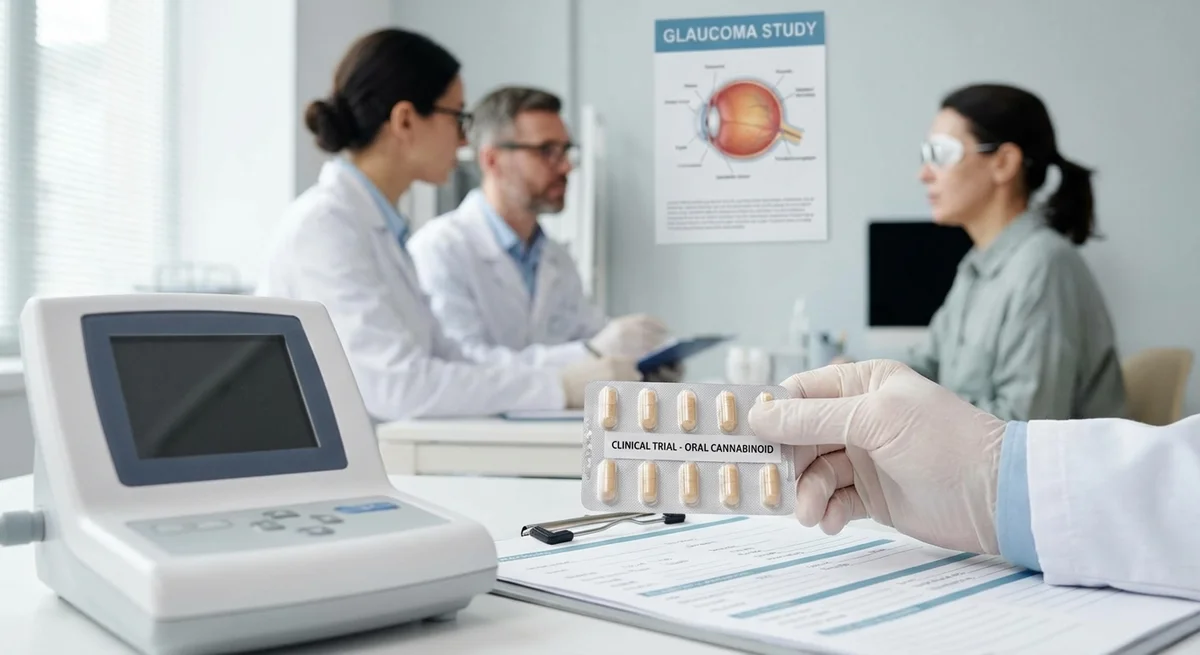
Some patients may have seen news on March 18, 2026 about a new drug trial for glaucoma and wondered what it means. It’s about a medicine called ART27.13, an experimental oral drug aimed at lowering eye pressure in people with glaucoma or ocular hypertension. In simple terms, this is only a research study. The drug is not FDA-approved or proven to work yet. It is being tested to see if it can safely lower the pressure inside the eye.
Before we dive in, let’s remember why eye pressure matters. Glaucoma is a group of eye conditions where high pressure or poor blood flow damages the optic nerve at the back of the eye. That nerve damage causes vision loss. Once vision is lost from glaucoma, it cannot be restored (uwaterloo.ca) (www.thedailystar.net). So doctors focus on slowing the damage, not fixing it. The only proven way to slow glaucoma is by lowering the pressure in the eye (pmc.ncbi.nlm.nih.gov). Today this is usually done with eye drops or surgery. A new study is exploring whether ART27.13, an oral drug, can join these treatments.
What Is ART27.13?
ART27.13 is the code name for a new experimental drug. It is related to cannabinoids – the kinds of active compounds found in the cannabis plant – but it is specially made in a lab. It is taken by mouth (an oral tablet). The reason researchers are interested is that some cannabinoids can lower eye pressure. However, ART27.13 is not just cannabis. It is designed to work mainly outside the brain. In other words, it should not make someone feel high or have the same effects as marijuana. Scientists hope it targets only the eye and body tissues involved in pressure. No one can take ART27.13 outside a doctor’s study right now – it’s only being given to volunteers in the trial.
Remember: this is early clinical research. ART27.13 is not an approved medicine yet. It is being studied to see if it is safe and if it can lower eye pressure. We do not know if it will help; that is exactly what the trial is meant to find out.
Why Are Cannabinoids of Interest in Glaucoma?
Cannabinoids have a long history in glaucoma research. Many people know that marijuana can lower eye pressure a bit (at least for a few hours). In fact, cannabis and related compounds have been known since the 1970s to temporarily reduce intraocular pressure (pmc.ncbi.nlm.nih.gov). Studies show that taking THC or synthetic cannabinoids by mouth can drop pressure by up to about 10–30%, but only for a few hours (pmc.ncbi.nlm.nih.gov). After that, the pressure goes back up. (One review found the maximum drop at 2–4 hours after dose, and it stopped in 3–4 hours (pmc.ncbi.nlm.nih.gov) (pmc.ncbi.nlm.nih.gov).)
Because of this, some researchers wondered if certain cannabinoids could help with glaucoma. Cannabinoids also have other effects that might help: they can improve blood flow to the optic nerve and may reduce inflammation. But there are problems with using ordinary cannabis. The drop in eye pressure is short-lived and would require dosing many times a day (pmc.ncbi.nlm.nih.gov) (pmc.ncbi.nlm.nih.gov). Meanwhile, marijuana causes side effects like feeling “high,” tiredness, and faster heartbeat. Because of that, eye doctors do not use medical cannabis to treat glaucoma. As one eye specialist explained, most glaucoma doctors believe “marijuana is really ineffective” for treating the disease (www.aoa.org).
This history has made the topic confusing for patients. On one hand, you might hear that “cannabis lowers eye pressure.” That is true technically. But you also hear that it’s not a real cure for glaucoma. For example, a recent expert review found no clear benefit of cannabis for glaucoma – it concluded there is only limited evidence and even suggested cannabinoids are not effective at improving eye pressure (www.aoa.org). In short, the hype around cannabis and glaucoma has often outpaced the science. Many claims about marijuana curing glaucoma come from old or incomplete data (www.aoa.org) (pmc.ncbi.nlm.nih.gov). That is why a carefully designed drug trial like this one is needed: to test a specific compound and measure its effect.
How Is ART27.13 Different from Medical Cannabis?
It’s important to stress that ART27.13 is not the same as using medical marijuana. Medical cannabis usually means whole-plant products or extracts that contain things like THC and CBD. Those can cause a psychoactive effect (the “high”). ART27.13, by contrast, is a single molecule drug. Think of it like the difference between a plant tea and a specific medicine pill. This drug is made so that it can’t get into the brain easily. In effect, it should act only on the eye and body. The goal is that patients won’t feel any mind-altering effects.
For context, the FDA has approved a few cannabinoid-based drugs in other fields (for example, synthetic THC pills called dronabinol or nabilone, and a pure CBD medicine). But those are used for things like nausea from chemotherapy, not for glaucoma (pmc.ncbi.nlm.nih.gov). In glaucoma, an oral pill like ART27.13 is very different from smoking or eating cannabis. It’s a new chemical aimed only at the eye’s pressure system.
The New Study: What Was Announced in March 2026
In March 2026, researchers announced that they have approval to begin a clinical trial of ART27.13 for glaucoma and ocular hypertension. Here are the key facts of this study:
- Investigator-Sponsored: It is led by doctors and scientists (likely at a university or hospital) rather than by a pharmaceutical company. This often means it is a smaller, carefully controlled trial.
- Randomized, Crossover Design: The study will randomly assign participants to get either ART27.13 or a placebo for a time, and then switch (crossover) to the other treatment. This way, each participant acts as their own comparison. Researchers use this design to fairly compare the drug’s effect to no treatment.
- Regulatory Approval: The trial has been approved by an ethics board (to protect participants) and by the UK’s Medicines and Healthcare products Regulatory Agency (MHRA). This means it meets safety and quality rules for clinical research.
- Timeline: The announcement said the study plans to enroll its first patient in the second quarter of 2026. That means they hope to start seeing patients around spring 2026.
It’s worth repeating: this trial is just beginning. No results are available yet. The doctors are checking if ART27.13 is safe and whether it can lower eye pressure in people. At this stage, it is exploratory clinical research.
Could ART27.13 Help Lower Eye Pressure?
The hope is that it could. We know by experience that the eye’s pressure can be reduced by working on the same system that cannabinoids affect. Past experiments (like giving volunteers THC or related drugs) did see a modest pressure drop (pmc.ncbi.nlm.nih.gov). Because ART27.13 is a carefully made cannabinoid, scientists think it might also lighten the fluid pressure in the eye. If the drug proves to safely cause a significant pressure drop, then in theory it could help protect vision over time (since lowering pressure is the only proven way to slow glaucoma (pmc.ncbi.nlm.nih.gov)).
However, we do not yet know if ART27.13 actually works this way. Early studies can only tell us about safety and possible effects. Even if pressure goes down a bit, doctors will need larger studies to confirm the benefit. That’s why this trial is small and initial. Right now, we can’t say it will lower pressure – we have to wait for the study results.
Is ART27.13 the Same as Using Medical Cannabis?
No. ART27.13 is not the same as smoking or using marijuana or other cannabis products. The term “medical cannabis” generally refers to cannabis plant or plant extract containing THC, CBD, and other compounds. ART27.13 is a single laboratory-made compound. Taking medical cannabis (by smoking, oil, or tincture) often involves psychoactive THC and variable other chemicals – plus legal and health issues. By contrast, ART27.13 is a pill made to target eye pressure specifically.
Putting it another way, if you have glaucoma, using marijuana is not the same as enrolling in this study. In fact, eye doctors do not recommend glaucoma patients rely on marijuana. As noted above, studies and experts say marijuana’s effects on glaucoma are not reliable or long-lasting (pmc.ncbi.nlm.nih.gov) (www.aoa.org). The ART27.13 study is testing a far more precise approach.
Could It Restore Lost Vision?
No. Like all glaucoma treatments, ART27.13 (if it works) would only slow further damage, not bring back vision already lost. Glaucoma damages the optic nerve, and nerve cells do not grow back. Many eye doctors point out that glaucoma causes irreversible vision loss (uwaterloo.ca) (www.thedailystar.net). That’s why the key goal is to preserve existing vision by lowering pressure. If ART27.13 can lower pressure, it might help slow new damage, but it cannot make blind areas of vision come back.
Why This Got Attention
This news got a lot of attention for a few reasons. First, any story that mentions glaucoma and a new drug grabs interest from patients eager for breakthroughs. Second, the word cannabinoid in an eye treatment is eye-catching. Many people have heard bits and pieces about cannabis and eye pressure, which creates curiosity (and confusion).
Media outlets know that inside and outside medicine, “cannabis” sells headlines. Articles often play up the idea of cannabis for glaucoma, even though the scientific answer is unclear (www.aoa.org). So when a press release speaks of an “oral cannabinoid” for glaucoma, it sounds like big news. Patients and families who have struggled with glaucoma hear this and naturally wonder if it’s the long-awaited cure. That interest is understandable — but it’s also why the story needs careful explanation.
Why Patients Should Stay Careful with the Headlines
It’s important not to jump to conclusions from early news. This study is just starting, and it does not mean ART27.13 is effective or approved. Headlines may simplify things: “cannabis helps glaucoma,” for example, is a phrase you might see, but that is not proven. In reality, most eye specialists say exactly the opposite in terms of glaucoma management. As one doctor put it bluntly, “Marijuana is really ineffective in the management of glaucoma” (www.aoa.org).
The confusion comes from mixing up a few facts. Yes, cannabinoid chemistry can lower pressure briefly — but it’s not a treatment that doctors currently use for glaucoma. Headlines can gloss over the fact that this is an early trial, not a success story. For now, ART27.13 has been announced for study, but no patient data are public. Glaucoma patients should continue their regular treatments and follow-up with their eye doctors.
In short: Stay careful with the excitement online. This announcement is newsworthy, but it’s not the end of the story. Researchers himself emphasize caution. Until the study is done, we won’t know if ART27.13 really does anything useful for glaucoma. Eye doctors always say: watch out for claims that sound too good to be true.
What Would Need to Happen Next If This Drug Shows Promise
If this trial finds that ART27.13 substantially and safely lowers eye pressure, it would be a first step. The next steps would be typical for any new medicine. The researchers would need to do larger studies (often called Phase II and Phase III trials) involving more patients and many clinics. These would confirm the effect and look for any rare side effects. Only after robust evidence in those trials could the company or investigators apply for official approval. That process can take years of work.
In other words, even if ART27.13 looks promising, it would still be a long road before it could become a real treatment option. Patients should watch for future study results but continue trusting the glaucoma treatments their doctors have recommended.
Key Takeaway: ART27.13 is an experimental oral drug derived from cannabinoid chemistry. It is now being tested in a carefully approved clinical trial (starting around spring 2026) to see if it can safely lower eye pressure in glaucoma. This is early research, not a cure. While cannabinoids have known pressure-lowering effects, those were short-lived and not practical as therapy (pmc.ncbi.nlm.nih.gov) (pmc.ncbi.nlm.nih.gov). ART27.13 is made to avoid psychoactive side effects, but its effectiveness is still unknown. Keep an eye on updates, but for now rely on proven treatments to protect vision.
Sources: Research and expert reviews on cannabinoids and glaucoma (pmc.ncbi.nlm.nih.gov) (pmc.ncbi.nlm.nih.gov); official glaucoma patient information (uwaterloo.ca) (www.thedailystar.net); Eye care professional publications on cannabis (www.aoa.org) (pmc.ncbi.nlm.nih.gov); press coverage of the new study announcement.