
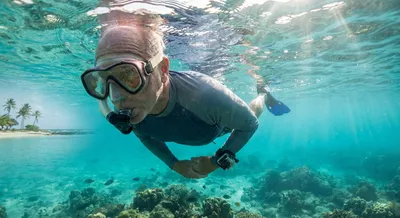
Snorkeling and Glaucoma: Gentle Aquatic Activity with Mask and Sunlight Considerations
Importantly, snorkeling is mostly done at the surface where the water pressure is nearly the same as on land, so you avoid the pressure changes of...
Deep research and expert guides on maintaining your visual health.
Importantly, snorkeling is mostly done at the surface where the water pressure is nearly the same as on land, so you avoid the pressure changes of...
Track peripheral vision changes between eye doctor visits. Start your free trial and get results in under 5 minutes.
Snorkeling is a simple way to observe life underwater by swimming at the surface with a mask and a breathing tube called a snorkel. The mask lets you see clearly beneath the water, while the snorkel allows you to breathe without lifting your head. People often use fins for easier movement and a rash guard or wetsuit for sun and cold protection. It is usually done in calm, shallow water where there is good visibility and interesting things to see, like fish and coral. Because it requires little special training, snorkeling is popular with beginners and families who want an accessible ocean experience. Fit is important: a well-fitting mask prevents leaks and a comfortable snorkel helps you breathe easily and stay relaxed. Always be aware of water conditions, currents, and boat traffic, and consider wearing a flotation aid if you are not a strong swimmer. Protect your skin and eyes from the sun, and avoid touching or standing on reefs to prevent damage to delicate marine life. Rinse and dry your gear after use, and store it properly to prolong its life and keep it sanitary. With basic safety steps and respect for the environment, snorkeling offers a peaceful, close-up way to enjoy the underwater world.