
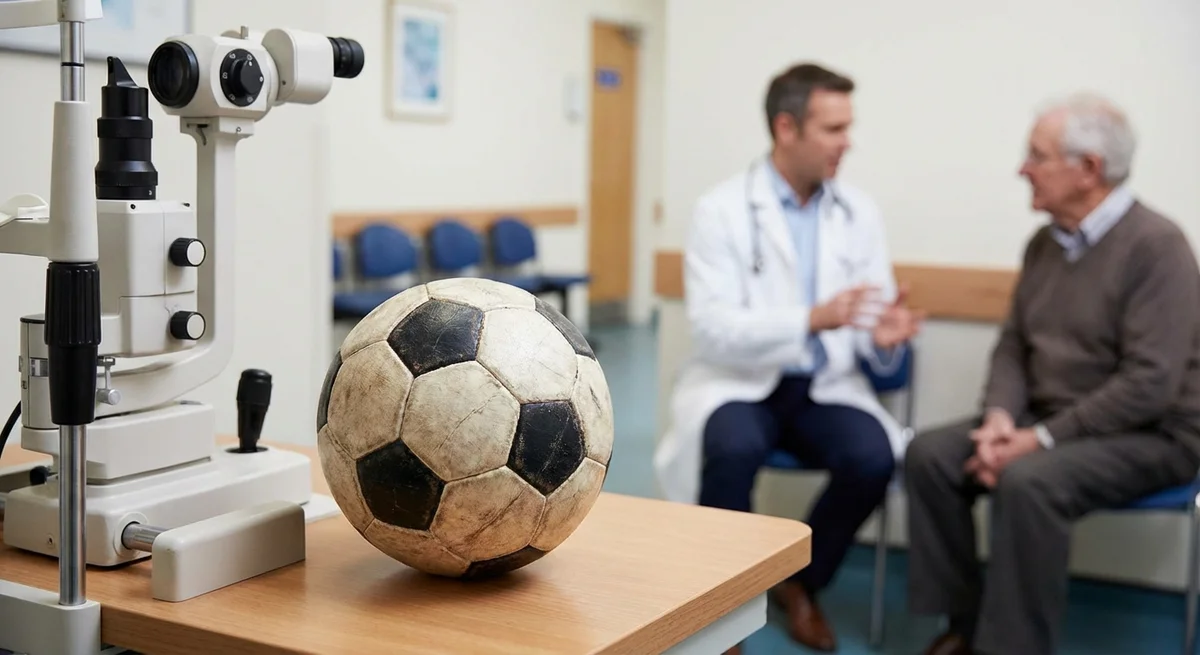
Soccer and Glaucoma: Endurance Gains Amid Collision Risks
Soccer is a vigorous team sport that combines aerobic exercise with short bursts of sprinting. For people with glaucoma, the question arises: are the fitness and social benefits of soccer worth the potential eye risks? On one hand, regular running and teamwork can boost cardiovascular health, lower eye pressure, and even slow glaucoma progression. On the other hand, soccer involves collisions, flying balls, and outdoor exposure that can injure the eyes. Below we explore how soccer’s intermittent exercise affects intraocular pressure (IOP), balance those health gains against eye injury hazards (from headers, kicks or weather), and suggest practical ways to play safely.
Aerobic Fitness and Team Benefits
Playing soccer provides excellent cardiorespiratory exercise. The running, jogging, and game movement substantially raise heart rate and build endurance. Research shows that moderate aerobic exercise can lower intraocular pressure, the key risk factor in glaucoma. For example, a study found that 15 minutes of treadmill running reduced average eye pressure from about 14.9 mmHg to 11.1 mmHg immediately after exercise (pmc.ncbi.nlm.nih.gov). Likewise, a glaucoma foundation article notes that activities like walking, running or swimming “stand out for their ability to significantly lower IOP” (glaucoma.org). Over time, keeping IOP lower helps protect the optic nerve from damage.
In large population studies, physically fit people developed glaucoma at much lower rates. In one long-term study of nearly 30,000 male runners, better fitness and more exercise were linked to sharply reduced glaucoma risk (pmc.ncbi.nlm.nih.gov) (pmc.ncbi.nlm.nih.gov). Runners who could maintain a fast pace (over 5.0 m/s) had virtually no cases of new glaucoma (pmc.ncbi.nlm.nih.gov). In another study of over 9,500 adults, those who met the recommended exercise guidelines (at least 500 MET-minutes/week) had only about half the glaucoma risk of inactive people (pmc.ncbi.nlm.nih.gov). Even having good overall fitness (high cardiorespiratory fitness) cut glaucoma risk by ~40% (pmc.ncbi.nlm.nih.gov). These findings suggest that soccer’s regular endurance exercise – similar to running – can be protective for eye health in the long run.
Beyond the raw numbers, soccer also boosts general wellness and team spirit. Playing on a team encourages discipline, social support, and stress relief. Exercise and camaraderie help reduce stress hormones, which may indirectly benefit eye pressure control. Many patients find that the fun and motivation of team sports makes it easier to stick with an exercise routine. In short, for a patient cleared to play, soccer offers the fitness and psychological rewards of a team sport, which can contribute to overall health and potentially slow glaucoma progression (glaucoma.org) (pmc.ncbi.nlm.nih.gov).
Soccer’s Exercise and Eye Pressure
Soccer involves intermittent exercise: periods of running mingle with walking or resting, plus explosive sprints. How does this affect eye pressure? Studies suggest two relevant patterns:
-
Aerobic running lowers IOP: Continuous or moderate running tends to decrease eye pressure. The treadmill study above (pmc.ncbi.nlm.nih.gov) is one example. A larger analysis found that long-distance runners had stable or slightly lower post-exercise IOP (about 15.1 mmHg) compared to their baseline (pmc.ncbi.nlm.nih.gov). In contrast, weightlifters (a static, strain-heavy sport) showed significant IOP spikes (up to ~19.3 mmHg) (pmc.ncbi.nlm.nih.gov). The difference is likely due to breath-holding and straining in weightlifting raising blood pressure and eye pressure, while aerobic breathing in running keeps it down. Since soccer players breathe continuously during game running, much of soccer’s effect on IOP should resemble running – i.e., a net drop in pressure.
-
High-intensity bursts: The sprinting and jostling in soccer might cause brief IOP increases. A recent study noted that higher workout exertion correlated with higher immediate IOP (pmc.ncbi.nlm.nih.gov). In practice, a full-out sprint or colliding overhead might transiently jolt up pressure. Likewise, heading the ball can involve brief head motion. However, these short spikes are usually short-lived, and IOP falls again quickly after exertion (pmc.ncbi.nlm.nih.gov). Overall, the average effect of playing is positive. In fact, exercise-induced reductions in IOP tend to rebound close to normal after a few minutes (pmc.ncbi.nlm.nih.gov), giving a net benefit over time.
In sum, soccer’s mixed-intensity effort is likely safe for most glaucoma patients, as long as they avoid extreme straining. The key is that the aerobic component (endurance running) generally lowers eye pressure, just as it did in similar studies (pmc.ncbi.nlm.nih.gov) (glaucoma.org). Very intense short bursts might momentarily raise IOP, but for most players this does not outweigh the pressure-lowering effect of continuous play.
Tip: To maximize benefit, stay hydrated and use controlled breathing during play. Avoid holding your breath or bearing down (as in a heavy lift or a soccer goalie tensing too much). This helps keep IOP lower during intense runs or jumps.
Collision and Injury Risks
While soccer has clear cardiovascular upsides, it does carry eye injury risks:
-
Ball and body impacts: Soccer balls travel fast, and they often hit players in the face and eyes. In fact, one case report of an 18-year-old pro noted that even a routine training ball-to-face accident caused a complex injury: retina tears, a macular hole, lens damage, and vitreous bleeding, requiring emergency surgery (pmc.ncbi.nlm.nih.gov). The authors emphasize that in soccer “the ball [getting] kicked into a player’s face and eye…is usually innocuous, [but] there exist patients who present with complex, severe ocular injury” (pmc.ncbi.nlm.nih.gov). This underscores that while most hits are minor, serious damage can happen to the retina, iris, or even cause corneal abrasions. In a broad series of soccer eye injuries, the worst injuries came from the ball itself (the matches with retinal tears and bleeding).
-
Headers and head trauma: Repeated heading of the ball is a concern, though the data are mixed. One study of youth players found no cases of retinal bleeding from heading (over 270 headers observed) (pubmed.ncbi.nlm.nih.gov). The conclusion was that properly executed headers by themselves are unlikely to cause retinal hemorrhage (pubmed.ncbi.nlm.nih.gov). Still, any heavy or misdirected header can contribute to head impact forces. Apart from eye injury, repeated headers raise concerns about concussion symptoms (though that is beyond eye health). For glaucoma patients, caution is wise: avoid frequent headers, especially if the person has very fragile optic nerves. In fact, pediatric guidelines in some places already ban or limit heading, reflecting concern for young, developing eyes and brains.
-
Player contact (elbows, feet, fists): Soccer is a contact sport, and players often collide, sometimes unintentionally. Elbows, knees and even fingers can strike the eye. For example, accidental elbow or knee blows can lead to a black eye or corneal abrasion. One analysis found that a fingernail from an opponent caused the most serious eye injury in its series (jamanetwork.com). In practice, contact from players is common: defenders might swing a boot, a striker may jump into a goalkeeper, or a piece of metal post or eyewear can break. Any of these can hit the eye. While we lack specific new data on glaucoma interaction, we do know that any blunt trauma to a glaucoma eye can trigger spikes in eye pressure or bleeding (since the eye cannot handle force as well when nerves are compromised).
-
Environmental exposure (sun, heat, cold): Soccer is usually outdoors. Prolonged sun exposure can lead to glare, eye dryness, and long-term UV damage (cataracts, macular degeneration), though UV is not a known direct risk for glaucoma. Nonetheless, wearing UV-blocking sunglasses or a brimmed hat during bright play is smart common-sense. Extreme cold or wind can also affect the eyes: one glaucoma review noted that intense cold might bother patients with unstable blood flow to the eye (vascular dysregulation) (www.sciencedirect.com). For example, dryness and redness from a cold, windy field might cause discomfort or even temporary IOP fluctuations. Likewise, heat and dehydration can strain the body (though quick changes in IOP from heat are less documented). In summary, weather itself doesn’t cause glaucoma, but harsh weather can aggravate eye symptoms or risk collisions (like slippery turf).
Recommendations: Positions, Headgear, and Play Style
High-risk patients (advanced glaucoma, children, monocular vision) should be especially cautious. Here are some practical tips:
-
Position selection: There is no firm “safe” position in soccer, but consider roles that suit your comfort level. For instance, a midfielder or wing player may head the ball occasionally but often runs, whereas central defenders and strikers often deal with many aerial balls. Goalkeepers rarely head the ball, but they do face high-speed shots and dives. Some coaches advise that players with eye issues avoid center-back or striker duties (which see more contact) and instead play positions where they can focus on running and passing. Ultimately, discuss with your doctor and coach: they can help you find a role that minimizes high-impact collisions while letting you enjoy play.
-
Avoiding headers if at risk: If you or your child have advanced glaucoma or are very cautious, simply avoid heading practice. Focus on ground passes and controlling the ball with feet or chest. Note that youth soccer guidelines (e.g. USA Soccer, US Youth Soccer) already limit heading in young children, reflecting concerns about head impacts. For safety, skip any intentional headers and drop out of drills or games where balls are being chested or headed at eye level.
-
Protective eyewear: Proper eye protection can make a huge difference. Any sports eyewear should be made of impact-resistant polycarbonate and meet standards like ASTM F803 (the approved standard for sports goggles) (pmc.ncbi.nlm.nih.gov). Sports goggles with snug straps will absorb shocks from flying balls or elbows. Note that regular glasses or sunglasses are not enough – they shatter on impact. Polycarbonate lenses are specially made for sports: they are about 8 times stronger than regular lenses and block almost all ultraviolet light (www.aafp.org). Even if you normally wear prescription glasses, get a proper sports prescription goggle. Many are available that fit under a helmet or headband. Importantly, well-made sports goggles do not impede vision or performance (www.sportsvision.pro). In fact, research notes that athletes wearing proper protective eyewear can play freely without worrying about eye injuries (www.sportsvision.pro).
-
Contact lenses: If you wear contacts, properly fitted ones are fine for soccer, but they offer no impact protection and can be scratched or dislodged easily. They do not block UV. Consider having a spare pair with you, and use lubricating drops if your eyes get dry in wind. Some players prefer daily disposable contacts so that dust or debris does not build up over a match.
-
Sun and weather protection: Wear a wide-brimmed hat or a cap during sunny practice, and apply UV-blocking sunglass (that also meet safety impact specs) to reduce glare. For cold or windy play, keep eyes moist with lubricating drops and perhaps wear a thin beanie. In any temperature extremes, make sure to stay hydrated and post-play give your eyes a rest.
-
Headgear (helmets or face guards): Soccer generally has no hard helmets, but some players use a soft padded headband to cushion minor head bumps. This won’t stop a fast ball, but it can soften light collisions and keep hair/forehead sweat out of your eyes. It will not protect the eye itself, though.
-
Medical clearance: Before playing, get a comprehensive eye exam. Discuss with your ophthalmologist how severe your glaucoma is and whether any visual field loss affects your ability to play safely. If you have glaucoma in one eye only, emphasize protecting the other eye. Your doctor may recommend more frequent monitoring if you begin contact sports. Always report any head or eye trauma immediately – even if pain is mild – because quick treatment (as in the case report (pmc.ncbi.nlm.nih.gov)) can save vision.
Risk-Benefit Summary and Checklist
Balancing act: For most glaucoma patients, moderate soccer is a net positive if precautions are taken. The benefits – improved fitness, lowered eye pressure, better blood flow and mood – are real (glaucoma.org) (pmc.ncbi.nlm.nih.gov). The risks – blunt eye trauma from balls, hands or collisions – can usually be mitigated. By choosing the right position, avoiding risky plays (like aggressive headers), and wearing quality eye protection, many players safely enjoy the game. Serious eye injuries in soccer are uncommon, but they do occur, so it’s wise to be prepared.
Equipment Checklist: To play as safely as possible, consider the following gear and practices:
- ASTM F803 sports goggles: Polycarbonate eye protectors designed for soccer (and other sports) absorb impacts and block UV light. They should fit snugly and have a secure strap (pmc.ncbi.nlm.nih.gov) (www.aafp.org).
- Prescription inserts: If you use glasses or contacts, get a sports-vision prescription built into the goggles. Never wear standard glasses without protection on the field.
- Sunglasses (UV blocking): High-quality sunglasses or tinted athletic goggles will protect against glare and UV during daytime matches (www.aafp.org).
- Protective headgear: A soft padded headband can cushion light frontal blows. Mouthguards are not needed for the eyes, but ensure all other gear is in good condition.
- Hat/visor: For outdoor practice in sun, a cap can reduce glare. In cold weather, a thermal cap keeps you comfortable (cold eyes can feel fuzzy).
- Hydration and breaks: Keep hydrated and cool down if overheated. Drink water regularly, as dehydration can stress your body.
- Eye drops: Lubricating artificial tears can alleviate dry, wind-blown eyes after play.
- Team doctor/trainer: If available, let the coach or team doctor know about your eye condition so they can help monitor and be ready if any injury occurs.
- Written clearance or emergency plan: Carry a card or medical note about your glaucoma medications in case a coach or trainer needs to know, and have an under-care ophthalmologist’s contact info available.
In conclusion, soccer’s endurance and team benefits often outweigh the risks for glaucoma patients, as long as safety measures are observed. With the right precautions – especially protective eyewear and avoiding risky moves – many patients can enjoy soccer’s health and social rewards without harm to their eyes. Always discuss exercise plans with your eye doctor, but know that moderate soccer play is generally compatible with glaucoma management (glaucoma.org) (pubmed.ncbi.nlm.nih.gov).