

GLP-1 Peptides and Glaucoma Risk: What We Know and What to Watch
A nationwide Danish registry study also found that GLP-1 agonist use was linked to a lower glaucoma risk. Compared to diabetic patients on other...
Deep research and expert guides on maintaining your visual health.
A nationwide Danish registry study also found that GLP-1 agonist use was linked to a lower glaucoma risk. Compared to diabetic patients on other...

Earlier trial results. A recent Phase III study (NCX 470) and others confirmed that combined outflow enhancers can beat traditional drops. For...

Some trials deliver genes encoding neuroprotective factors into the eye to help RGCs survive. For example, one approach uses a harmless viral vector...

Home readings can also serve as early safety signals. Protocols typically pre-specify pressure thresholds or warning rules. For instance, the...

For example, imagine a treatment that boosts the survival of optic nerve fibers or blocks harmful chemical processes in the nerve. If such a...
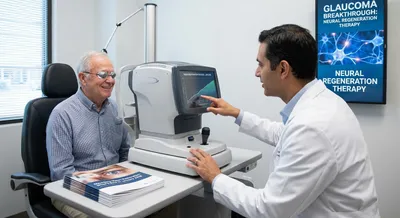
This article reviews the state of regenerative ophthalmology for glaucoma as of early 2026. We explain the new therapies under study, summarize any...

Gene therapies are also under study to deliver neurotrophic signals. One innovative approach engineered a permanently active version of the BDNF...

In the next few years, the emphasis will be on neuroprotection/neuroenhancement – therapies that aim to preserve or slightly improve the function of...

RGCs have extremely high metabolic demands and rely on robust mitochondrial function. In glaucoma, aging and chronic stress trigger progressive NAD+...

Senescent cells build up in key eye tissues. In the trabecular meshwork (TM), senescence stiffens the meshwork and increases resistance to fluid...

Animal research confirms that bilberry anthocyanins protect retinal cells by enhancing antioxidant systems and damping inflammation. In a rabbit...
Visual field loss from conditions like glaucoma can go unnoticed. Start a free trial and screen for potential blind spots in minutes.
Clinical trials are carefully planned research studies that test whether a medical treatment, device, or procedure is safe and effective in people. They follow strict rules and are coordinated by scientists, doctors, and regulators to protect participants and produce reliable results. Trials usually progress in phases: early phases check safety and dosing, while later phases compare the new intervention to standard care or a placebo to see if it works better. Common methods include random assignment, where participants are placed into groups by chance, and blinding, where patients and sometimes researchers do not know who received which treatment. Researchers measure predefined outcomes, such as symptom improvement, side effects, or biological markers, to determine benefit and risk. Before a trial starts, ethical review boards must approve the plan, and participants give informed consent to join with a clear understanding of possible risks and benefits. Clinical trials are essential because they provide the evidence that medicines and devices need to be approved and recommended. Even after approval, ongoing studies and monitoring keep checking for rare side effects or long-term outcomes, so well-conducted trials are the most reliable way to bring new medical advances into safe patient care.