
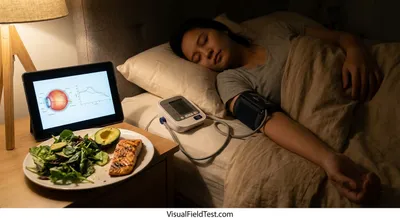
Low-Carb Diets and Nocturnal Blood Pressure Dips: Ocular Perfusion Risks and Benefits
Research has shown that excessive night-time hypotension is associated with glaucomatous damage. In fact, Hayreh and colleagues found that night-time...
Deep research and expert guides on maintaining your visual health.
Research has shown that excessive night-time hypotension is associated with glaucomatous damage. In fact, Hayreh and colleagues found that night-time...
For angle-closure glaucoma, the genetics are more complex and less clear-cut. This form depends on eye shape (shallow front chamber) more than one...

This article reviews all human studies on magnesium in glaucoma. Specifically, we look at trials and reports of magnesium levels or supplementation...
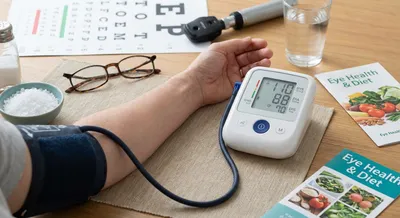
For example, a major review found “strong relationships between low ocular perfusion pressure and open-angle glaucoma” – in population studies, eyes...

SII = (Platelet count × Neutrophil count) / Lymphocyte count ().
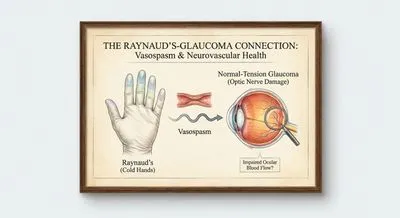
Raynaud’s phenomenon is a condition where cold or stress causes the small arteries in the fingers and toes to spasm and shut down blood flow (turning...
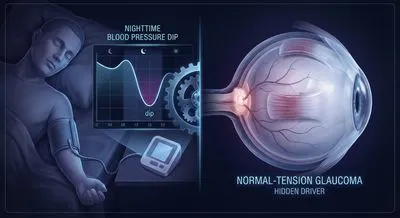
OPP is like the eye’s blood “fuel”. When systemic blood pressure (the “pump”) falls or eye pressure (“back pressure”) rises, OPP drops. Decades of...

Several clinical trials have tested whether oral PEA can help lower IOP in glaucoma or ocular hypertension. In these studies, patients usually...
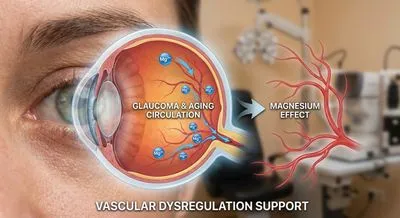
Magnesium influences blood vessels and endothelial function in several ways:

By contrast, larger reviews find no clear benefit on field metrics. A 2025 systematic review of 8 trials (428 subjects) concluded that GBE did not...
Track peripheral vision changes between eye doctor visits. Start your free trial and get results in under 5 minutes.
Normal-tension glaucoma is a form of glaucoma where the optic nerve becomes damaged and visual field loss occurs even though measured eye pressure stays within the normal range. People with this condition show the same characteristic optic nerve changes and vision loss as other types of glaucoma, but they do not have elevated intraocular pressure by standard office measurements. Because pressure readings look normal, this condition can be harder to recognize unless someone examines the optic nerve and tests visual fields carefully. Researchers think blood flow problems and vulnerability of the optic nerve may play a larger role in this condition than in pressure-driven glaucoma. Factors such as low blood pressure, poor vascular regulation, sleep-time dips in pressure, and certain vascular disorders may contribute to optic nerve damage. Diagnosis typically involves detailed eye exams, optic nerve imaging, visual field testing, and sometimes 24-hour monitoring to catch pressure or blood flow changes. Treatment still aims to protect the optic nerve, and lowering eye pressure further than normal can slow progression for many patients. Doctors may also address systemic vascular issues, adjust blood pressure medications if needed, and consider lifestyle changes to improve blood flow. Because vision loss from glaucoma is irreversible, early detection and careful monitoring are important to preserve sight. Normal-tension glaucoma matters because people can lose vision despite having what looks like a normal eye pressure, so relying on pressure measurements alone is not enough.