
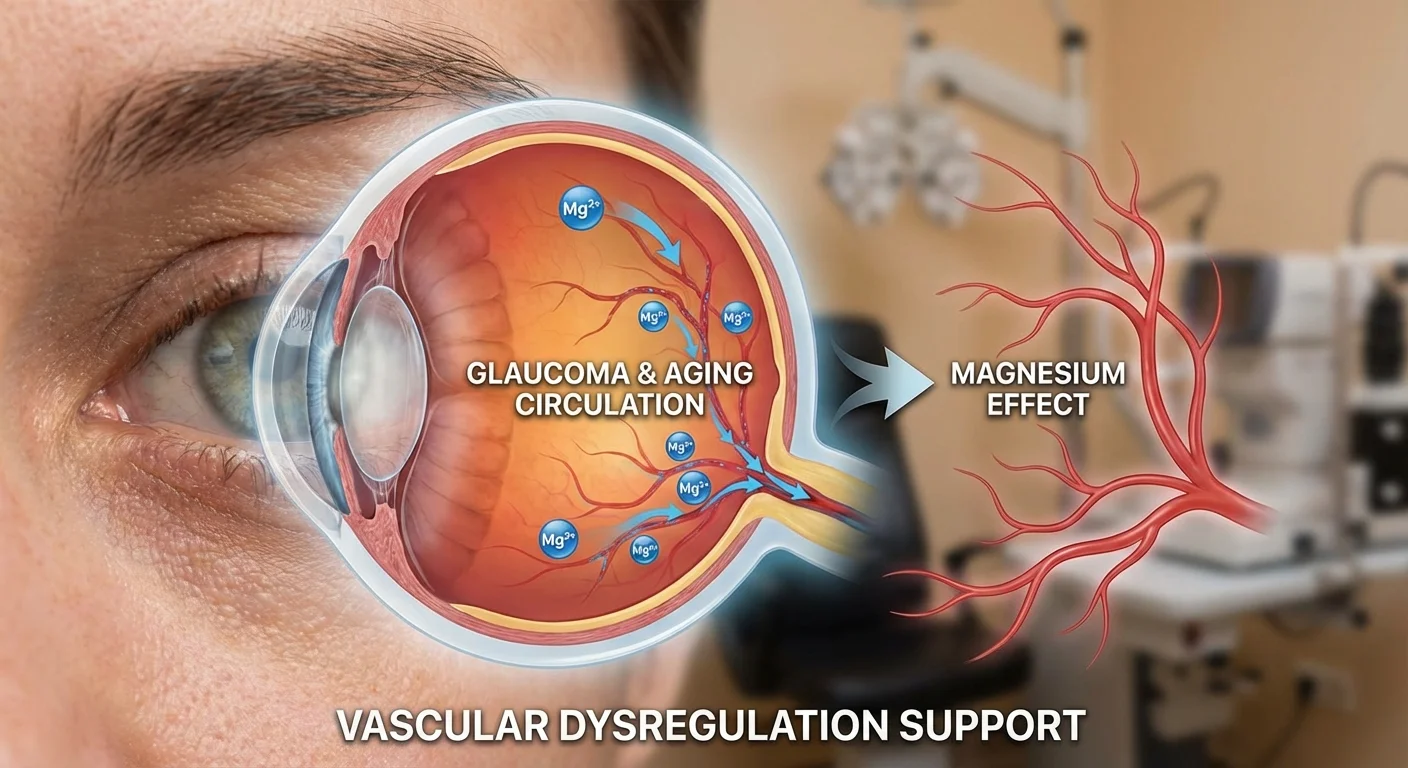
Magnesium and Vascular Dysregulation in Glaucoma
Glaucoma is a progressive optic nerve disease that leads to vision loss. While high intraocular pressure (IOP) is the best-known risk factor, many patients – especially those with normal-tension glaucoma (NTG) – develop glaucoma despite normal IOP (pmc.ncbi.nlm.nih.gov). In NTG, systemic vascular issues are believed to contribute: unstable blood flow, vasospasm (sudden vessel constriction), and excessive nighttime blood pressure dips can reduce blood supply to the optic nerve (pmc.ncbi.nlm.nih.gov) (pmc.ncbi.nlm.nih.gov). Treatments that stabilize blood flow are therefore of interest in NTG. Magnesium, an essential mineral and natural calcium-channel blocker, has emerged as a candidate because it promotes vasodilation and nerve protection (pmc.ncbi.nlm.nih.gov).
Magnesium’s Vascular Actions
Magnesium influences blood vessels and endothelial function in several ways:
- Calcium antagonism. Magnesium acts as a physiologic calcium channel blocker. It competes with calcium in muscle and blood vessels, causing smooth muscle relaxation and vasodilation. (pmc.ncbi.nlm.nih.gov) In laboratory studies, raising Mg²⁺ levels inhibits endothelin-1–induced vessel constriction (for example, in porcine ciliary arteries) (pmc.ncbi.nlm.nih.gov). Because endothelin-1 is a powerful vasoconstrictor implicated in glaucoma, magnesium’s blockade of this pathway can improve perfusion. (pmc.ncbi.nlm.nih.gov)
- Endothelial function. Healthy blood vessels produce relaxing factors like nitric oxide (NO). Magnesium enhances endothelial cell health and NO availability, leading to better blood flow. (pmc.ncbi.nlm.nih.gov) Studies in coronary artery disease show that oral magnesium improves endothelium-dependent vasodilation (pmc.ncbi.nlm.nih.gov). By improving the balance of endothelin-1 vs. nitric oxide, magnesium can reduce abnormal vasoconstriction and oxidative stress in tiny ocular vessels.
- Vasospasm relief. Clinically, many NTG patients have Raynaud-like vasospasm (cold-triggered digital or nailfold spasms). In one pilot study of 10 glaucoma patients with cold-induced fingertip vasospasm, giving 121.5 mg magnesium twice daily for one month significantly improved peripheral capillary flow and digital temperature, and visual fields tended to improve (pubmed.ncbi.nlm.nih.gov). This suggests magnesium can relieve systemic vasospasm, potentially stabilizing ocular perfusion (pubmed.ncbi.nlm.nih.gov).
Magnesium also has neuroprotective effects. By blocking NMDA receptors and inhibiting excitotoxic glutamate release, Mg²⁺ guards against retinal ganglion cell damage (pmc.ncbi.nlm.nih.gov). It stabilizes neuronal metabolism (supporting ATP production and antioxidants) (pmc.ncbi.nlm.nih.gov). In summary, magnesium helps normalize blood vessel tone and protect nerve cells – both relevant in glaucoma-related vascular dysregulation (pmc.ncbi.nlm.nih.gov) (pmc.ncbi.nlm.nih.gov).
Blood Pressure Dipping and Ocular Perfusion
Healthy individuals have a 10–20% drop in blood pressure during sleep. Some glaucoma patients, especially NTG, experience excessive overnight dips or total hypotension, harming optic nerve perfusion. A landmark longitudinal study found that NTG patients whose mean arterial pressure stayed ≥10 mmHg below daytime levels for longer during sleep were much more likely to experience progressive visual field loss (pmc.ncbi.nlm.nih.gov). In other words, nocturnal hypotension (deep nighttime dips) predicted glaucomatous progression (pmc.ncbi.nlm.nih.gov).
Magnesium status appears to influence this blood pressure rhythm. Low magnesium labs are linked to a non-dipping pattern – where nighttime BP fails to decline normally (pmc.ncbi.nlm.nih.gov). In hypertensive patients, hypomagnesemia blunted the normal nocturnal dip, likely via increased sympathetic activity and altered renin-angiotensin signaling (pmc.ncbi.nlm.nih.gov). By contrast, adequate magnesium supports normal circadian blood pressure control. This suggests magnesium supplementation could help prevent dangerous nocturnal hypotension in at-risk patients.
Clinical Studies in Glaucoma
Though data are limited, small clinical trials indicate benefits of magnesium in glaucoma patients with vascular dysregulation:
- Gaspar et al., 1995: In 10 glaucoma patients (open-angle or NTG) with documented peripheral vasospasm, oral magnesium (121.5 mg twice daily) for 4 weeks improved nailfold capillary flow and digital temperature significantly, while visual field defects tended to improve (pubmed.ncbi.nlm.nih.gov). Systemic blood pressure and pulse were unchanged, implying magnesium acted locally on microcirculation.
- Aydin et al., 2010: In a randomized controlled trial of 30 NTG patients, one group received 300 mg oral magnesium daily for one month (vs. no treatment). The treatment group saw significant improvements in visual field indices (mean deviation and pattern standard deviation) at one month, whereas the control group did not (pubmed.ncbi.nlm.nih.gov) (pmc.ncbi.nlm.nih.gov). Color Doppler imaging of orbital vessels showed no significant change in measured blood velocities (pubmed.ncbi.nlm.nih.gov). The authors speculated that magnesium’s effects on perfusion regulation (rather than bulk flow) may underlie the visual field gains (pubmed.ncbi.nlm.nih.gov).
Overall, these small trials suggest oral magnesium can improve visual function in some glaucoma patients with vascular dysregulation (pubmed.ncbi.nlm.nih.gov) (pmc.ncbi.nlm.nih.gov). Larger and longer studies are needed, but the evidence aligns with magnesium’s known vascular benefits.
Systemic Magnesium: Deficiency, Arrhythmias, and Aging
Beyond the eye, magnesium status affects overall cardiovascular and systemic health:
- Widespread deficiency. Modern diets often fall short of magnesium needs. In the U.S., average intakes (~228 mg/day for women, 331 mg/day for men) are below earlier recommended levels (300–354 mg for women, 420–483 mg for men) (pmc.ncbi.nlm.nih.gov). Population surveys find that magnesium intake is inadequate in many countries. Age-related factors (reduced absorption, diets poor in green vegetables and whole grains) further contribute to low magnesium in the elderly (pmc.ncbi.nlm.nih.gov). Researchers highlight that aging itself is a risk factor for magnesium deficit, which in turn may accelerate age-related diseases (pmc.ncbi.nlm.nih.gov).
- Arrhythmia prevention. Intracellular magnesium stabilizes cardiac myocytes, so deficiency predisposes to abnormal heart rhythms. For example, the Framingham Heart Study found people in the lowest serum magnesium quartile had ~50% higher risk of atrial fibrillation compared to those with higher Mg levels (pmc.ncbi.nlm.nih.gov). Hypomagnesemia also contributes to QT prolongation and torsades de pointes (a dangerous ventricular tachycardia). Clinically, intravenous magnesium is first-line therapy for torsades, and in acute myocardial infarction settings magnesium supplementation has been shown to reduce ventricular ectopy and arrhythmias (pmc.ncbi.nlm.nih.gov). In heart failure, low magnesium (and associated low potassium) increases the risk of fatal arrhythmias; supplemental magnesium can lower blood pressure and reduce premature ventricular beats in such patients (pmc.ncbi.nlm.nih.gov) (pmc.ncbi.nlm.nih.gov). Overall, maintaining adequate magnesium supports a stable cardiac rhythm.
- Healthy aging. Adequate magnesium intake is tied to many aspects of healthy aging. Magnesium is essential for muscle function and energy production. In older adults, low magnesium is associated with sarcopenia (muscle loss), frailty, impaired immune response, and higher inflammation (pmc.ncbi.nlm.nih.gov). Chronic magnesium deficiency also promotes oxidative stress and systemic inflammation, pathways implicated in aging and age-related diseases (pmc.ncbi.nlm.nih.gov) (pubmed.ncbi.nlm.nih.gov). Some reviews propose that correcting even mild magnesium deficits could improve metabolic and vascular health in aging populations (pmc.ncbi.nlm.nih.gov) (pubmed.ncbi.nlm.nih.gov). In sum, adequate magnesium is considered a cornerstone of overall cardiovascular and metabolic health, which in turn supports ocular health.
Safety Considerations
Magnesium supplementation is generally safe at moderate doses, but precautions are needed in low-BP patients or those on blood-pressure medications:
- Common side effects. Oral magnesium can cause gastrointestinal upset, including diarrhea, nausea, or flushing (pmc.ncbi.nlm.nih.gov). These are usually mild. Intravenous magnesium (for other indications) can cause weakness or sedation if levels become too high (pmc.ncbi.nlm.nih.gov). Rarely (mostly with very high IV doses), magnesium can lead to loss of reflexes or respiratory depression, which are reversible with calcium infusion (pmc.ncbi.nlm.nih.gov).
- Hypotension risk. Because magnesium lowers vascular resistance, it can slightly reduce blood pressure (pmc.ncbi.nlm.nih.gov) (pmc.ncbi.nlm.nih.gov). In most people this is modest. Meta-analyses show a 310–370 mg daily supplement typically lowers systolic BP by ~2–4 mmHg and diastolic by ~2 mmHg (pmc.ncbi.nlm.nih.gov). However, in patients already prone to low blood pressure (or on multiple antihypertensives), magnesium could intensify hypotension. Clinicians should monitor blood pressure, especially at night, and adjust antihypertensive regimens if needed. In practice, magnesium rarely causes severe hypotension at usual doses (pmc.ncbi.nlm.nih.gov).
- Drug interactions. Magnesium may interact additively with calcium-channel blockers or nitrates, enhancing blood pressure lowering. It can also bind certain oral medications in the gut (notably some antibiotics), so timing of doses is recommended. Importantly, magnesium supplementation can actually help patients on diuretics by preventing hypokalemia and improving vascular reactivity (pmc.ncbi.nlm.nih.gov). Potassium levels should be checked in tandem, since magnesium and potassium homeostasis are linked.
In summary, magnesium is widely tolerated. Standard dietary supplements (e.g. 200–400 mg elemental magnesium daily) are safe for most people. In glaucoma or hypotension-prone patients, start low and monitor BP and reflexes. Serious side effects are uncommon at nutritional doses.
Conclusion
Vascular dysregulation is increasingly recognized as an important factor in glaucoma, especially NTG. Magnesium’s multi-faceted actions – promoting vasodilation, improving endothelial function, and protecting neurons – make it a compelling adjunct for patients with ocular perfusion issues (pmc.ncbi.nlm.nih.gov) (pmc.ncbi.nlm.nih.gov). Small trials and physiological studies suggest that magnesium supplementation can improve visual field outcomes and microcirculation in glaucoma patients with vasospasm tendencies (pubmed.ncbi.nlm.nih.gov) (pmc.ncbi.nlm.nih.gov). These ocular findings align with broad evidence that optimal magnesium status supports healthy blood pressure patterns, prevents arrhythmias, and contributes to overall vascular health (pmc.ncbi.nlm.nih.gov) (pmc.ncbi.nlm.nih.gov). When considering magnesium for glaucoma patients, clinicians should ensure doses are appropriate, particularly if systemic hypotension or blood pressure medications are present. Overall, magnesium represents a low-risk, potentially beneficial strategy for addressing the vascular component of glaucomatous optic nerve injury.
Keywords: magnesium, glaucoma, normal-tension glaucoma, vasospasm, endothelial function, ocular perfusion, blood pressure, neuroprotection, aging, arrhythmia