
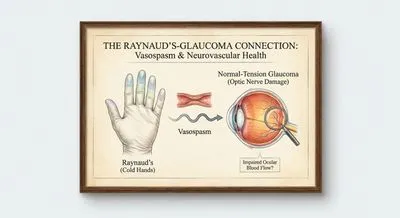
Vasospasm, Cold Hands, and Normal-Tension Glaucoma: The Raynaud’s Connection
Raynaud’s phenomenon is a condition where cold or stress causes the small arteries in the fingers and toes to spasm and shut down blood flow (turning...
Deep research and expert guides on maintaining your visual health.
Raynaud’s phenomenon is a condition where cold or stress causes the small arteries in the fingers and toes to spasm and shut down blood flow (turning...
Raynaud's phenomenon is a condition where small blood vessels in the fingers and sometimes toes temporarily narrow too much, usually in response to cold or stress. When this happens, the skin often turns white as blood flow stops, then may turn blue as oxygen runs out, and finally red when blood flow returns. These episodes can be painful or numb and usually last minutes to an hour, though they may be longer in severe cases. There are two main patterns: one that happens on its own and is generally milder, and another that occurs because of an underlying medical problem and can be more serious. Knowing which pattern you have matters because secondary forms can be linked to diseases that need treatment. Doctors diagnose it by listening to symptoms, observing attacks, and sometimes doing simple tests that show how blood flows in the fingers. Treatment focuses on preventing attacks and protecting the area from cold—warming hands and avoiding rapid temperature changes helps a lot. Lifestyle changes like quitting smoking and managing stress can reduce episodes, and medicines that relax blood vessels are used when attacks are frequent or severe. Most people with the primary form lead normal lives, but severe cases can damage tissue if blood flow is very impaired for long periods. If you have worsening symptoms, sores, or signs of infection, it's important to see a doctor so the cause can be checked and treated if needed.