
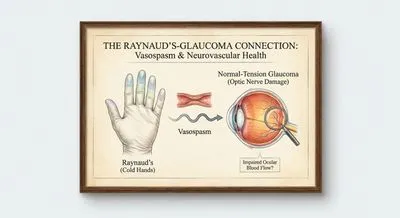
Vasospasm, Cold Hands, and Normal-Tension Glaucoma: The Raynaud’s Connection
Raynaud’s phenomenon is a condition where cold or stress causes the small arteries in the fingers and toes to spasm and shut down blood flow (turning...
Deep research and expert guides on maintaining your visual health.
Raynaud’s phenomenon is a condition where cold or stress causes the small arteries in the fingers and toes to spasm and shut down blood flow (turning...
Our visual field test is inspired by the perimetry methods eye care professionals use. Check for blind spots and track changes over time.
Test Your VisionVascular dysregulation describes a problem with how blood vessels widen and narrow to control blood flow. Normally, the vessels respond to signals like temperature, oxygen needs, and activity level to deliver the right amount of blood; when dysregulation occurs, those signals are not followed properly and blood flow can be too much or too little. This can cause symptoms such as cold hands and feet, dizziness, headaches, or unusual sensitivity to temperature and light. The condition can be temporary or chronic, and it may occur by itself or with other health issues that affect circulation. Vascular dysregulation matters because blood flow is critical for every organ, and persistent poor regulation can contribute to symptoms or complications in the eyes, brain, and other tissues. Doctors assess it through a combination of medical history, physical exam, and tests that measure blood flow or vessel responses to temperature or stress. Treatment depends on the pattern and severity and may include lifestyle steps like keeping warm, staying hydrated, and avoiding triggers, as well as medications that help blood vessels behave more normally. Managing underlying conditions such as autoimmune disease or hormonal imbalances can also improve vessel behavior. While it can be uncomfortable and sometimes disabling, many people gain good symptom control with the right approach. If symptoms change or worsen, medical review is important to rule out treatable causes and prevent complications.