
Introduction
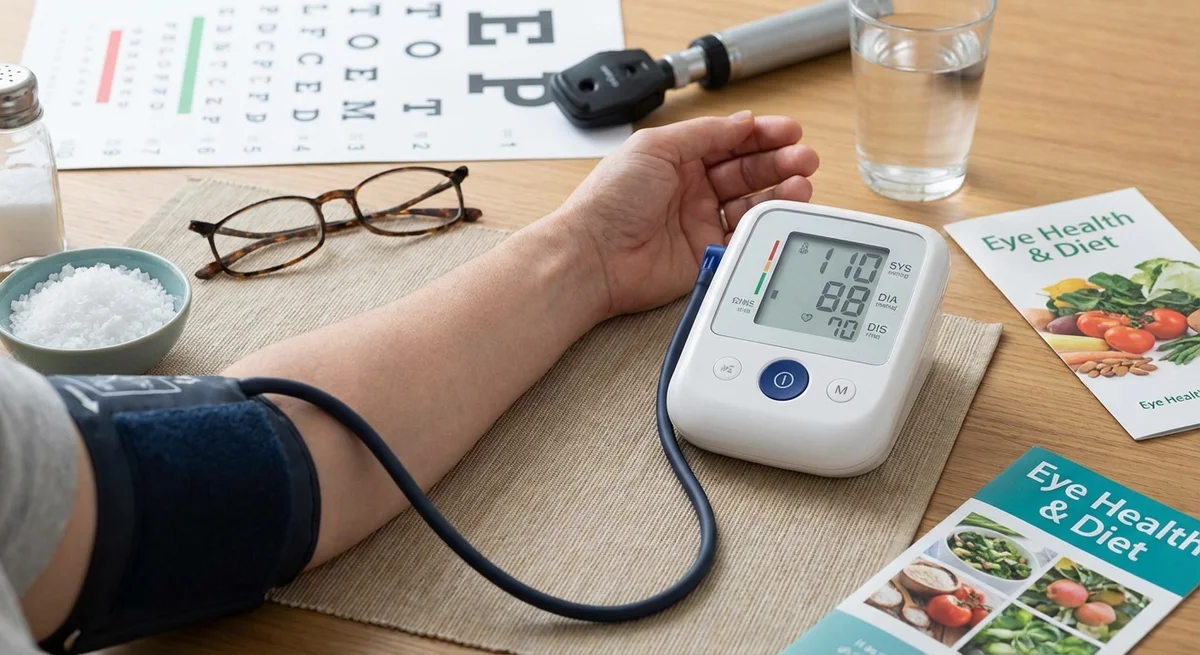
Glaucoma is an eye disease where the optic nerve gradually loses vision, often without obvious symptoms until later stages. Many people know that high intraocular pressure (the fluid pressure inside the eye) is a key risk factor. But doctors are increasingly aware that blood flow to the eye matters too. The pressure of blood reaching the optic nerve – called ocular perfusion pressure (OPP) – depends on your blood pressure and eye pressure together. Diet, especially salt (sodium) intake, strongly affects systemic blood pressure. In turn, your blood pressure (especially if very high or very low at night) can raise a person’s glaucoma progression risk. In this article we explain how dietary sodium relates to blood pressure and eye health, why both uncontrolled hypertension and excessive nighttime dips can harm glaucoma eyes, and how you and your doctors can work together on a balanced salt and blood-pressure plan.
How Salt Affects Your Blood Pressure
Salt is a major flavoring in the diet, but it is also the main source of dietary sodium. Sodium helps regulate body fluids, but eating too much tend to raise blood pressure. In fact, large health organizations agree: reducing salt lowers blood pressure. For example, the World Health Organization recommends keeping sodium under 2 g per day (about 5 g salt per day) for adults, noting that cutting salt intake “significantly reduces blood pressure” and cardiovascular risk (www.who.int) (pmc.ncbi.nlm.nih.gov). American guidelines similarly advise limiting sodium (often to about 1.5–2.3 g/day) for heart and vessel health.
When you eat salt, your body retains more water to keep the salt concentration balanced. This extra fluid raises blood volume, which in turn pushes up blood pressure. Some people are salt-sensitive, meaning their blood pressure rises more sharply with high salt intake (pmc.ncbi.nlm.nih.gov). Over time, chronically high blood pressure (hypertension) can damage blood vessels and strain the heart. That’s why reducing sodium is a cornerstone of preventing and treating hypertension (pmc.ncbi.nlm.nih.gov) (www.who.int).
Blood Pressure and Eye Perfusion: Why It Matters in Glaucoma
Your eyes need a steady blood supply to stay healthy, especially the tiny blood vessels nourishing the optic nerve. Ocular perfusion pressure (OPP) is the net pressure driving blood into the eye’s arteries – roughly the difference between your arterial blood pressure and the pressure inside the eye (IOP). In simple terms, if blood pressure is high, OPP tends to be higher; if blood pressure is low, OPP drops. Numerous studies show that chronically low OPP is linked to glaucoma risk and progression (pmc.ncbi.nlm.nih.gov) (pmc.ncbi.nlm.nih.gov).
For example, a major review found “strong relationships between low ocular perfusion pressure and open-angle glaucoma” – in population studies, eyes with glaucoma often had lower OPP, and clinical studies showed glaucoma got worse when OPP was low (pmc.ncbi.nlm.nih.gov). Likewise, a large meta-analysis reported that glaucoma patients had significantly lower average OPP (by about 2.5 mmHg) than people without glaucoma (pmc.ncbi.nlm.nih.gov). Lower perfusion pressure means the optic nerve is less well perfused, so it may suffer chronic undernourishment and ischaemia.
Interestingly, that meta-analysis also found the OPP difference was most clear in patients who started with high eye pressure. In people with normal-tension glaucoma (glaucoma despite “normal” IOP), no simple OPP difference was seen in that pooled analysis (pmc.ncbi.nlm.nih.gov). However, other work suggests that in normal-tension glaucoma (NTG), a more sensitive balance of pressures or blood flow irregularities may be at play. In all cases, ophthalmologists emphasize that stable blood flow to the eye is crucial. As one team summarized, “Ocular perfusion pressure reflects the vascular status at the optic disc, [and] it may be more relevant than systemic blood pressure alone” (pmc.ncbi.nlm.nih.gov).
Of course, systemic hypertension also damages vessels and can indirectly affect eye health. In fact, a study of over 1,200 people with hypertension found that both very high diastolic blood pressure (>90 mmHg) and very low OPP (<40 mmHg) were each linked to higher glaucoma risk (pmc.ncbi.nlm.nih.gov). In plain terms, this means both ends of the spectrum can be problematic: overly high blood pressure may indicate stiff or damaged vessels, while overly low perfusion pressure starves the eye’s circulation. The take-home is that healthy eye circulation needs balanced blood pressure – not too high, not too low.
High Blood Pressure: A Different Type of Risk
Uncontrolled hypertension (high blood pressure) by itself can lead to blood vessel damage throughout the body, including the tiny vessels that feed the eye. Over years, high pressure can cause atherosclerosis or vessel stiffening, which may reduce the eye’s ability to auto-regulate blood flow. In people with glaucoma, this damaged autoregulation might make the optic nerve vulnerable when pressures change. In fact, some research suggests that patients on blood pressure medications had a higher chance of glaucoma than those not on medication (pmc.ncbi.nlm.nih.gov) – possibly reflecting prior severe hypertension.
More directly, the Colombian study mentioned above showed that even among people already treated for hypertension, having a very high diastolic pressure still correlated with more glaucoma (pmc.ncbi.nlm.nih.gov). This aligns with the idea that hypertension can contribute to glaucoma by damaging blood vessels. Thus, when hypertension is untreated or poorly controlled, it poses a risk not only for heart attack and stroke, but also for glaucoma progression. Controlling high blood pressure is important for overall eye health too. (Importantly, this doesn’t mean uncontrolled high BP is “protective” for OPP; rather, it underlines the complex role of vascular health in glaucoma.)
The Hidden Hazard of Nocturnal Hypotension
If high blood pressure is bad news, you might think “lower is always better” – but that’s not entirely true for glaucoma patients. In some cases, blood pressure that gets too low, especially at night, can also harm the optic nerve. Normally, blood pressure dips a bit during sleep. But in some glaucoma patients (especially those with normal-tension glaucoma or vascular dysregulation), these nocturnal dips can be exaggerated. If blood pressure falls below the eye’s autoregulation range, the optic nerve can suffer ischemic injury.
Researchers have shown that these deep nighttime dips are a serious red flag. In one landmark study of normals and NTG patients monitored over 48 hours, the duration and depth of nocturnal hypotension strongly predicted glaucoma worsening (pmc.ncbi.nlm.nih.gov). Specifically, patients who spent more time asleep with blood pressure at least 10 mmHg lower than their daytime baseline went on to have significantly more visual field loss (pmc.ncbi.nlm.nih.gov). In other words, prolonged low blood pressure at night was a powerful predictor of glaucoma progression.
Because of these findings, some experts now recommend 24-hour ambulatory blood pressure monitoring for glaucoma patients who are still losing vision despite controlled eye pressure (pmc.ncbi.nlm.nih.gov). This kind of monitoring can catch hidden lows that a single clinic reading might miss. The goal is to ensure that nighttime BP doesn’t dip into a dangerous range. For example, one group suggested that ophthalmologists work with patients’ primary doctors to avoid overly aggressive blood pressure targets if they cause chronic nocturnal hypotension (pmc.ncbi.nlm.nih.gov).
In short, repeatedly hitting very low blood pressure overnight can starve the optic nerve of blood flow, which is as troubling for the glaucoma eye as very high blood pressure is for the cardiovascular system. Both extremes – night‐time hypotension and day-time hypertension – can lead to damage, so doctors aim for a sweet spot that keeps the optic nerve well-perfused around the clock.
Special Note: Normal-Tension Glaucoma
Normal-tension glaucoma (NTG) is a subtype where optic nerve damage occurs despite having IOP in the normal range. Vascular factors are thought to play a larger role in NTG. People with NTG often show signs of poor blood flow regulation to the optic nerve. In fact, studies indicate that NTG patients tend to have more pronounced nocturnal blood pressure dips and other circulatory irregularities. For NTG patients, preventing excessive blood pressure swings is crucial. In practice, this often means closely watching both salt intake and antihypertensive treatment to avoid perfusion drops.
Managing Salt in Your Diet: How Much Is Right?
Given the link between sodium, blood pressure, and eye perfusion, how should a glaucoma patient approach salt? The answer varies by individual blood pressure and health status.
If you have hypertension or are salt-sensitive: In most cases, it makes sense to follow general cardiovascular health advice. This means a low-salt diet is usually best. A high-salt diet increases blood pressure and can raise eye pressure slightly (through fluid retention) (pmc.ncbi.nlm.nih.gov). It also may stiffen blood vessels and reduce nitric oxide, impairing blood flow (pmc.ncbi.nlm.nih.gov). In fact, a recent review recommends that glaucoma patients eat a low-salt diet (with less processed food) to help control eye pressure and slow glaucoma progression (pmc.ncbi.nlm.nih.gov). So if you have high BP or vascular risk factors, your eye doctor and cardiologist will likely advise cutting back on salt. This means limiting table salt and avoiding salty processed foods (canned soup, deli meats, pickles, fast foods, etc.). Fresh vegetables, fruits, lean meats, and whole grains naturally have less sodium. (Boosting potassium intake by eating fruits and veggies is also recommended, as potassium helps counterbalance sodium’s effects.)
If you have low blood pressure or NTG with night dips: In rare cases, increasing salt intake modestly may be considered. Some glaucoma experts have proposed raising blood sodium – for example, by adding a bit more table salt or using a mild steroid (fludrocortisone) – to reduce dangerous hypotensive episodes and improve optic nerve perfusion (pmc.ncbi.nlm.nih.gov). In one small study of open-angle glaucoma patients with low BP, fludrocortisone treatment was shown to reduce nocturnal dips (pmc.ncbi.nlm.nih.gov). However, this approach is not routine. It carries risks (extra salt could worsen blood pressure control or cause swelling) and must be tailored to your situation.
Importantly, too much salt can backfire in some people. If you are salt-sensitive – meaning your blood pressure really skyrockets when you eat salt – then adding salt even for the sake of OPP could hurt your vascular health (pmc.ncbi.nlm.nih.gov) (pmc.ncbi.nlm.nih.gov). As the Thessaloniki Eye Study authors note, salt loading “likely leads to further vascular injury” in people with impaired autoregulation (pmc.ncbi.nlm.nih.gov). In fact, they found that glaucoma prevalence was higher in patients on blood pressure medicine who also used salt often (pmc.ncbi.nlm.nih.gov).
Bottom line: Don’t change your salt intake without talking to your doctors. If you have glaucoma and normal or osteoporosis-level blood pressure, your eye doctor may still urge reducing salt to protect small vessels (pmc.ncbi.nlm.nih.gov). But if your ophthalmologist notices you have low perfusion or pronounced dips, they might coordinate with your physician to adjust salt or medications. The goal of salt management is always balance: enough to maintain stable eye perfusion, but not so much that systemic blood pressure stays high.
Antihypertensive Medications and Timing
If you take blood-pressure medicines, timing can matter for glaucoma. Many antihypertensive drugs – especially some blood pressure pills taken at bedtime – can accentuate the normal nighttime dip. For patients who already dip too low in sleep, this can worsen OPP at night. Some doctors therefore assess whether it’s better for such patients to take medications earlier (in the morning) or switch to other drugs that cause less night-time hypotension. (For example, short-acting medicines or dividing the dose differently.)
Additionally, not all blood pressure medications behave the same. For instance, alpha-blockers and some calcium-channel blockers might allow more moderate night-time blood pressure levels, whereas certain beta-blockers or nitrates could create deeper dips. There is no one-size-fits-all answer, but keeping a log of your blood pressure (and possibly asking for 24-hour ambulatory monitoring) can guide choices. If a low nocturnal dip is suspected, your eye doctor might suggest reviewing your medication schedule with your primary doctor or cardiologist to prevent excessive overnight hypotension.
As one study noted, continuing low BP medicine at bedtime might need reevaluation in glaucoma cases. Since these interactions are complex, the best approach is coordinated care: an eye doctor can flag concerns and your cardiologist or GP can adjust therapy.
Working with Your Doctors: A Team Approach
Your eye care should not happen in isolation from your overall health care. Because blood pressure is largely managed by cardiologists or primary care doctors, good glaucoma care often involves teamwork. Here are some strategies:
-
Communicate: Tell your eye doctor about your blood pressure history (levels, dips, medications). Likewise, inform your GP/cardiologist about your glaucoma and any concerns about low perfusion.
-
Monitor: If glaucoma is progressing despite normal eye pressure, your eye doctor may recommend 24-hour ambulatory blood pressure monitoring. This can detect troubling dips or spikes that happen outside the clinic.
-
Collaborate on medication timing: Work together to find blood pressure medication schedules that avoid deep nadirs. For example, if night-time hypotension is an issue, consider shifting doses to the morning or using medications with shorter duration.
-
Comprehensive risk control: Both doctors should aim for overall heart and vessel health, which indirectly benefits the eyes. For instance, managing diabetes and quitting smoking help eye circulation too.
Think of it as eye–heart parallel care. Your cardiologist or GP keeps your blood vessels healthy and pressures in a good range, and your ophthalmologist keeps your eye pressure safe. Each specialist should understand how the other’s domain affects the eyes. One review even calls blood pressure management in glaucoma “a crossroads between cardiology and ophthalmology” (pmc.ncbi.nlm.nih.gov). In practice, open communication (and maybe a shared care plan) can safeguard you against the vascular pitfalls of glaucoma.
Conclusion
In glaucoma care, we must look beyond the eye alone. Dietary sodium, systemic blood pressure, and ocular perfusion pressure are interlinked in complex ways. For most patients, reducing salt is a sensible premise for good vascular health (www.who.int) (pmc.ncbi.nlm.nih.gov). But for some glaucoma patients – especially those with normal-tension glaucoma or documented low eye perfusion – doctors may need to carefully adjust salt intake or blood pressure medications to ensure the optic nerve is always well perfused. What’s clear is that both uncontrolled hypertension and excessive hypotension (particularly at night) can worsen glaucoma.
Therefore, individual goals are key. Work with your eye doctor, primary care physician, and possibly a cardiologist to find the right balance. Keep blood pressure in a healthy range and maintain steady eye perfusion. A heart-healthy diet (favoring vegetables, fruits, whole grains, and moderate salt) along with proper medication management is generally the best approach. By collaborating across specialties, you can protect both your vision and your cardiovascular health.