
Disease-modifying glaucoma drugs
Right now, no therapy has been proven to do this in patients. In large, decades-long studies only pressure lowering showed a clear benefit. In fact,...
Deep research and expert guides on maintaining your visual health.
Right now, no therapy has been proven to do this in patients. In large, decades-long studies only pressure lowering showed a clear benefit. In fact,...

Endothelin-1 (ET-1) is made by cells lining blood vessels throughout the body, and it helps regulate normal blood pressure and flow. In the eye, ET-1...

ET-1 is produced by many eye tissues (retina, ciliary body, trabecular meshwork, etc.). It normally helps regulate blood flow and aqueous humor...

Earlier trial results. A recent Phase III study (NCX 470) and others confirmed that combined outflow enhancers can beat traditional drops. For...

In addition, regular exercise helps the body’s autonomic nervous system (which controls things like heart rate and blood vessel tone) to stay in...
In this article we will explore unilateral and asymmetric glaucoma in depth. We begin with why one eye can be affected more than the other, then...

This article reviews all human studies on magnesium in glaucoma. Specifically, we look at trials and reports of magnesium levels or supplementation...
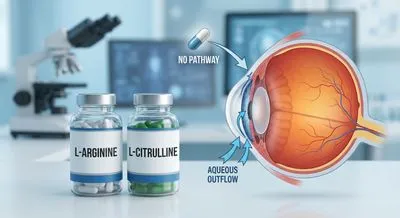
The body also has a backup route to make NO from dietary nitrates (the “nitrate–nitrite–NO pathway”). Normally, under conditions like low oxygen or...

Mirtogenol® is a proprietary supplement blend containing two main ingredients: Mirtoselect®, a standardized bilberry fruit extract (Vaccinium...
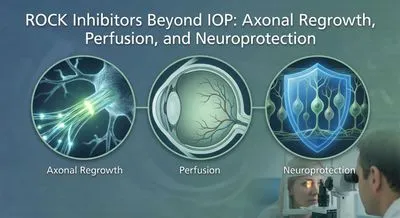
Likewise, general ROCK inhibition (with other agents like Y-27632) can encourage neurite extension when growth factors are present (). In an adult...

Blood vessels relax when their lining cells (endothelium) make the gas nitric oxide (NO). Hesperidin itself is a sugar-linked molecule that is broken...

Animal research confirms that bilberry anthocyanins protect retinal cells by enhancing antioxidant systems and damping inflammation. In a rabbit...
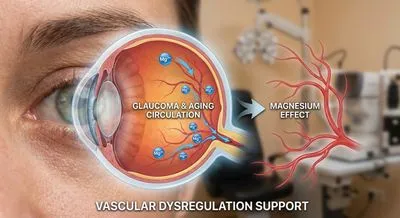
Magnesium influences blood vessels and endothelial function in several ways:
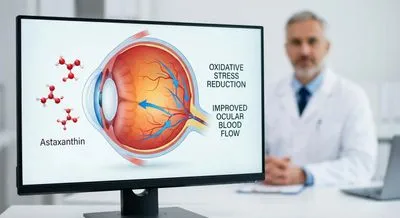
Astaxanthin protects eye cells from oxidative damage. In animal models of eye disease, AXT reduced markers of stress and inflammation in the retina...

By contrast, larger reviews find no clear benefit on field metrics. A 2025 systematic review of 8 trials (428 subjects) concluded that GBE did not...
Track peripheral vision changes between eye doctor visits. Start your free trial and get results in under 5 minutes.
Ocular blood flow refers to the movement of blood through the eye’s network of tiny vessels that deliver oxygen and nutrients to critical structures like the retina and optic nerve. It keeps the light-sensing cells and nerve fibers healthy so they can convert light into the signals your brain uses to form images. The eye has specialized circulation and small vessels that must provide a steady supply even when overall blood pressure changes; built-in mechanisms try to keep flow stable. When those control systems fail, or when vessels are narrowed or damaged, the eye can suffer from reduced or uneven blood supply. Poor ocular blood flow is linked to several vision-threatening conditions because nerve and retinal cells are highly sensitive to lack of oxygen. Doctors and researchers use imaging tests to estimate flow and to identify where problems begin, which helps guide treatment. Factors such as high blood pressure, diabetes, certain medications, and vascular health influence how well blood reaches the eye. Protecting and improving ocular blood flow is an important part of preventing vision loss and maintaining eye health as people age.