
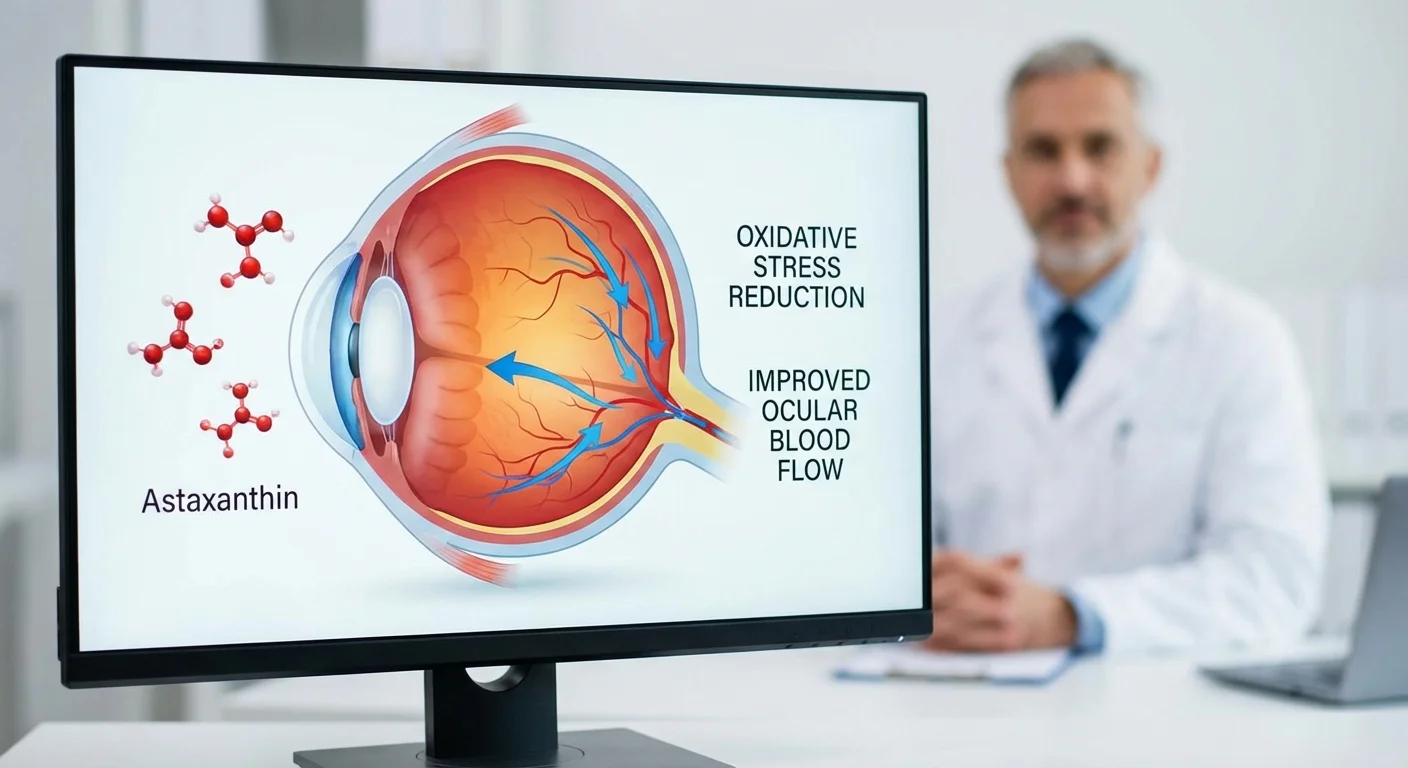
Astaxanthin: A Potent Antioxidant for Eye Health
Oxidative stress – an imbalance between reactive oxygen species (ROS) and the body’s defenses – contributes to many eye diseases (dry eye, macular degeneration, glaucoma, cataract) (pmc.ncbi.nlm.nih.gov) (pmc.ncbi.nlm.nih.gov). Astaxanthin (AXT) is a red xanthophyll carotenoid found in algae and seafood (salmon, shrimp). Its unique structure (polar ends and a long conjugated chain) allows it to span cell membranes, scavenging free radicals (ROS) both inside and outside cells (pmc.ncbi.nlm.nih.gov) (pmc.ncbi.nlm.nih.gov). Unlike routine antioxidants (vitamin C/E), AXT crosses membranes and even the blood–brain barrier, making it exceptionally potent. It is noted for strong antioxidant, anti-inflammatory, and anti-apoptotic activities (pmc.ncbi.nlm.nih.gov) (pmc.ncbi.nlm.nih.gov). These properties make AXT a candidate for protecting ocular tissues. Recent studies suggest AXT can modulate eye metabolism and inflammation, potentially improving vision and eye comfort (pmc.ncbi.nlm.nih.gov) (pmc.ncbi.nlm.nih.gov).
Antioxidant and Anti-Inflammatory Effects in Ocular Tissues
Astaxanthin protects eye cells from oxidative damage. In animal models of eye disease, AXT reduced markers of stress and inflammation in the retina and cornea. For example, in diabetic rats, orally given AXT suppressed expression of inflammatory molecules (e.g. NF-κB) and oxidative stress in the retina (pubmed.ncbi.nlm.nih.gov) (pubmed.ncbi.nlm.nih.gov). In a mouse glaucoma model (acute high eye pressure), AXT preserved retinal ganglion cells by boosting the Nrf2/HO-1 antioxidant pathway and reducing apoptosis (pubmed.ncbi.nlm.nih.gov). In a rat glaucoma model, AXT lowered retinal protein oxidation and nitric oxide synthase-2 (NOS-2), markers of damage, and reduced cell death (pubmed.ncbi.nlm.nih.gov) (pubmed.ncbi.nlm.nih.gov). These studies show that AXT’s free-radical scavenging stabilizes crucial eye cells under stress.
In more routine settings, AXT also benefits ocular surface and lens tissues. For example, some clinical trials have used AXT to ease digital eye strain or dry eye symptoms, arguing that its anti-inflammatory action (e.g. lowering NF-κB in ciliary body) and improved microcirculation can relieve fatigue (www.mdpi.com). In one trial of visual display terminal (computer) users, AXT supplements (with other antioxidants) significantly improved blink rates and tear-film stability. Overall, AXT’s antioxidant and anti-inflammatory effects appear to help maintain normal ocular function and comfort (www.mdpi.com) (pubmed.ncbi.nlm.nih.gov).
Accommodative Function and Eye Strain
Accommodation is the eye’s ability to focus on near objects, using the ciliary muscle to change lens shape. In ageing or after prolonged screen use, accommodation can become sluggish, leading to eyestrain (asthenopia). Several studies report that AXT may improve accommodation. In healthy adults over 40, 4–12 mg of AXT daily for 4 weeks improved visual acuity and shortened accommodation time (faster focus) (www.mdpi.com). In a combined supplement trial, middle-aged adults who took AXT (with lutein, DHA, etc.) for 4 weeks showed better near-point accommodation and found tasks “trouble-free” (less neck strain and blurring) compared to placebo (www.mdpi.com). The proposed mechanism is that AXT relaxes the ciliary muscle and enhances blood flow around the lens and retina (www.mdpi.com).
A dedicated 6-week trial (9 mg/day AXT) found that among adults ≥40, the astaxanthin group maintained better corrected visual acuity after 6 hours of screen use than placebo (pmc.ncbi.nlm.nih.gov). In other words, AXT helped older eyes resist the temporary blurring caused by prolonged near work. No change was seen in younger adults (as their ciliary function is already strong). These findings suggest AXT’s antioxidant protection helps the aging ciliary muscle sustain focus under stress (pmc.ncbi.nlm.nih.gov). Overall, AXT appears to mitigate eye fatigue from screen tasks, reflected in objective measures (acuity and pupil response) and symptoms (www.mdpi.com) (pmc.ncbi.nlm.nih.gov).
Ocular Blood Flow and Perfusion
Good blood perfusion (flow) to the retina and choroid is vital for eye health; poor perfusion exacerbates diseases like macular degeneration and glaucoma. Astaxanthin has been shown to improve ocular circulation. In a double-blind trial with healthy volunteers, 12 mg/day AXT for 4 weeks significantly increased choroidal blood flow velocity (measured by laser speckle flowgraphy) (pubmed.ncbi.nlm.nih.gov). No change occurred in the placebo group. Importantly, no adverse effects were seen with this dose. This indicates AXT can noninvasively boost retinal blood flow in the macula over a relatively short period (pubmed.ncbi.nlm.nih.gov).
In patients with intermediate age-related macular degeneration (AMD), a supplement containing AXT (10 mg) combined with lutein, vitamin D3, folate, and other antioxidants was studied. After 6 months, measurements by optical coherence tomography angiography (OCTA) showed that choriocapillary vessel density and choroidal thickness increased significantly in the supplemented group compared to controls (pmc.ncbi.nlm.nih.gov) (pmc.ncbi.nlm.nih.gov). In other words, the supplement (including AXT) appeared to enhance the fine capillary perfusion under the retina in AMD eyes. (OCTA is a noninvasive imaging method that quantifies blood flow in retinal and choroidal vessels.) These findings support the notion that AXT-containing extracts can improve ocular perfusion parameters in clinical use (pmc.ncbi.nlm.nih.gov) (pmc.ncbi.nlm.nih.gov).
Glaucoma: Neuroprotection and Surrogate Markers
Glaucoma is marked by progressive retinal ganglion cell (RGC) loss. While intraocular pressure (IOP) lowering is key, oxidative stress and blood flow also play roles. Although no large trials of AXT in glaucoma patients exist yet, animal studies are promising. In a rat model of ocular hypertension, AXT (5 mg/kg/day) normalized visual evoked potentials (electrophysiological signals from RGCs) that had been delayed by high IOP (pubmed.ncbi.nlm.nih.gov). AXT also reduced retinal apoptosis and oxidative damage under elevated pressure (pubmed.ncbi.nlm.nih.gov) (pubmed.ncbi.nlm.nih.gov). In a mouse model of normal-tension glaucoma (with genetic RGC loss), high-dose AXT (60 mg/kg) protected RGCs and lowered retinal lipid peroxidation (4-HNE levels) (pmc.ncbi.nlm.nih.gov). Similarly, in an acute glaucoma model (transient ischemia), AXT suppressed RGC apoptosis through the Nrf2/HO-1 pathway (pubmed.ncbi.nlm.nih.gov). These preclinical findings suggest AXT can protect optic nerve cells via antioxidant and anti-inflammatory mechanisms (pubmed.ncbi.nlm.nih.gov) (pubmed.ncbi.nlm.nih.gov).
Surrogate endpoints have also been studied. Pattern visual evoked potentials (VEPs) reflect RGC function; Nagaki et al. reported that astaxanthin improved VEP responses in people with chronic computer use (www.mdpi.com). Pupillary constriction (controlled by the ciliary body under parasympathetic tone) also improved with AXT (www.mdpi.com). These are early signals that AXT may support neural elements of vision. Moreover, the improved retinal blood flow (see above) could theoretically aid glaucoma by enhancing optic nerve perfusion, though this requires more study.
In summary, while human glaucoma trials are lacking, animal data show AXT reduces oxidative injury and RGC death in glaucoma models (pubmed.ncbi.nlm.nih.gov) (pmc.ncbi.nlm.nih.gov). To our knowledge, no published human RCT has tested AXT on intraocular pressure or visual fields in glaucoma. Surrogate measures (OCTA flow, electrophysiology) from related eye conditions hint at benefit, but definitive glaucoma-specific data are awaited.
Systemic Endurance, Mitochondrial Health, and Aging
Astaxanthin’s effects extend beyond the eye. In endurance athletes, AXT has been shown to improve performance and recovery – likely through mitochondrial and antioxidant pathways. A recent review summarizes that AXT «may improve» endurance metrics: faster cycling time-trials, lower heart rate during submaximal exercise, reduced muscle soreness, and higher endogenous antioxidant capacity (whole-blood glutathione) (pmc.ncbi.nlm.nih.gov). For instance, one trial found 12 mg/day AXT for one week led to a ~1.2% improvement in a 40 km cycling time trial (about 50 seconds faster) and greater fat oxidation at finish (pmc.ncbi.nlm.nih.gov). Another trial reported ~5% faster 20 km cycling after 4 weeks of 4 mg/day AXT (pmc.ncbi.nlm.nih.gov). In contrast, a higher dose (20 mg/day) did not enhance performance (pmc.ncbi.nlm.nih.gov). This suggests a moderate dose of AXT may boost endurance (possibly by promoting fat metabolism and conserving glycogen) without blunting training adaptations (pmc.ncbi.nlm.nih.gov) (pmc.ncbi.nlm.nih.gov).
At the cellular level, AXT is noted for targeting mitochondria – the “powerhouses” of cells. It can neutralize mitochondrial ROS (like superoxide) and stabilize mitochondrial membranes. Xanthophylls like AXT help quench superoxide and peroxyl radicals at the inner mitochondrial membrane (pmc.ncbi.nlm.nih.gov). In animal studies, AXT preserves calcium balance in muscle cells during stress, preventing mitochondria from swelling and triggering apoptosis (pmc.ncbi.nlm.nih.gov). These actions promote mitochondrial biogenesis (creating new mitochondria) and maintain energy production. Thus, AXT acts on mitochondrial health, which is crucial for both exercise endurance and cellular aging.
Speaking of aging, astaxanthin is even being considered a “geroprotector.” In neural aging models, AXT increases brain-derived neurotrophic factor (BDNF, which supports neuron survival) and reduces lipid, protein, and DNA oxidative damage (pmc.ncbi.nlm.nih.gov). It also modulates key longevity pathways: studies report AXT can activate transcription factors like FOXO3 (a gene strongly linked to human longevity) and proteins like SIRT1 and Klotho (pmc.ncbi.nlm.nih.gov) (pmc.ncbi.nlm.nih.gov). By these mechanisms, AXT could theoretically slow age-related decline in tissues, including the eye. While such effects are mostly in research settings, they provide context for how ocular benefits might tie to whole-body health: better mitochondria and lower systemic oxidative stress benefit aging eyes and retina as well.
Dosage, Safety, and Product Quality
Clinical trials of astaxanthin use moderate daily doses. In eye studies, doses of 4–12 mg/day are common. For example, 4 or 12 mg daily for 4 weeks improved vision and accommodation in adults (www.mdpi.com). The choroidal flow study used 12 mg for 4 weeks (pubmed.ncbi.nlm.nih.gov). Other trials in screen workers or athletes often use 6–12 mg/day. Higher doses (20 mg/day) have been tested in sports settings, often without extra benefit (pmc.ncbi.nlm.nih.gov).
Safety appears excellent at these levels. In the 4-week ocular blood flow trial (12 mg/day), no adverse effects were reported (pubmed.ncbi.nlm.nih.gov). A broad safety review looked at 87 human studies (including 35 trials at ≥12 mg/day) and found no safety concerns with natural astaxanthin supplements (pubmed.ncbi.nlm.nih.gov). (Reported side effects are generally mild – e.g. orange skin tint at very high intake.) By contrast, the European Food Safety Authority (EFSA) set a conservative acceptable daily intake (ADI) of 2 mg based on a rodent study with synthetic astaxanthin (pubmed.ncbi.nlm.nih.gov). This low ADI applies to synthetic astaxanthin (a different chemical form) but has been sometimes extrapolated to natural AXT. Importantly, systematic reviews argue that natural astaxanthin (e.g. from algae) has a wide safety margin, tolerating up to at least 12–24 mg/day without issue (pubmed.ncbi.nlm.nih.gov).
Product quality matters. Over 90% of commercially available astaxanthin is synthetically made (for aquaculture feed) (pmc.ncbi.nlm.nih.gov), while high-quality supplements use natural AXT from algae (Haematococcus pluvialis) or yeast. Natural AXT is often an esterified form ( bonded to fatty acids), whereas yeast-derived AXT is the free form (pmc.ncbi.nlm.nih.gov). Animal studies show that esterified Haematococcus AXT leads to higher blood levels than free AXT (pmc.ncbi.nlm.nih.gov), suggesting better bioavailability. Consumers should look for evidence of source and purity (third-party testing, allergen status). Because synthetic and natural forms differ, the safety and efficacy data from human trials (and our discussion above) primarily reflect natural, food-derived astaxanthin (pubmed.ncbi.nlm.nih.gov).
In summary, astaxanthin is a promising eye-health supplement. Its potent antioxidant and anti-inflammatory actions protect retinal and anterior segment tissues from oxidative damage. In clinical settings, AXT has improved visual function under stress (computer use) and increased retinal blood flow, potentially translating to reduced eye fatigue and better ocular perfusion (www.mdpi.com) (pubmed.ncbi.nlm.nih.gov). While more human trials are needed, preclinical glaucoma models show neuroprotection (normalized electrophysiology and cell survival) (pubmed.ncbi.nlm.nih.gov) (pmc.ncbi.nlm.nih.gov). Systemically, astaxanthin’s mitochondria-targeting effects support endurance and may help counter aging-related decline (pmc.ncbi.nlm.nih.gov) (pmc.ncbi.nlm.nih.gov). Used at typical supplement doses (4-12 mg/day), natural AXT is well-tolerated and safe (pubmed.ncbi.nlm.nih.gov) (pubmed.ncbi.nlm.nih.gov). Given these multifunctional benefits, astaxanthin stands out as an easy-to-take nutrient that bridges ocular health and overall oxidative stress management.
Conclusion: Astaxanthin’s unique chemistry underlies its wide-ranging benefits. By neutralizing ROS and dampening inflammation in eye tissues, it can improve focus and relieve digital eyestrain. By enhancing eye perfusion and mitochondrial resilience, it contributes to long-term retinal health. Clinicians and patients interested in adjunct ocular therapies may consider evidence-based astaxanthin formulations (with verified natural sources and dosages). Ongoing research – including glaucoma trials and biomarker studies – will clarify the full potential of this carotenoid in preserving vision and combating age-related eye diseases.