
Can Ferroptosis Supplements Protect Vision in Glaucoma? What the New Dnajb14 Discovery Really Means
Ferroptosis is not a household word, but it’s essentially a newly recognized way cells can die. Unlike typical cell death (like old cells dying...
Deep research and expert guides on maintaining your visual health.
Ferroptosis is not a household word, but it’s essentially a newly recognized way cells can die. Unlike typical cell death (like old cells dying...
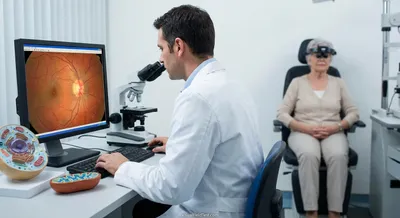
Retinal ganglion cells are the nerve cells in the eye that send visual signals from the retina to the brain. They have an especially high energy...

Inside the eye’s retina, special nerve cells called retinal ganglion cells (RGCs) work like telephone wires, carrying visual signals from the eye to...
Right now, no therapy has been proven to do this in patients. In large, decades-long studies only pressure lowering showed a clear benefit. In fact,...
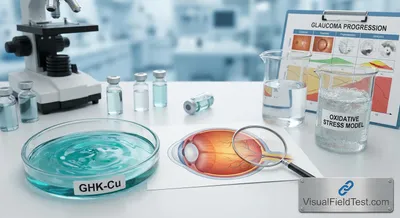
Plain-language summary: GHK-Cu is a naturally occurring protein fragment that carries copper. It is known to help wounds heal and may influence...

Current research has focused on three NAD precursors: nicotinamide (vitamin B₃), nicotinamide riboside (NR), and nicotinamide mononucleotide (NMN)....

Endothelin-1 (ET-1) is made by cells lining blood vessels throughout the body, and it helps regulate normal blood pressure and flow. In the eye, ET-1...

In a rabbit glaucoma model (pressure raised by a gel in the eye), researchers injected NGF around the eye (retrobulbar) before damage. Those rabbits...

In 2015, researchers discovered MOTS-c – a 16-amino-acid peptide encoded in mitochondrial DNA (mtDNA) (). It is produced from a short open reading...

Even if you load up on pyruvate, an inactive body won’t convert it to extra ATP unless it’s needed. Instead, the surplus pyruvate enters normal...

Photobiomodulation at 670 nm targets mitochondria, the tiny structures inside cells that make most of our energy (ATP). In mitochondria, a key enzyme...

One new idea is that damage to small retinal blood vessels might contribute to glaucoma. Normally, the tiny blood vessels in the retina have tight...

In theory, brief exposure to high oxygen (like short HBOT sessions) could activate protective pathways inside eye cells. One key pathway involves the...
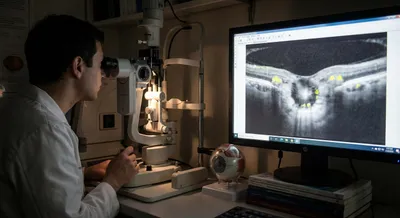
For example, imagine a treatment that boosts the survival of optic nerve fibers or blocks harmful chemical processes in the nerve. If such a...
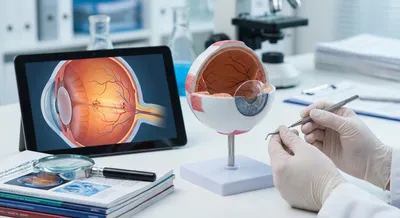
Even in cases like age-related macular degeneration or diabetic retinopathy, the optic nerve often stays healthy, so restoring vision means fixing or...

KIO-301 is one such experimental drug. It is described as a “molecular photoswitch” (). In healthy vision, photoreceptors (rods and cones) detect...

Researchers are exploring new ways to one day fix this problem by replacing or protecting those lost nerve cells. One exciting idea is to transplant...
Scientists have long dreamed of replacing lost RGCs by transplanting new cells into the retina. If new ganglion cells could be made to survive and...
Blind spots often develop gradually without symptoms. Start a free trial and take a quick visual field test to spot changes early.
Find Out NowRetinal ganglion cells are specialized nerve cells in the eye that collect visual information from other retinal neurons and send it to the brain. They sit in the innermost layer of the retina and have long fibers called axons that bundle together to form the optic nerve. These cells translate patterns of light into electrical signals that the brain interprets as shapes, motion, color, and contrast. Because each cell connects to many different photoreceptors and interneurons, they help filter and refine the visual message before it leaves the eye. Healthy retinal ganglion cells are essential for sharp, reliable vision. These cells are especially important because they cannot easily be replaced if lost, so damage leads to lasting vision problems. Conditions such as glaucoma, optic nerve injury, and some inherited diseases cause these cells to die or lose function, creating blind spots or gradual vision loss. That vulnerability is why researchers focus on protecting them, improving blood supply, and finding ways to encourage repair or regrowth. Emerging approaches include drugs that reduce harmful signals, gene treatments that promote survival, and therapies aimed at regenerating their axons. Understanding retinal ganglion cells helps explain how vision is lost in many diseases and points to strategies to preserve or restore sight.