
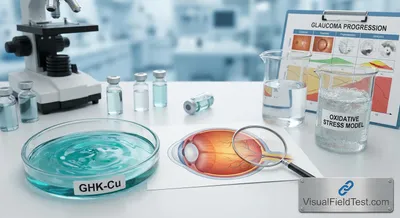
The Copper Peptide and the Optic Nerve: A Deep Look at GHK-Cu, Oxidative Stress, and Glaucoma
Plain-language summary: GHK-Cu is a naturally occurring protein fragment that carries copper. It is known to help wounds heal and may influence...
Deep research and expert guides on maintaining your visual health.
Plain-language summary: GHK-Cu is a naturally occurring protein fragment that carries copper. It is known to help wounds heal and may influence...
Blind spots often develop gradually without symptoms. Start a free trial and take a quick visual field test to spot changes early.
Find Out NowGHK-Cu is a small naturally occurring molecule made of three amino acids—glycine, histidine, and lysine—bound to a copper ion. This compact complex can enter cells and interact with biological systems involved in repair, inflammation, and maintenance. Laboratory studies show it can stimulate production of structural proteins such as collagen and other components that support tissue integrity and wound healing. It also appears to influence antioxidant systems and gene activity related to cell maintenance and stress response. Because of these effects, GHK-Cu has attracted interest for skin health, tissue repair, and protection against cellular stress, and it appears in some topical formulations and research studies. There is also ongoing investigation into whether it can support nerve cells or reduce damage from oxidative stress, but this evidence is still developing. The way it behaves depends on dose, delivery method, and formulation, so practical benefits vary. As with many biologically active compounds, more clinical research is needed to confirm long-term safety and effectiveness.