
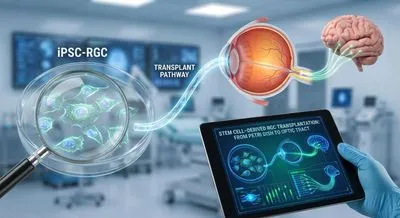
Трансплантація РГК, отриманих зі стовбурових клітин: Від чашки Петрі до зорового тракту
Вступ Глаукома є провідною причиною необоротної сліпоти в усьому світі, оскільки ретинальні гангліонарні клітини (РГК), що з'єднують око з мозком, від...
Dziļi pētījumi un ekspertu rokasgrāmatas par jūsu redzes veselības uzturēšanu.
Вступ Глаукома є провідною причиною необоротної сліпоти в усьому світі, оскільки ретинальні гангліонарні клітини (РГК), що з'єднують око з мозком, від...
はじめに 緑内障は、眼と脳をつなぐ網膜神経節細胞(RGC)が死滅し、再生できないために、世界中で不可逆的な失明の主要な原因となっています (pmc.ncbi.nlm.nih.gov)。RGCがなければ、網膜からの視覚信号は脳の中心部(外側膝状体や上丘など)に到達できないため、視力が失われます。現在の...
Einleitung Glaukom ist weltweit eine Hauptursache für irreversible Blindheit, da die retinalen Ganglienzellen (RGCs), die das Auge mit dem Gehirn verb...
Introduction Glaucoma is a leading cause of irreversible blindness worldwide because the retinal ganglion cells (RGCs) that connect the eye to the bra...
Sāciet bezmaksas redzes lauka testu mazāk nekā 5 minūtēs.
Sākt testu tagadiPSC stands for induced pluripotent stem cell, a cell created by reprogramming an ordinary adult cell back into a stem-like state. These cells regain the ability to become many different kinds of cells in the body, such as nerve cells, heart cells, or retinal cells. Scientists make them by turning on a set of genes or using molecules that reset the cell’s identity without using embryos. Because they come from adult tissues like skin or blood, they avoid many of the ethical concerns tied to embryonic stem cells. iPSC are very useful for studying disease because they can be made from a patient’s own cells to model that person’s condition in the lab. Researchers can use them to test drugs, study how diseases develop, and explore ways to replace damaged tissue. They hold promise for personalized therapies where a patient could receive cells made from their own body, reducing the chance of immune rejection. However, making reliable, safe cell products is still challenging because reprogramming can introduce genetic changes and some iPSC-derived cells may form unwanted growths. Scientists are working to improve reprogramming methods, control cell differentiation better, and ensure long-term safety before widespread clinical use. Even with hurdles, iPSC technology has transformed biology by giving researchers a powerful, flexible tool to study human cells and imagine new treatments.