
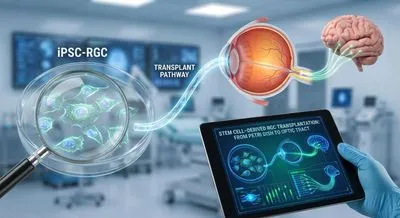
Stamcelleafledt RGC-transplantation: Fra petriskål til synsnervebane
RGC'er er ikke en ensartet celletype. Dusinvis af RGC-subtyper eksisterer (f.eks. bevægelsesfølsomme retningsselektive celler, on/off-center celler,...
Dybtgående forskning og ekspertguider til vedligeholdelse af dit syn.
RGC'er er ikke en ensartet celletype. Dusinvis af RGC-subtyper eksisterer (f.eks. bevægelsesfølsomme retningsselektive celler, on/off-center celler,...
Blinde pletter udvikler sig ofte gradvist uden symptomer. Start en gratis prøveperiode og tag en hurtig synsfeltstest for at opdage ændringer tidligt.
Find ud af det nuiPSC står for "inducerede pluripotente stamceller" og er almindelige celler, som forskere omprogrammerer til at opføre sig som tidlige stamceller. Det betyder, at de kan dele sig mange gange og udvikle sig til mange forskellige celletyper i kroppen, for eksempel hud, nerveceller eller muskelceller. Cellerne laves typisk ved at tilføre nogle få genprodukter eller faktorer, der ændrer celleidentiteten uden at bruge embryonale kilder. Fordelen er, at man kan få celler, der ligner patientens egne, hvilket gør dem nyttige i forskning og medicinsk udvikling. iPSC giver en måde at studere sygdomme i celler fra den rigtige person og teste lægemidler på humane celler i laboratoriet. De bruges også til at undersøge, hvordan celler udvikler sig, og hvilke ændringer der fører til sygdom. iPSC er vigtige, fordi de åbner muligheder for skræddersyede behandlinger, hvor syge eller manglende celler kan erstattes med patientens eget materiale. Der er dog udfordringer: omprogrammering kan give genetiske ændringer, og der er risiko for, at cellerne udvikler sig ukontrolleret. Forskere arbejder derfor på at gøre metoderne sikrere og forstå, hvilke celler man trygt kan bruge i behandling. På lang sigt kan iPSC bidrage til personlig medicin, bedre lægemiddelforsøg og nye former for vævsterapi til sygdomme, der i dag er svære at behandle. På den måde har iPSC potentialet til at ændre, hvordan vi forstår og behandler mange sygdomme.