
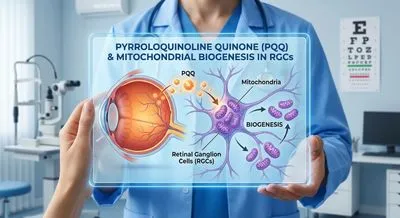
Pyrroloquinoline Quinone (PQQ) and Mitochondrial Biogenesis in RGCs
PQQ was first discovered as a cofactor for certain bacterial enzymes, but later found to be important in animal nutrition. Because animals cannot...
Deep research and expert guides on maintaining your visual health.
PQQ was first discovered as a cofactor for certain bacterial enzymes, but later found to be important in animal nutrition. Because animals cannot...
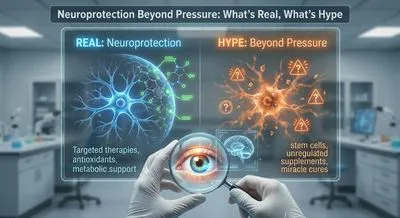
A recent review reminds us that after decades of work, “only a handful of neuroprotective therapies have succeeded clinically” (). In other words,...
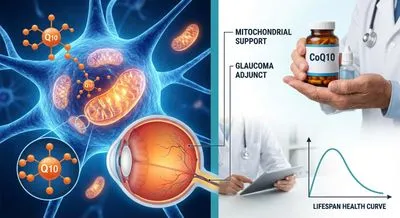
Notably, in the topical CoQ10 trial (), all eyes were also on standard drugs (timolol/dorzolamide), and CoQ10-treated eyes fared better. Thus, CoQ10...
Visual field loss from conditions like glaucoma can go unnoticed. Start a free trial and screen for potential blind spots in minutes.
Coenzyme Q10 is a small molecule that cells use to help make energy. It lives inside mitochondria, the parts of cells that act like power plants, and helps carry electrons in the chain that produces the energy molecule ATP. Because of that role, cells that need a lot of energy — like heart muscle cells and cells in the eye — depend on enough Coenzyme Q10 to work well. The molecule also has antioxidant properties, so it can help protect cells from damaging reactive molecules that form during normal metabolism. In the body it appears in two main forms, and one form is easier for some tissues to use. Levels of Coenzyme Q10 tend to fall with age and with some health conditions, which has led people to study whether boosting it might help preserve function. Some people take it as a dietary supplement to support energy, aging tissues, or recovery after illness. If you consider taking a supplement, it’s wise to talk with a healthcare provider about dose, form, and possible interactions. Overall, Coenzyme Q10 matters because it connects basic cell energy production with the body's ability to withstand stress and maintain healthy function over time.