
Introduction
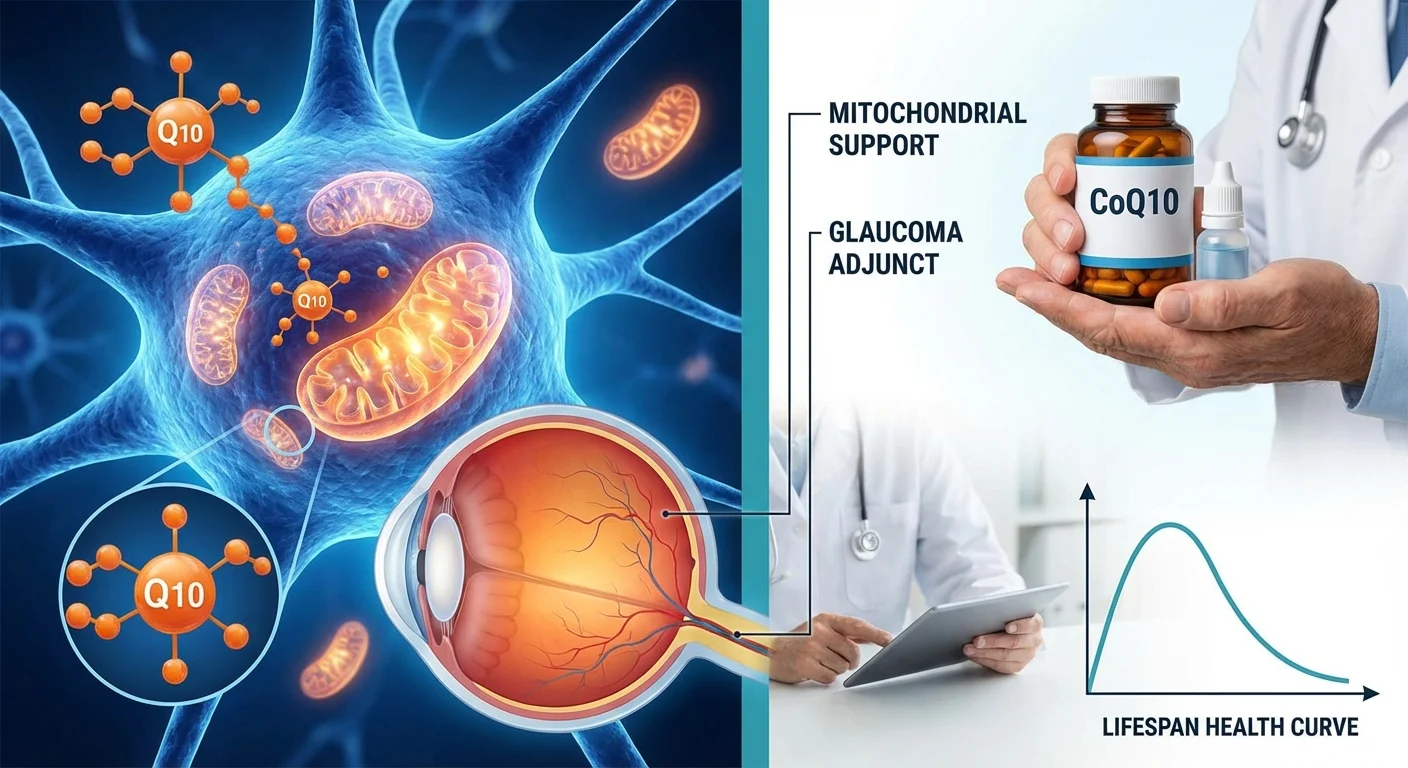
Glaucoma is a progressive optic neuropathy marked by retinal ganglion cell (RGC) death and visual field loss (pmc.ncbi.nlm.nih.gov). Although lowering intraocular pressure (IOP) is the mainstay of treatment, many patients continue to lose vision despite controlled IOP, suggesting additional factors contribute to injury (pmc.ncbi.nlm.nih.gov). Mitochondrial dysfunction and oxidative stress are increasingly recognized in glaucomatous optic nerve damage (pmc.ncbi.nlm.nih.gov). Coenzyme Q10 (CoQ10) – a lipophilic cofactor of mitochondrial oxidative phosphorylation – emerges as a candidate neuroprotectant. CoQ10 shuttles electrons between complexes I/II and complex III in the electron transport chain and also scavenges reactive oxygen species (ROS) (pubmed.ncbi.nlm.nih.gov) (pmc.ncbi.nlm.nih.gov). In tissues with high energy demand and low antioxidant reserve, such as the retina and optic nerve, CoQ10 may support cellular bioenergetics and reduce oxidative damage. This article reviews CoQ10’s mitochondrial and antioxidant roles in the eye, evidence from animal and clinical glaucoma studies (including interactions with IOP-lowering drugs), and related systemic findings in aging and cardiometabolic health. We also discuss CoQ10 bioavailability, safety, and gaps in clinical evidence for glaucoma endpoints.
CoQ10 in Mitochondrial Energy Metabolism
CoQ10 is synthesized endogenously by mitochondria and is essential for adenosine triphosphate (ATP) production. In the inner mitochondrial membrane, ubiquinone (CoQ10) accepts electrons from complex I and II and transfers them to complex III, driving proton pumping and ATP synthesis via oxidative phosphorylation (pubmed.ncbi.nlm.nih.gov) (pmc.ncbi.nlm.nih.gov). Nearly every cell in the body contains CoQ10, with especially high concentrations in tissues with large mitochondria – such as the heart, brain, and retina (pubmed.ncbi.nlm.nih.gov) (pmc.ncbi.nlm.nih.gov). Studies indicate that CoQ10 levels decline with age or when biosynthesis is impaired; this decline may limit mitochondrial efficiency and increase oxidative stress (pubmed.ncbi.nlm.nih.gov). In fact, aging, chronic disease and some medications (e.g. statins) can lower tissue CoQ10 levels, potentially contributing to cellular dysfunction (pubmed.ncbi.nlm.nih.gov). Oral CoQ10 supplementation (300 mg/day or more) raises circulating and tissue CoQ10 and has shown benefits in disorders associated with mitochondrial dysfunction (pubmed.ncbi.nlm.nih.gov).
CoQ10 as an Antioxidant in the Retina and Optic Nerve
Beyond its role in the electron transport chain, CoQ10 is a potent antioxidant. In its reduced form (ubiquinol), it directly neutralizes ROS and regenerates other antioxidants in membranes (pubmed.ncbi.nlm.nih.gov) (pmc.ncbi.nlm.nih.gov). The retina (particularly photoreceptors and RGCs) consumes oxygen at a very high rate and is susceptible to oxidative injury. CoQ10 is abundant in retinal mitochondria, and experimental studies show it can protect retinal cells from oxidative damage. For example, a seminal review noted that topical CoQ10 halted RGC apoptosis in rat glaucoma models (pmc.ncbi.nlm.nih.gov). Likewise, systemic CoQ10 in murine glaucoma preserved optic nerve axons by inhibiting oxidative-stress enzymes (lowering SOD2 and HO-1 expression) (pmc.ncbi.nlm.nih.gov). These findings support the concept that CoQ10 maintains oxidative phosphorylation while countering excessive ROS in retinal and optic nerve tissues. In vitro, CoQ10 has been shown to prevent glutamate excitotoxic injury to neurons – a mechanism relevant to glaucoma – which may reflect its mitochondrial support as well as its radical-scavenging activity (pmc.ncbi.nlm.nih.gov) (pmc.ncbi.nlm.nih.gov). Importantly, CoQ10 can modulate glial responses: it inhibits stress-induced astrocyte activation in the optic nerve head and preserves expression of mitochondrial transcription factors (e.g. Tfam), thereby sustaining DNA and membrane integrity under ischemic or hypertensive stress (pmc.ncbi.nlm.nih.gov).
Topical and Oral CoQ10 Delivery
Topical Formulations
Topical CoQ10 eye drops have been formulated (often combined with vitamin E to enhance solubility) for ocular neuroprotection. Animal studies confirm that CoQ10 penetrates into the posterior eye. For instance, patients who received CoQ10/vitamin E drops prior to eye surgery had detectable CoQ10 in the vitreous, demonstrating corneal and retinal delivery (pmc.ncbi.nlm.nih.gov). In rodent models of ocular hypertension, CoQ10 eye drops preserved RGCs and inner retinal layers (pmc.ncbi.nlm.nih.gov). Topical CoQ10 (often with vitamin E TPGS as a solubilizer) appears to mitigate mitochondrial dysfunction and oxidative stress in retinal cells in diabetic and glaucoma models. An eye-drop delivery avoids systemic dilution and targets the retina, but bioavailability is still limited by corneal permeability and formulation challenges. Commercial products (e.g. Coqun®, 0.5% CoQ10 with 0.5% vitamin E) and experimental nanocarriers have been developed to enhance ocular uptake.
Oral Supplementation
Oral CoQ10 supplements (ubiquinone or ubiquinol forms) are widely used for systemic mitochondrial support. After ingestion, dietary CoQ10 is incorporated into chylomicrons and transported in blood bound to lipoproteins (pmc.ncbi.nlm.nih.gov). Plasma levels rise dose-dependently, although with notable inter-individual variability (pmc.ncbi.nlm.nih.gov). Neither ubiquinone nor ubiquinol form proved clearly superior for absorption in older adults, reflecting a physiological limit on uptake (pmc.ncbi.nlm.nih.gov). Importantly, orally administered CoQ10 is taken up by many tissues – including heart, muscle and neural tissues – as indicated by experiments in surgical patients, and presumably benefits retinal mitochondria too (pmc.ncbi.nlm.nih.gov). High-dose CoQ10 (up to several hundred mg daily) safely elevates plasma concentrations; in one review, chronic dosing of 300 mg/day (≈5 mg/kg) was associated with a safety margin over 60-fold (www.ncbi.nlm.nih.gov). Thus, daily oral CoQ10 regimens (100–300 mg) raise systemic CoQ10 in aging patients and have been well tolerated (www.ncbi.nlm.nih.gov) (pmc.ncbi.nlm.nih.gov).
Evidence from Clinical and Translational Studies
Animal and Cellular Models
Preclinical glaucoma models have consistently shown that CoQ10 confers neuroprotection. In hypertensive rat eyes, topical CoQ10 (±vitamin E) reduced RGC apoptosis and retinal oxidative stress (pmc.ncbi.nlm.nih.gov). In DBA/2J mice (a hereditary glaucoma model), dietary CoQ10 preserved RGCs and optic nerve axons, maintained complex IV enzyme levels, and reduced reactive gliosis (pmc.ncbi.nlm.nih.gov) (pmc.ncbi.nlm.nih.gov). In ischemia–reperfusion injury, CoQ10 supported mitochondrial biogenesis and prevented mitochondrial DNA loss (pmc.ncbi.nlm.nih.gov). CoQ10 also attenuated glutamate excitotoxicity in retinal ganglion cell cultures and prevented mitochondrial damage in vivo (pmc.ncbi.nlm.nih.gov) (pmc.ncbi.nlm.nih.gov). Taken together, these translational studies suggest CoQ10 maintains RGC energy metabolism and inhibits stress signaling under glaucomatous conditions.
Visual Function Outcomes
Human data, though limited, support a functional benefit of CoQ10. In one randomized controlled trial, one eye of glaucoma patients received CoQ10+vitamin E drops (Coqun®) added to standard IOP therapy, while the fellow eye served as control (IOP medications alone) (pubmed.ncbi.nlm.nih.gov). After 6–12 months, the CoQ10-treated eyes showed improved electrophysiological responses: pattern visual evoked potential (VEP) P100 amplitudes increased and implicit times decreased, whereas control eyes worsened (pubmed.ncbi.nlm.nih.gov). Similarly, visual fields were more stable in CoQ10-treated eyes. At 12 months, no visual field deterioration occurred in ~67% of treated eyes, compared to only 50% of controls (pubmed.ncbi.nlm.nih.gov). Optical coherence tomography showed less decline in retinal nerve fiber layer (RNFL) thickness with CoQ10, though both groups thinned over time (pubmed.ncbi.nlm.nih.gov). These results suggest that CoQ10 (with vitamin E) can enhance inner retinal function and slow visual loss under glaucomatous stress (pubmed.ncbi.nlm.nih.gov).
Another pilot study in pseudoexfoliation glaucoma reported that topical CoQ10+vitamin E significantly lowered aqueous markers of oxidative stress (reduced superoxide dismutase levels) versus untreated eyes (pmc.ncbi.nlm.nih.gov). (Serum or perfusion parameters were not directly measured.) Although clinical trials are few, these human data align with preclinical findings: CoQ10 supplementation has measurable, beneficial effects on electrophysiological and field outcomes when added to IOP-lowering regimens (pubmed.ncbi.nlm.nih.gov) (pmc.ncbi.nlm.nih.gov).
Ocular Perfusion and IOP-Drug Synergy
CoQ10 may also influence ocular blood flow and the systemic effects of glaucoma medications. In congestive heart failure, CoQ10 improves cardiac output; analogously, CoQ10 could enhance optic nerve head perfusion. In a clinical trial, oral CoQ10 (90 mg/day for 6 weeks) attenuated the cardiovascular side effects of timolol eye drops – vales like heart rate and stroke index were less suppressed – without diminishing timolol’s IOP reduction (pubmed.ncbi.nlm.nih.gov). This suggests CoQ10 may mitigate beta-blocker contraindications in glaucoma patients with cardiac risk (pubmed.ncbi.nlm.nih.gov). No study to date has shown a direct synergistic increase in ocular blood flow, but CoQ10’s vasoprotective properties (e.g. enhancing nitric oxide availability) raise this possibility.
Notably, in the topical CoQ10 trial (pubmed.ncbi.nlm.nih.gov), all eyes were also on standard drugs (timolol/dorzolamide), and CoQ10-treated eyes fared better. Thus, CoQ10 appears safe to combine with pressure-lowering agents and may even bolster their neuroprotective effects. In other models, CoQ10 prevented ischemia‐reperfusion damage, further supporting a vascular or metabolic synergy (pmc.ncbi.nlm.nih.gov). Overall, current evidence indicates CoQ10 does not interfere with IOP control and may complement conventional therapy, especially by protecting RGCs from ischemic or systemic stress (pubmed.ncbi.nlm.nih.gov) (pubmed.ncbi.nlm.nih.gov).
CoQ10 and Systemic Health in Aging
A broader view of CoQ10 underscores its relevance to age-related health and mitochondrial function. Many studies link low CoQ10 to cardiometabolic disease: levels fall with age, obesity, diabetes and heart failure, correlating with increased oxidative stress (pubmed.ncbi.nlm.nih.gov) (pubmed.ncbi.nlm.nih.gov). Randomized trials indicate that CoQ10 supplementation (often 100–300 mg/day) can improve symptoms of heart failure, reduce cardiovascular events, and lower blood pressure and lipid peroxidation in patients with metabolic syndrome (pubmed.ncbi.nlm.nih.gov) (pubmed.ncbi.nlm.nih.gov). For example, one review noted that CoQ10 is “tightly linked” to cardiometabolic disorders, and its use appears beneficial in hypertension, ischemic heart disease, and type 2 diabetes (pubmed.ncbi.nlm.nih.gov). In neurodegenerative aging as well, CoQ10 supports neuronal mitochondria; trials have explored it in Parkinson’s and Alzheimer’s with some positive signals (though results vary) (pubmed.ncbi.nlm.nih.gov) (pmc.ncbi.nlm.nih.gov).
The importance of CoQ10 in aging physiopathology suggests that its ocular benefits might extend beyond glaucoma. By preserving mitochondrial function, CoQ10 could potentially reduce other age-related retinal diseases. Furthermore, since many glaucoma patients are elderly and often on statins or other drugs that deplete CoQ10, supplementation may generally support their systemic and ocular energy metabolism. Thus, findings from cardiology and gerontology reinforce the rationale for CoQ10 in ocular health, while also reminding us of its safety and tolerability over long-term use (pubmed.ncbi.nlm.nih.gov) (pmc.ncbi.nlm.nih.gov).
Bioavailability and Pharmacokinetics
Despite its promise, CoQ10 supplementation faces bioavailability challenges. CoQ10 is extremely lipophilic and tends to form crystalline aggregates, limiting its dissolution and absorption in the gut. After oral ingestion, only a small fraction of a dose appears in plasma (pmc.ncbi.nlm.nih.gov). Studies show large inter-individual variability: nearly equal doses of ubiquinone or ubiquinol yielded statistically similar blood levels in older adults (pmc.ncbi.nlm.nih.gov). In other words, intestinal uptake of CoQ10 appears saturable and independent of its administered form (pmc.ncbi.nlm.nih.gov). For ocular delivery, topical CoQ10 must circumvent corneal barriers. Combining CoQ10 with vitamin E derivatives or cyclodextrins increases solubility; novel formulations (lipid emulsions, nanoparticles, water-soluble complexes) have been developed to boost ocular penetration. For example, a cyclodextrin-based CoQ10 formulation showed higher bioavailability than standard ubiquinone capsules in one study (pmc.ncbi.nlm.nih.gov).
Once absorbed, CoQ10 is transported in the blood primarily in the reduced (ubiquinol) state bound to LDL and VLDL, and it is taken up into tissues via lipoprotein receptors (pmc.ncbi.nlm.nih.gov) (pmc.ncbi.nlm.nih.gov). In humans, even after good supplement formulation, only nanomolar plasma levels are achieved, and tissue saturation is debated. Importantly, one pharmacokinetic review concluded that CoQ10 absorption is highly variable and that “the body is limited in how much CoQ10 it can absorb at a given time,” whether as ubiquinone or ubiquinol (pmc.ncbi.nlm.nih.gov). Clinicians should recognize that oral CoQ10 may require relatively high daily doses (100–300 mg or more) to achieve therapeutic tissue levels, and that peak plasma concentrations plateau. For ocular trials, this means standard systemic doses might have only modest retinal effects; conversely, topical dosing must contend with rapid clearance from the eye.
Safety and Dosing
CoQ10 is generally very safe. Large clinical reviews report minimal adverse effects even at high doses. In preclinical toxicology, the no-observed-adverse-effect level (NOAEL) for ubiquinol was 300–600 mg/kg in rats (www.ncbi.nlm.nih.gov). In humans, chronic supplementation up to 300 mg/day (≈5 mg/kg) translated to a safety factor between 60× and 120× relative to animal data (www.ncbi.nlm.nih.gov). Reported side effects in trials are usually limited to mild gastrointestinal symptoms or insomnia in a few patients. There have been no serious toxicities attributed to CoQ10 in long-term studies. Importantly, high-dose CoQ10 (at least 1200 mg/day) has been administered in rare cases (e.g. mitochondrial disease trials) without major issues (www.ncbi.nlm.nih.gov). CoQ10 does not have known serious drug interactions, though its levels may rise slightly in patients on warfarin or simvastatin metabolism (since simvastatin competes for CoQ10 synthesis).
Standard supplementation regimens for systemic use range from 100 to 300 mg per day (www.ncbi.nlm.nih.gov). For glaucoma research, oral CoQ10 is often given at the higher end of this range. Topical formulations typically deliver a few milligrams per drop (e.g. 0.5% solution). Because CoQ10 is fat-soluble, taking it with a meal and adequate fat can improve absorption. Overall, safety is not a limiting factor for CoQ10 twin to ocular use. Rather, the challenge is demonstrating a clear dose–response for efficacy in glaucoma; such dose–response curves remain undefined. No current glaucoma trial has systematically varied CoQ10 dose to establish an optimal therapeutic window. Until larger trials are done, dosing will largely follow precedent (e.g. 100–200 mg oral daily, or 0.5% topical) and be guided by tolerability.
Conclusions
Experimental and early clinical evidence suggests that CoQ10 – by enhancing mitochondrial ATP production and quenching oxidative stress – may serve as a useful adjunct in glaucoma management. In the retina and optic nerve, CoQ10 supports neuronal survival under stress (pmc.ncbi.nlm.nih.gov) (pmc.ncbi.nlm.nih.gov). Topical CoQ10 (often with vitamin E) has shown neuroprotective effects in animal models and improved electrophysiological and visual field outcomes in small human studies (pubmed.ncbi.nlm.nih.gov) (pmc.ncbi.nlm.nih.gov). Systemically, CoQ10 is well-studied in aging and cardiometabolic conditions and is known to be safe at moderate doses (pubmed.ncbi.nlm.nih.gov) (pubmed.ncbi.nlm.nih.gov). These systemic findings strengthen the rationale for CoQ10 in ocular neurodegeneration and suggest shared mechanisms across aging tissues.
However, important gaps remain. Bioavailability constraints mean that achieving therapeutic retinal concentrations may require optimized formulations or combination therapies. No large randomized trial has yet proven that CoQ10 supplementation slows glaucoma progression; the only controlled ocular study to date involved fewer than 100 eyes (pubmed.ncbi.nlm.nih.gov). Further work is needed to define the optimal dose, treatment duration, and patient subgroups most likely to benefit. Meanwhile, given its favorable safety profile and the plausible mechanism of action, integrating CoQ10 (as eye drops or oral supplement) into comprehensive glaucoma care appears promising. Future research will clarify whether CoQ10 can translate its mitochondrial support into measurable improvements in vision and ocular perfusion for glaucoma patients.