
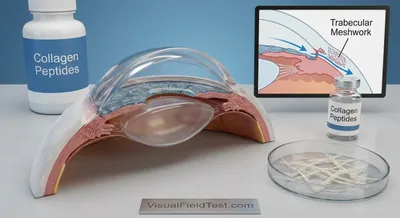
Peptida Kolagen dan Trabecular Meshwork: Kaitan Mekanistik dengan Tekanan Intraokular
Pada mata yang sehat, TM dan KS bekerja sama seperti sistem perpipaan. TM adalah jaringan spons berpori yang dilapisi oleh sel endotel, dan terletak...
Penelitian mendalam dan panduan ahli untuk menjaga kesehatan visual Anda.
Pada mata yang sehat, TM dan KS bekerja sama seperti sistem perpipaan. TM adalah jaringan spons berpori yang dilapisi oleh sel endotel, dan terletak...
Lacak perubahan penglihatan tepi di antara kunjungan dokter mata. Mulai uji coba gratis Anda dan dapatkan hasil dalam waktu kurang dari 5 menit.
Istilah ini menunjuk ke jaringan berbentuk seperti anyaman halus yang terletak di sudut depan mata, antara kornea dan iris. Fungsi utamanya adalah mengatur aliran cairan mata yang disebut humor aqueous, sehingga membantu menjaga tekanan dalam bola mata tetap seimbang. Ketika jaringan ini bekerja dengan baik, cairan bisa mengalir keluar secara teratur dan tekanan intraokular tetap normal. Namun jika jaringan ini tersumbat atau rusak, aliran cairan terganggu dan tekanan di dalam mata dapat meningkat. Peningkatan tekanan yang tidak terkontrol berisiko merusak saraf optik dan menyebabkan kondisi yang dikenal sebagai glaukoma. Karena fungsinya yang krusial, jaringan ini menjadi fokus dalam diagnosis dan pengobatan glaukoma, termasuk terapi obat dan prosedur bedah yang bertujuan memperbaiki drainase. Menjaga kesehatan jaringan ini penting untuk mempertahankan penglihatan yang baik, terutama pada orang yang berisiko mengalami gangguan tekanan mata.