
Resveratrol’s Promise in Glaucoma: Ocular Cells and Systemic Aging
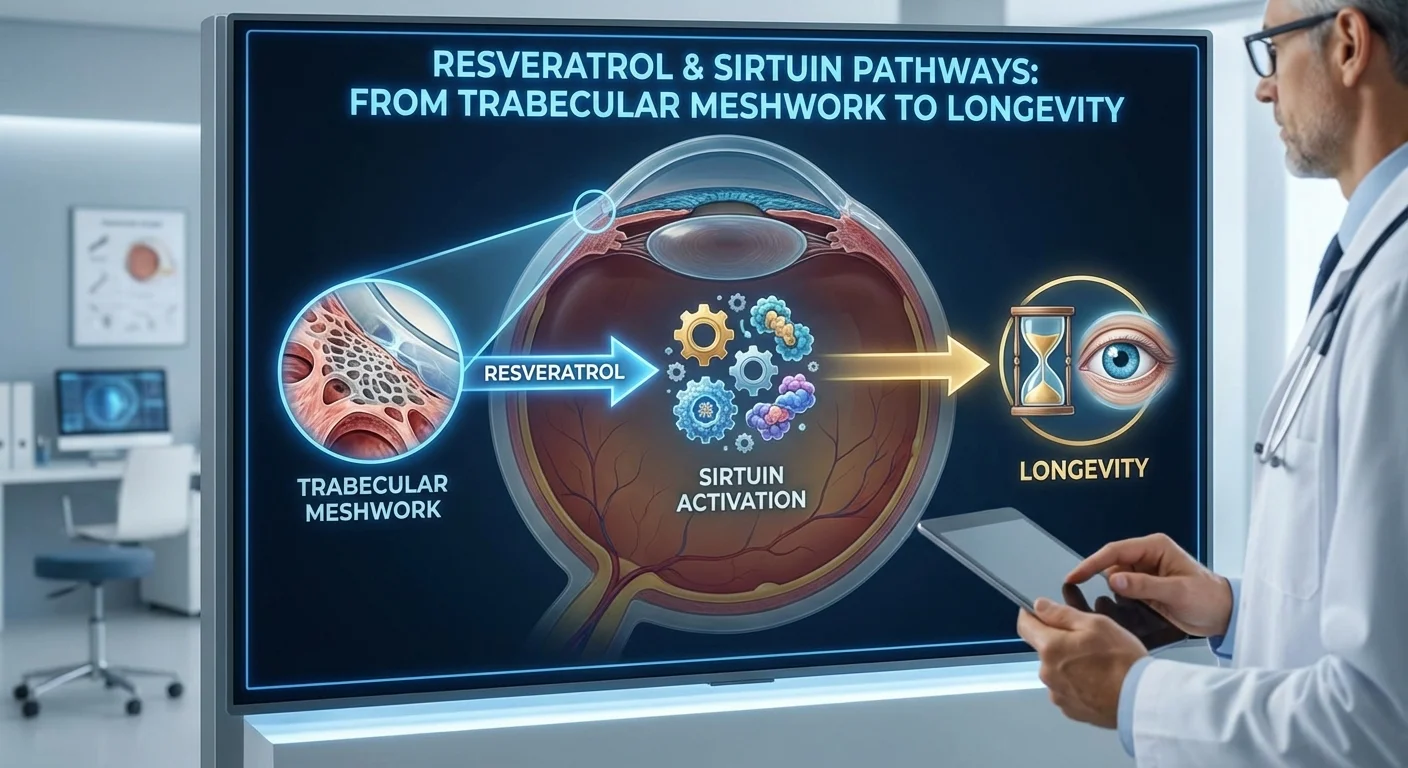
Resveratrol is a polyphenolic compound often touted as a “caloric restriction mimetic” and SIRT1 activator with antioxidant and anti-inflammatory effects. Early studies showed resveratrol can boost stress resistance and extend lifespan in organisms from yeast to mammals (pmc.ncbi.nlm.nih.gov). In cells and animal models, resveratrol activates SIRT1 – a deacetylase linked to longevity – which in turn induces autophagy (cellular cleanup) required for its healthspan benefits (pmc.ncbi.nlm.nih.gov). These same pathways – reduced oxidative stress, enhanced cellular renewal – underlie interest in resveratrol for age-related eye diseases. In glaucoma, where trabecular meshwork (TM) cells and retinal ganglion cells (RGCs) suffer chronic stress and senescence, resveratrol’s anti-aging mechanisms are being explored.
Trabecular Meshwork: Fighting Senescence and Stress
The TM tissue acts as the eye’s drainage filter and becomes less cellular and more dysfunctional in glaucoma. Chronic oxidative stress and inflammation in TM cells trigger senescence (marked by SA-β-gal, lipofuscin) and cytokine release (IL-1α, IL-6, IL-8, ELAM-1). In cultured TM cells subjected to high oxygen stress, chronic resveratrol (25 µM) virtually abolished the rise in reactive oxygen species (ROS) and inflammatory markers, and sharply reduced senescence markers (pmc.ncbi.nlm.nih.gov). In one study, resveratrol-treated TM cells had much lower SA-β-gal activity and protein carbonylation despite oxidative challenge (pmc.ncbi.nlm.nih.gov). This suggests resveratrol may preserve TM cell health by blocking stress-induced aging.
Resveratrol also influences Nitric Oxide (NO) pathways in TM cells. In glaucomatous human TM cells, resveratrol increased endothelial NO synthase (eNOS) expression and boosted NO levels, while lowering inducible NOS (iNOS) at higher doses (pmc.ncbi.nlm.nih.gov). Since NO promotes blood flow and may reduce outflow resistance, increased NO could improve ocular perfusion and outflow facility. Likewise, lowering iNOS (which drives damaging oxidative stress) underscores resveratrol’s antioxidant role (pmc.ncbi.nlm.nih.gov). These effects align with its anti-inflammatory action: resveratrol downregulates pro-inflammatory IL-1α and related cytokines in TM cells (pmc.ncbi.nlm.nih.gov).
Resveratrol’s benefits may also extend to autophagy in TM cells. Although specific ocular data are scarce, resveratrol is known to promote autophagy via SIRT1 in many cell types (pmc.ncbi.nlm.nih.gov). Autophagy is the process that clears damaged proteins and organelles, and it typically declines with age. Inducing autophagy could help TM cells dispose of stress-damaged components and maintain outflow function. In summary, preclinical TM data indicate resveratrol buffers TM cells against chronic stress and aging (pmc.ncbi.nlm.nih.gov) (pmc.ncbi.nlm.nih.gov).
Retinal Ganglion Cells: Neuroprotection and SIRT1
Glaucomatous loss of RGCs leads to vision loss, and protecting these neurons is a key goal. In multiple rodent and cell studies, resveratrol has consistently shown neuroprotective effects on RGCs. It promotes RGC survival under stress by antioxidant and anti-apoptotic mechanisms (pmc.ncbi.nlm.nih.gov). For example, in cultured RGCs exposed to hydrogen peroxide (H₂O₂), resveratrol stimulated cell survival and growth, reduced apoptotic signaling, and lowered ROS levels (pmc.ncbi.nlm.nih.gov). It also blocked hypoxia-induced RGC death by suppressing pro-death pathways (e.g. diminishing ErbB2 protein) (pmc.ncbi.nlm.nih.gov). These actions are mediated in part via SIRT1: resveratrol prevents phosphorylation of stress kinases (c-Jun N-terminal kinase) in RGCs through SIRT1-dependent mechanisms (pmc.ncbi.nlm.nih.gov).
In animal models of retinal ischemia or ocular hypertension – experimental analogs of glaucoma – resveratrol treatment preserves retinal structure. One study of rats with acute retinal ischemia-reperfusion found that resveratrol injections significantly reduced retinal thinning and RGC loss. This was accompanied by restoration of mitochondrial optic atrophy protein-1 (Opa1) levels and superoxide dismutase (SOD) activity, both of which had been suppressed by the injury (pmc.ncbi.nlm.nih.gov). In other words, resveratrol-treated eyes had healthier mitochondria (Opa1) and antioxidant defense (SOD), leading to less RGC apoptosis (pmc.ncbi.nlm.nih.gov). Correspondingly, resveratrol partially restored retinal SIRT1 that was otherwise lost after ischemic injury (pmc.ncbi.nlm.nih.gov). Since SIRT1 upregulation promotes cell survival (and is required for resveratrol to activate autophagy) (pmc.ncbi.nlm.nih.gov) (pmc.ncbi.nlm.nih.gov), these findings link ocular effects to its systemic anti-aging role.
A recent meta-analysis of ~30 preclinical studies confirmed these trends: resveratrol-treated animals had much higher RGC counts, thicker retinas, and better visual function than controls. Pooled data showed a large effect size for RGC survival and retinal thickness with resveratrol (pmc.ncbi.nlm.nih.gov). Notably, resveratrol treatment consistently elevated retinal SIRT1 protein in these models, suggesting a shared pathway for neuroprotection (pmc.ncbi.nlm.nih.gov). In short, animal data strongly support resveratrol as a neuroprotective agent for RGCs, leveraging antioxidant, anti-inflammatory, mitochondrial, and SIRT1-mediated effects (pmc.ncbi.nlm.nih.gov) (pmc.ncbi.nlm.nih.gov).
Human Evidence: Oxidative Markers and Blood Flow
Human data on resveratrol in eye disease are limited but offer hints of benefit. Pharmacokinetic studies show that after oral dosing, resveratrol and its metabolites do reach ocular tissues. In patients given an oral resveratrol supplement (Longevinex), measurable resveratrol-sulfate metabolites were found in aqueous and vitreous humor during eye surgery, and even intact resveratrol appeared in conjunctival tissue (pmc.ncbi.nlm.nih.gov). This confirms that orally taken resveratrol can penetrate the eye, at least as metabolites.
One small clinical trial demonstrated a direct effect on ocular blood flow: healthy adults receiving a single dose of a resveratrol-rich supplement had a significant increase in choroidal thickness as measured by OCT within 1 hour (escholarship.org). The foveal choroid thickened by ~6%, suggesting acute vasodilation of choroidal blood vessels. In contrast, placebo had no effect (escholarship.org). This supports the notion that resveratrol can enhance ocular perfusion in humans, consistent with its known vasodilatory action (pmc.ncbi.nlm.nih.gov) (escholarship.org). Improved blood flow might help deliver nutrients to the optic nerve head, though its clinical relevance in glaucoma is still speculative.
Systemic biomarkers in humans give a cautious perspective. Meta-analyses of clinical trials report that resveratrol supplements raise glutathione peroxidase levels modestly but generally do not significantly change SOD, malondialdehyde (MDA) or total antioxidant capacity (pubmed.ncbi.nlm.nih.gov). In other words, the impact of resveratrol on blood oxidative markers has been modest and inconsistent. No trials to date have examined resveratrol in glaucoma patients per se, nor linked it to preservation of visual field or IOP. At most, human data show that resveratrol can behave as an antioxidant and vasodilator in the eye (increasing perfusion (pmc.ncbi.nlm.nih.gov) (escholarship.org)) but without definitive evidence of slowing glaucoma progression.
Systemic Sirtuins and Healthy Aging
Resveratrol’s ocular benefits likely tie back to its systemic action on sirtuins and metabolic health. SIRT1 activation by resveratrol recapitulates some effects of calorie restriction, a regimen known to extend lifespan. In cell and animal models, dietary restriction or resveratrol only prolongs life when autophagy (linked to SIRT1) is intact (pmc.ncbi.nlm.nih.gov). SIRT1 also influences many longevity pathways (mitochondrial biogenesis, DNA repair, inflammation control) that affect brain, muscle, and eye health. For example, mice on high-fat diets lived longer with resveratrol treatment than without it (pmc.ncbi.nlm.nih.gov), demonstrating global benefits beyond the eye.
However, human trials of resveratrol in aging populations have been underwhelming. Studies in elderly or diabetic adults found no clear increase in SIRT1 activity or major metabolic improvements, except slight enzyme changes (pubmed.ncbi.nlm.nih.gov). No large trials have shown resveratrol extending human lifespan or preventing age-related disease. Thus, while resveratrol fits the theory of a CR mimetic, actual healthy-aging outcomes in people are uncertain. The ocular effects (neuroprotection, vessel dilation) mirror its general anti-inflammatory/antioxidant roles, but translation to patients is unproven. In glaucoma, SIRT1 itself is neuroprotective (overexpression delays RGC loss in rats), and resveratrol-dependent SIRT1 activation in animal eyes likely explains much of its retinal benefit (pmc.ncbi.nlm.nih.gov) (pmc.ncbi.nlm.nih.gov). Still, humans vary in absorption and metabolism of resveratrol, so systemic dosing regimens may not reliably activate ocular SIRT1.
Bioavailability, Formulations and Expectations
A major challenge for resveratrol is its poor bioavailability. Although about 70–75% of an oral dose is absorbed in the intestine (pmc.ncbi.nlm.nih.gov), liver and gut rapidly convert it to glucuronide and sulfate conjugates (pmc.ncbi.nlm.nih.gov). These metabolites are cleared quickly; free resveratrol in plasma peaks briefly before being eliminated. In practical terms, only tiny fractions of an oral dose reach tissues in active form. Strategies to overcome this include micronized or liposomal formulations, combining resveratrol with metabolism inhibitors (like quercetin), or using sustained-release technologies. For instance, the supplement Longevinex contains micronized trans-resveratrol (100 mg) along with quercetin and other compounds to boost stability (pmc.ncbi.nlm.nih.gov). Co-administration with fats also increases absorption (pmc.ncbi.nlm.nih.gov). Even so, achieving therapeutic eye levels via diet alone is unlikely; high-dose supplements or intravitreal approaches would be needed to mimic the concentrations used in lab studies.
Given these hurdles, expectations for glaucoma outcomes should be tempered. No clinical trials have tested resveratrol for lowering IOP or preserving vision in glaucoma patients. Its benefits are likely to be supportive rather than primary. Resveratrol might help maintain TM and RGC health by reducing oxidative/inflammatory stress, but it should not replace proven glaucoma treatments. Patients should continue IOP-lowering therapies and follow-ups. At best, resveratrol could be an adjunct – similar to other antioxidants (vitamins, omega-3s) or lifestyle measures – rather than a standalone therapy. Some eye-care products include resveratrol for its vasodilatory and antioxidant promise, but rigorous human data are lacking.
In summary, preclinical data show resveratrol can protect TM cells from senescence and save RGCs from death, largely through SIRT1-mediated, anti-oxidative pathways (pmc.ncbi.nlm.nih.gov) (pmc.ncbi.nlm.nih.gov). Human evidence hints at better ocular perfusion (choroidal thickening) (escholarship.org) and small shifts in blood antioxidants (pubmed.ncbi.nlm.nih.gov), but no definitive glaucoma trials exist. Resveratrol’s promotion of 'healthy aging' via sirtuin activation and autophagy is well documented in models (pmc.ncbi.nlm.nih.gov), but translating that to eye health will require more research. Until then, resveratrol remains a promising supplement with systemic anti-aging properties, but a modest player among glaucoma prevention strategies, not a cure.
Keywords: resveratrol, trabecular meshwork, retinal ganglion cells, sirtuin1, oxidative stress, autophagy, glaucoma therapy, ocular perfusion, bioavailability, longevity