

SLT’s Evolving Role Relative to MIGS and Surgery
SLT is often recommended either before starting drops or after medications alone can’t reach the target pressure. Being “selective,” the laser...
Deep research and expert guides on maintaining your visual health.
SLT is often recommended either before starting drops or after medications alone can’t reach the target pressure. Being “selective,” the laser...
SLT and ALT aim to improve fluid drainage from the eye to lower the pressure. In ALT, the argon laser causes visible burns and scarring on the...

The pivotal LiGHT trial (Lancet 2019) compared first-line SLT to eye drops in newly diagnosed glaucoma/ocular hypertension patients () (). Over 3...
Screen your peripheral vision from home — no downloads, no waiting rooms. Sign up for a free trial and test in under 5 minutes.
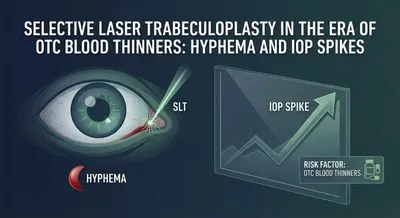
Selective Laser Trabeculoplasty (SLT) is a short, clinic-based laser procedure used to lower pressure inside the eye by helping fluid drain more easily through the eye’s natural drainage system. It works by delivering low-energy laser pulses to specific cells in the drainage tissue, which stimulates a biological response that improves outflow without causing widespread tissue damage. The treatment is usually done with numbing drops, takes only a few minutes, and patients can go home the same day. Many people experience a meaningful drop in intraocular pressure that can last months to years, and the procedure can often be repeated if the effect wears off. SLT can reduce or delay the need for daily eye drops, which helps some patients who have trouble with medication routines. Like any treatment, it has potential side effects: temporary inflammation, a brief spike in eye pressure, or rare bleeding inside the front of the eye; doctors weigh these risks especially when people are taking blood-thinning medicines. SLT is most commonly used for the common form of glaucoma where the drainage angle is open, and it may be offered as an initial treatment or as an addition to medications. Its relative simplicity, repeatability, and ability to improve adherence make it an important option in long-term eye care. Choosing SLT depends on the individual’s eye condition, other health issues, and treatment goals, so a discussion with an eye specialist helps determine whether it’s a good fit.