
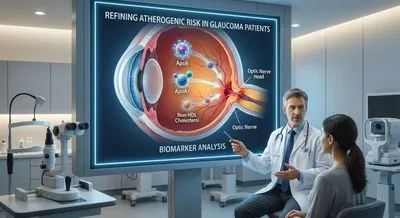
ApoB, ApoA1, and Non-HDL Cholesterol: Refining Atherogenic Risk in Glaucoma Patients
For example, a recent expert consensus noted that “ApoB…represents the total concentration of atherogenic lipoprotein particles” and “more accurately...
Deep research and expert guides on maintaining your visual health.
For example, a recent expert consensus noted that “ApoB…represents the total concentration of atherogenic lipoprotein particles” and “more accurately...
Our visual field test is inspired by the perimetry methods eye care professionals use. Check for blind spots and track changes over time.
Test Your VisionAtherogenic lipoproteins are particles in the blood that carry cholesterol and other fats and that tend to promote the buildup of plaque inside arteries. These particles include low-density lipoprotein (LDL) and certain remnants of other fat-carrying particles; when they penetrate the artery wall, they can trigger inflammation and the formation of fatty streaks that grow into plaques. Over time, plaque narrows arteries, reduces blood flow, and can lead to heart attacks, strokes, or problems in other organs that depend on good circulation. The number and type of these particles are more important than total cholesterol alone, because some particles are especially likely to cause damage. Tests that measure the concentration or specific proteins carried by these particles give doctors a clearer idea of risk and help guide treatments. Reducing atherogenic lipoproteins through diet, exercise, medications, and controlling other risk factors lowers the chance of artery disease. Since these particles affect blood flow throughout the body, they can influence health beyond the heart, including organs that are sensitive to reduced circulation. Knowing whether your blood contains many atherogenic particles helps predict future artery problems and directs prevention strategies. Managing these lipoproteins is a central part of preventing cardiovascular disease and protecting overall circulation.