
Introduction
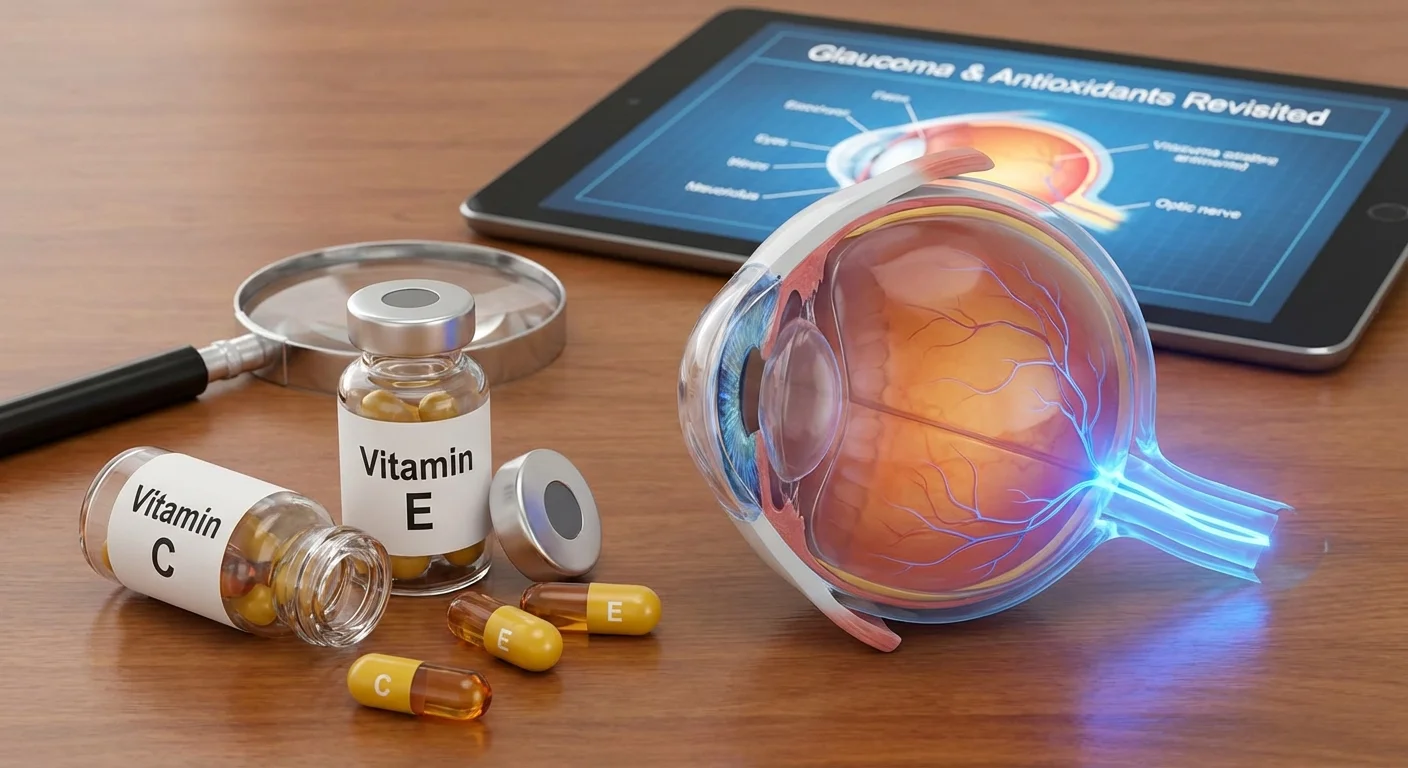
Glaucoma is a progressive eye disease that damages the optic nerve and leads to vision loss; it affects over 70 million people worldwide and is a leading cause of irreversible blindness (pmc.ncbi.nlm.nih.gov). A major risk factor is high intraocular pressure (IOP), but damage can occur even at normal pressure. Over time, scientists have noticed that oxidative stress (cell damage from free radicals) may contribute to glaucoma by harming retinal ganglion cells and the eye’s drainage tissues (pmc.ncbi.nlm.nih.gov) (pmc.ncbi.nlm.nih.gov). This has led to interest in antioxidant nutrients – particularly vitamins C and E – as possible protective agents in glaucoma. Vitamin C (ascorbic acid) and vitamin E (tocopherols) fight oxidation in the body, and they are highly concentrated in the eye. For example, ascorbate levels in the aqueous humor of the eye are roughly 15 times higher than in blood (pmc.ncbi.nlm.nih.gov), suggesting it plays a natural protective role. In healthy eyes these high antioxidant levels may guard against free radicals from light exposure and metabolism (pmc.ncbi.nlm.nih.gov). In glaucoma patients, however, the eye’s antioxidant defenses often appear lower: several studies report reduced vitamin C in the eye fluid of people with glaucoma (pmc.ncbi.nlm.nih.gov).
This review will summarize the evidence—both old and new—on vitamins C and E in glaucoma. We will look at laboratory and animal studies, population surveys and clinical trials, and consider both immediate effects and long-term outcomes. Key questions include: Can high-dose vitamin C lower eye pressure? Does taking vitamin C or E supplements actually slow glaucoma? Are there risks (like kidney stones or bleeding) from megadoses? How do these supplements interact with medications? We will also compare getting vitamins from foods versus pills, note any differences seen in various populations, and finally give practical advice to patients thinking about antioxidant supplements for glaucoma.
Vitamin C and Glaucoma
Vitamin C (ascorbic acid) is a water-soluble antioxidant abundant in fruits and vegetables. It helps regenerate vitamin E and neutralize free radicals. In the eye, high ascorbate levels help protect the lens and retina from light and oxygen damage (pmc.ncbi.nlm.nih.gov). Experiments in animals suggest ascorbate can increase fluid outflow from the eye – for example, low eye ascorbate was found in rabbits with glaucoma-like high pressure (pubmed.ncbi.nlm.nih.gov). In lab models, topical or systemic vitamin C has been shown to lower IOP: for instance, applying vitamin C to the eye or injecting it into the bloodstream of rabbits and patients has produced temporary pressure drops (pmc.ncbi.nlm.nih.gov). This effect is thought to come from vitamin C’s ability to relax the eye’s drainage channels, improving fluid outflow.
Interestingly, vitamin C levels in the eye can be boosted by taking supplements. In cataract patients without glaucoma, giving 2 g of vitamin C by mouth raised aqueous humor ascorbate from ~1350 to ~1860 μmol/L, while 20 g given intravenously raised it to ~2387 μmol/L (pmc.ncbi.nlm.nih.gov). In other words, high-dose vitamin C (especially IV) greatly increases antioxidant levels inside the eye, much more so than diet alone. Whether this actually translates into lasting glaucoma benefit is unclear. A few small studies and older reports noted that large doses of vitamin C – given orally, topically or by IV – could briefly lower IOP in glaucoma patients (pmc.ncbi.nlm.nih.gov). However, these were not large trials and such treatments are not standard care. We simply note that acutely taken vitamin C can reduce eye pressure in some studies (pmc.ncbi.nlm.nih.gov), but this has not proven to halt or reverse glaucoma.
Observational Evidence
Much of the data on vitamins C and E in glaucoma comes from population studies. In these surveys, researchers look at people’s diets, supplement use, blood levels of the vitamins, and whether they have glaucoma.
In one large U.S. study (NHANES, 2005–2006), adults over 40 were asked about their health, including whether a doctor had ever diagnosed glaucoma, and about their use of supplements. Analysis of 2,912 participants found that those taking vitamin C supplements had lower odds of glaucoma. Specifically, people in the highest supplement-intake group had only about half the odds of glaucoma compared to those taking none (adjusted OR ≈ 0.47) (pmc.ncbi.nlm.nih.gov). In contrast, vitamin E supplement users did not have lower glaucoma rates (in fact, they had a non-significant trend toward higher odds) (pmc.ncbi.nlm.nih.gov). Notably, the study also measured blood levels of these vitamins. Serum vitamin C levels showed no clear link to glaucoma prevalence (OR ≈0.94, not significant) (pmc.ncbi.nlm.nih.gov). This suggests that the association was only seen with reported supplement use, not with actual blood levels. (It is possible high-dose vitamin C in pills can affect the eye differently than nutritional intake.) In any case, this single study hints that taking vitamin C supplements was associated with less glaucoma (pmc.ncbi.nlm.nih.gov), whereas vitamin E supplements did not show benefit (pmc.ncbi.nlm.nih.gov).
Other observational and epidemiologic analyses yield mixed results. A comprehensive review of many studies (Ramdas et al., 2018) found that dietary intake of vitamin C and A was linked to lower glaucoma risk, but blood levels of vitamins showed no clear pattern (pmc.ncbi.nlm.nih.gov). In that meta-analysis, high vitamin A intake (from foods like carrots and leafy greens) was significantly protective (OR ~0.45 for glaucoma) (pmc.ncbi.nlm.nih.gov). After addressing study differences, vitamin C intake also appeared beneficial. However, in the same review, vitamin E intake (from diet or supplements) showed no significant association (pooled OR ~0.95) with open-angle glaucoma (pmc.ncbi.nlm.nih.gov). The authors noted that foods high in these antioxidants (dark green vegetables, fruits, etc.) seemed to be where the protective trends came from (pmc.ncbi.nlm.nih.gov).
Country- and population-specific studies also support diet. For example, among older African-American women, those eating at least three servings of fruit per day had 79% lower odds of glaucoma than those eating almost none (pmc.ncbi.nlm.nih.gov). Specifically, eating more oranges, peaches, collard greens/kale (all high in vitamins C and A) was linked to a markedly reduced glaucoma risk (pmc.ncbi.nlm.nih.gov). In that study, higher intakes of dietary vitamin C and A were individually associated with lower glaucoma odds (pmc.ncbi.nlm.nih.gov). Another study of Japanese-American adults found that low vitamin A and high iron intake were risk factors for glaucoma (pmc.ncbi.nlm.nih.gov). These findings suggest that overall diet and background nutrition status do play a role and that people of different ethnicities might show different patterns of diet-glaucoma associations.
Importantly, epidemiology cannot prove causation. People who eat healthier diets or take supplements might differ in other ways. Nevertheless, these surveys hint that getting plenty of antioxidants from foods (especially those rich in vitamin C) may be associated with lower glaucoma rates (pmc.ncbi.nlm.nih.gov) (pmc.ncbi.nlm.nih.gov). Supplement studies, on the other hand, have been inconsistent or null. Aside from the NHANES report, few large clinical trials have tested vitamin C or E alone for glaucoma prevention. One prospective trial in normal-tension glaucoma patients gave two different antioxidant formulas (similar to the eye-care AREDS mix) versus placebo. After two years, there was no difference in visual field progression or nerve fiber measurements between the supplement and placebo groups (pmc.ncbi.nlm.nih.gov). In short, no study has definitively shown that long-term vitamin C or E pills slow glaucoma progression in humans.
Safety and Interactions (Vitamin C)
For most adults, vitamin C is safe and water-soluble (excess is excreted in urine). However, very high intakes carry some risks. The most well-known is kidney stones. Large doses of vitamin C can convert to oxalate in the body, raising the risk of calcium-oxalate kidney stones. In a prospective study of >150,000 women and >40,000 men (Nurses’ Health and Health Professionals studies), men taking ≥1000 mg/day of vitamin C had a higher incidence of kidney stones (hazard ratio ~1.4) (pubmed.ncbi.nlm.nih.gov). Women in that study did not show the same risk. Still, because stone risk is a concern (especially for men or anyone with a history of stones), doctors advise not exceeding about 1000–2000 mg of vitamin C daily. The US upper limit is 2000 mg/day. Below that, the main side effects of extra C would be mild – diarrhea, nausea or cramps – not serious.
Another precaution: vitamin C can affect some medications. For example, it might interact with warfarin (a blood thinner) in complex ways, so patients on anticoagulants are usually told to keep vitamin K and other supplements steady. The evidence on vitamin C and warfarin is minimal (drugs.com lists it as a minor interaction) (www.drugs.com). In general, vitamin C has few drug interactions at normal doses. One thing to note is that very high vitamin C can alter lab tests (e.g. glucose measurements) or increase iron absorption, but these are minor concerns. If you have kidney disease, check with your doctor: high vitamin C could raise oxalate and worsen kidney injury.
In summary: ordinary dietary vitamin C (from fruits and vegetables) is very safe. Supplements up to a few hundred mg/day are generally fine for most people. But megadoses (grams per day) should be used cautiously. Men in particular should be aware of stone risk (pubmed.ncbi.nlm.nih.gov), and anyone with kidney issues should discuss with a doctor before taking high-dose C.
Safety and Interactions (Vitamin E)
Vitamin E is fat-soluble and accumulates in body tissues. At the recommended dietary allowance (~15 mg/day) and normal diets, it is very safe. However, supplements can deliver much higher amounts. Many vitamin E products provide 100–1000 IU (67–670 mg) or more, far above the RDA. Excess vitamin E can impair blood clotting. It inhibits vitamin K-dependent clotting factors, which raises bleeding risk (pubmed.ncbi.nlm.nih.gov) (www.ncbi.nlm.nih.gov). Case reports show that very high vitamin E intake (often with other risk factors) led to serious bleeding problems (pubmed.ncbi.nlm.nih.gov). In general, clinicians warn that supplements above roughly 300–400 IU (about 200–250 mg) daily can interact with anticoagulants or antiplatelet drugs (like warfarin or aspirin), making bleeding more likely (pubmed.ncbi.nlm.nih.gov) (www.ncbi.nlm.nih.gov). In fact, one review notes that vitamin E toxicity in humans is mainly manifested as excessive bleeding (www.ncbi.nlm.nih.gov). For example, stroke patients given >400 IU of vitamin E fared worse in clinical trials, likely due to clotting interference (www.ncbi.nlm.nih.gov).
Other interactions with vitamin E include some chemotherapy and cholesterol-lowering drugs, but for a patient with glaucoma, the key point is bleeding risk. If you take blood thinners, it is wise to avoid large vitamin E doses unless supervised by your doctor. Lower-dose E ( < 100 IU, provided it’s within recommended limits) from diet or supplements is not likely to cause problems for healthy people. But since vitamin E can build up in fat tissue, it’s best not to exceed about 800–1000 IU/day (the tolerable upper limit).
In short, vitamin E from foods (nuts, seeds, oils, leafy greens) is not a concern – supplements are where caution is needed. Toxicity effects do not occur from normal diet alone (www.ncbi.nlm.nih.gov). If you do take vitamin E supplements, stick to moderate doses and inform your doctor if you are on any blood-thinning medications.
Dietary Sources vs. Supplements
A key distinction is getting vitamins from foods versus pills. Foods rarely contain harmful megadoses of vitamins, and they come with fiber and other nutrients. For glaucoma, studies suggest the benefit lies in diet. Fruits and vegetables provide vitamin C along with flavonoids and minerals; oils, nuts and green vegetables provide vitamin E. For example, citrus fruits, berries and peppers are rich in vitamin C, while spinach and almonds supply both E and C. In the diet-based studies above, total fruit-and-vegetable intake was strongly protective even without any pills (pmc.ncbi.nlm.nih.gov) (pmc.ncbi.nlm.nih.gov).
Supplements allow much higher doses. This can be good if you are very deficient, but it can overshoot what the body needs. For instance, getting 300 mg of vitamin C from diet alone would mean eating about 5 oranges or a large spinach salad every day. Many people use a 500–1000 mg vitamin C pill instead, which is 10–13 times the Recommended Daily Allowance. Above the body’s saturation point (~100–200 mg C), extra vitamin C is mostly excreted. The theoretical rationale is that “more antioxidants” might protect the eye better, but there is no clear evidence that megadoses help glaucoma beyond a healthy diet. On the other hand, supplements do raise the risk of side effects (stones or bleeding as discussed).
Observationally, people with diets high in natural antioxidants seem to do well. In the African-American women’s study, it was food servings of vitamin C–rich fruits that cut glaucoma risk, not supplements (pmc.ncbi.nlm.nih.gov). Meta-analyses also emphasize dietary intake: “foods high in [these vitamins]… were protective for glaucoma,” whereas blood levels were less conclusive (pmc.ncbi.nlm.nih.gov).
In general health guidance, experts often advise getting vitamins from a balanced diet first, and only using supplements to fill gaps. For example, the StatPearls review notes that there is “no data on detrimental effects from dietary vitamin E intake without supplementation” (www.ncbi.nlm.nih.gov). In other words, eating vitamin-E–rich foods (broccoli, nuts, spinach) is safe, but problems arise only if you take large pills. The same logic applies to vitamin C.
Population and Individual Differences
Different groups of people might have varying baseline nutrient status or genetic differences that affect these vitamins. For instance, one genetic study in a Mediterranean population found that a common variant of the vitamin C transporter gene (SLC23A2) was linked to both lower blood vitamin C levels and higher risk of open-angle glaucoma (pubmed.ncbi.nlm.nih.gov). People with the “GG” genotype had lower plasma ascorbate and ~1.7 times the glaucoma risk compared to others (pubmed.ncbi.nlm.nih.gov). This suggests some individuals may naturally have lower eye vitamin C due to genetics, which could influence their risk.
Dietary patterns also vary by ethnicity and locale. As noted, African-American women in one US cohort and Japanese Americans in another showed different dietary risk factors (pmc.ncbi.nlm.nih.gov) (pmc.ncbi.nlm.nih.gov). For example, eating collard greens and oranges (vitamin A and C sources) was hugely protective in the African-American group (pmc.ncbi.nlm.nih.gov), while the Japanese-American study found low Vitamin A intake as a risk factor (pmc.ncbi.nlm.nih.gov). Such findings reflect cultural diets and possibly genetic predispositions; they highlight that “one size” recommendations may not fit everyone.
Age and general health can matter too. Older adults naturally have lower vitamin C in the eye (pmc.ncbi.nlm.nih.gov). If you are elderly or have poor overall nutrition, a modest supplement might help you reach healthy levels. Conversely, if you already eat a rich diet of fruits, vegetables, nuts and whole grains, adding extra pills may not provide extra benefit.
Practical Takeaways for Patients
-
Prioritize proven glaucoma treatments. Medications and surgeries that lower eye pressure are the only treatments proven to slow glaucoma. Vitamins and antioxidants cannot replace these therapies. Always continue your prescribed eye drops or medical advice first.
-
Eat a healthy diet. Aim for plenty of fruits and vegetables to get natural antioxidants. Studies suggest diets high in foods rich in vitamin C (citrus fruits, berries, peppers, leafy greens) and vitamin A (carrots, sweet potatoes, kale) are associated with less glaucoma (pmc.ncbi.nlm.nih.gov) (pmc.ncbi.nlm.nih.gov). This is a low-risk way to gain potential benefit.
-
Be cautious with high-dose supplements. There is no strong evidence that taking large amounts of vitamin C or E in pills will protect your eyes or slow glaucoma. In fact, too much can be harmful. Doses above the recommended daily intake (about 90 mg for men or 75 mg for women of vitamin C, and about 15 mg of vitamin E) may cause side effects. For example, men taking ≥1000 mg/day of vitamin C had more kidney stones (pubmed.ncbi.nlm.nih.gov), and vitamin E doses above a few hundred IU increased bleeding risk (pubmed.ncbi.nlm.nih.gov) (www.ncbi.nlm.nih.gov).
-
Discuss supplements with your doctor. If you still want to try a supplement, talk to your ophthalmologist or primary care physician. They can advise on a safe dose and ensure it won’t interfere with medications. For instance, if you take blood thinners (warfarin, aspirin, etc.), only very low vitamin E supplements (or none) should be considered, because of bleeding risk (pubmed.ncbi.nlm.nih.gov) (www.ncbi.nlm.nih.gov). Similarly, if you have kidney problems or history of stones, high vitamin C should be avoided.
-
Dosage guidance. A modest daily vitamin C (e.g. 100–200 mg) is easily obtained by diet or a small pill and is unlikely to cause harm, but provides enough to cover basic needs. The Tolerable Upper Intake is 2000 mg; avoid exceeding that. For vitamin E, don’t go beyond about 400–500 IU (≈ 270–335 mg) per day unless directed by your doctor. Keep in mind the body needs only a certain level; more is not always better.
-
Look at ‘whole antioxidant’ supplements carefully. Some eye supplements (like those for macular degeneration) contain mixtures of vitamins, minerals, lutein, etc. A few of these have been tried in glaucoma. One small trial gave a multivitamin cocktail (with ALA, Vit C+E, omega-3s, etc.) and found improved tear film and antioxidant blood markers but no change in visual field (pmc.ncbi.nlm.nih.gov). Another gave an “AREDS-formula” pill to glaucoma patients and saw no benefit (pmc.ncbi.nlm.nih.gov). This suggests that simply adding antioxidant pills on top of usual care probably won’t improve glaucoma outcomes.
-
Avoid misinformation. Beware of claims that high-dose supplements will cure or prevent glaucoma. The scientific evidence is simply not there. Keep in mind that an association (e.g. people with higher diet C having less glaucoma) does not prove cause, and brainy clinical trials have not confirmed a benefit of vitamins.
-
Focus on overall eye and health. Vitamins C and E are important nutrients for general health (immune function, skin, circulation, etc.), so ensure you meet basic needs. But for glaucoma specifically, lifestyle changes like controlling blood pressure, avoiding smoking, and protecting your eyes from excessive light may be more impactful in the long run. A well-rounded diet, exercise, and adherence to medical treatments offer the best support to preserve vision.
Conclusion
In summary, vitamins C and E are important antioxidants that support eye health, but their role in glaucoma is unproven. Some laboratory and epidemiological evidence hints that vitamin C in the eye may help protect optic nerve cells and could modestly lower eye pressure when given in large doses (pubmed.ncbi.nlm.nih.gov) (pmc.ncbi.nlm.nih.gov). High dietary intake of vitamin C (from fruits and veggies) has been linked to lower glaucoma risk (pmc.ncbi.nlm.nih.gov) (pmc.ncbi.nlm.nih.gov). Vitamin E is also an antioxidant with theoretical benefit, but human studies have not shown a clear protective effect against glaucoma (pmc.ncbi.nlm.nih.gov) (pmc.ncbi.nlm.nih.gov).
For patients, the bottom line is: Eat well, stay safe, and treat glaucoma with proven methods. Enjoy a balanced diet rich in colorful fruits and greens to obtain vitamins C, E and others naturally. If you choose supplements, do so sensibly: avoid megadoses and discuss them with your doctor, especially if you have kidney issues or take blood thinners. Remember that no vitamin will replace eye pressure control. At best, vitamin C and E supplements might offer a small “insurance” of antioxidant support, but current research is mixed and cautious. Always prioritize your prescribed glaucoma therapy, and use nutrients as a possible adjunct, not a substitute. In the end, the healthiest eyes come from a healthy lifestyle – including nutrition, but grounded in evidence-based medicine.