
Introduction
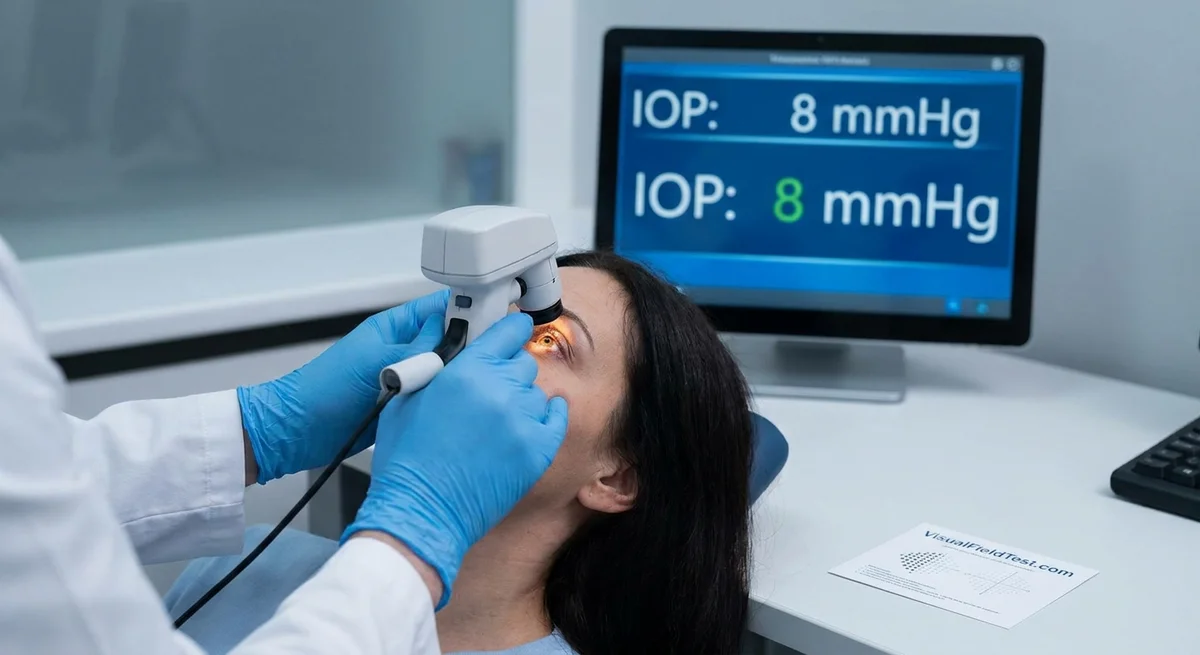
In advanced glaucoma, doctors often set very low target pressures (often 10 mmHg or lower) to protect remaining vision (www.eugs.org) (journals.lww.com). “Single-digit” pressures mean an eye pressure under 10 mmHg (normal pressure is 12–22 mmHg). Achieving such low pressure can slow or stop glaucoma damage, but requires strong surgery. This article explains the main surgical approaches—trabeculectomy with antimetabolites, tube shunts with flow restriction, and cyclodestruction—along with how doctors balance the benefits against risks like hypotony (too-low pressure) and vision problems. We will also cover what factors predict a surgery’s success or failure, how surgeons fine-tune eye pressure after surgery, and how to spot and treat complications early.
Surgical Strategies to Achieve Low IOP
Trabeculectomy with Tailored Antimetabolites
Trabeculectomy (filtering surgery) creates a new drainage path for fluid (aqueous humor) to leave the eye under the eyelid. Surgeons remove a small piece of the eye’s internal drainage tissue (trabecular meshwork) and make a tiny hole into the white of the eye. A flap of tissue is sewn loosely over this opening so fluid can seep out gradually. As the fluid drains, it forms a bubble or “bleb” under the conjunctiva (the transparent tissue covering the eye).
To keep this new drainage channel open long-term, surgeons often use antimetabolites (anti-scarring drugs) like mitomycin C (MMC) or 5-fluorouracil (5-FU) at the time of surgery. These drugs slow down healing so scar tissue doesn’t seal the flap shut. By carefully choosing the dose and duration of MMC, doctors can tailor how much drainage occurs. Stronger or longer MMC treatment generally increases the chance of a very low pressure, but also raises the risk of over-drainage. For example, using a high concentration of MMC (0.4 mg/ml for 4 minutes) led to hypotony (dangerously low pressure) in about 13% of cases (www.reviewofophthalmology.com), whereas a lower dose (0.2 mg/ml) in a similar setting reduced that risk to 3–5% (www.reviewofophthalmology.com). Modern techniques (such as injecting MMC under the conjunctiva instead of placing sponges) can achieve low pressures without excessively high hypotony rates (www.reviewofophthalmology.com).
Key points about trabeculectomy:
- It can often achieve mid-to-low single-digit pressures, especially in experienced hands (www.eugs.org) (journals.lww.com).
- Surgeons use antimetabolites (usually MMC) to prevent scarring. Tuning the concentration and time of application helps find the balance between pressure lowering and safety (www.reviewofophthalmology.com).
- The surgery can include adjustable or releasable sutures in the scleral flap. This means sutures (stitches) can be loosened or removed after surgery to increase drainage if IOP is still high, or they can be partially cut with a laser (suture lysis) if pressure is too low (pmc.ncbi.nlm.nih.gov) (pmc.ncbi.nlm.nih.gov).
Tube Shunts with Flow Restriction
Glaucoma drainage devices (tube shunts) are small implants comprising a drainage tube and a plate. The tube is placed into the front chamber of the eye, and the plate sits under the conjunctiva on the outside. Fluid flows through the tube into a reservoir (the plate) where it is absorbed by surrounding tissues. Tube shunts are often used when previous surgeries have failed or in severe secondary glaucomas, but they can also achieve very low pressures when carefully managed.
There are two main types of shunts:
- Valved shunts (e.g., Ahmed valve) have a built-in mechanism that partially blocks flow when pressure is low. This means they limit how low the pressure can drop automatically. Ahmed valves typically control pressure into the mid-teens. They often still require glaucoma drops after surgery. Because of the valve, deep hypotony is rare (www.brightfocus.org), but extreme low targets (<10 mmHg) often need additional medications or procedures.
- Non-valved shunts (e.g., Baerveldt, Molteno) have no built-in valve, so by default they would drain too much fluid at first. To prevent early hypotony, surgeons temporarily occlude these tubes. The standard method is to tie (ligate) the tube shut with an absorbable suture (like 6-0 or 7-0 Vicryl) around the outside of the tube. Some also place an internal stent (a thick nylon thread called Supramid®) inside the tube. As time passes (weeks to months), the ligature dissolves or the stent is removed, gradually allowing fluid out. This staged approach yields very low pressures once the eye has formed a capsule around the plate.
Flow restriction techniques for tube shunts:
- External ligature: Tying the tube with a dissolvable suture (typically Vicryl) prevents flow for the first 4–6 weeks until the ligature softens. Some surgeons leave multiple fine sutures inside or outside that can be cut with a laser in clinic to increase flow gradually later (eugs.org).
- Internal stent: A nylon or prolene suture (3-0 “Supramid”) is placed inside the tube lumen. This blocks most flow but can be left protruding so it can be pulled out or lasered when needed (eugs.org).
- Fenestrations: Some surgeons create tiny slits (“Sherwood slits”) in the tube before it enters the eye. These allow a small amount of fluid to bypass the ligature early on.
Because non-valved shunts ultimately allow higher flow (once fully open), they can reach lower pressures than valves, but they require careful follow-up to adjust flow. For example, one technique is to tie a Baerveldt with a loose nylon suture (10-0) that provides just ~10% occlusion on top of the main ligature. In clinic, the physician can then use a laser to cut one nylon suture at a time and “stage” the drop in pressure (eugs.org).
Key points about tube shunts:
- Valved devices (Ahmed) limit extra-low pressures but are easier to control; they often result in moderate pressure (high-teens) and usually need glaucoma drops after surgery (www.brightfocus.org).
- Non-valved devices (Baerveldt/Molteno) can achieve very low single-digit pressures after the occluding ligature dissolves, but require temporary blocking to keep pressure safe early on (eugs.org) (eugs.org).
- Post-surgical adjustments (cutting sutures, pulling stents) allow fine-tuning of IOP without major surgery.
Adjunctive Cyclodestruction
Cyclodestructive procedures use energy (laser or ultrasound) to partially destroy the ciliary body – the tissue that produces aqueous fluid. By reducing fluid production, these treatments help lower eye pressure. Cyclodestruction is generally used in advanced, refractory glaucoma or when other surgeries have failed or are not possible. Newer methods (like micropulse cyclophotocoagulation) aim to reduce side effects by delivering short, repeated laser pulses that heat the tissue gently (www.nice.org.uk).
Common cyclodestructive techniques include:
- Transscleral cyclodiode laser: A diode laser probe is applied on the white of the eye (sclera) over the ciliary body. It delivers burns through the sclera, shrinking fluid-producing cells (www.hey.nhs.uk). Patients often get topical or general anesthesia for comfort.
- Micropulse cyclophotocoagulation: Delivers the same diode laser energy in very brief pulses, allowing the tissue to cool between bursts. This tends to cause less inflammation and pain (www.nice.org.uk) (www.hey.nhs.uk).
- Endoscopic cyclophotocoagulation (ECP): Performed during cataract or other eye surgery, a tiny camera and laser are inserted into the eye via a small incision to directly target ciliary processes.
Cyclodestruction is less predictable and generally less powerful than filtration surgery. It often lowers IOP by 20–30% on average, and is not usually enough to reach very low single digits by itself, but it can supplement other treatments. For eyes with remaining vision, doctors typically use conservative settings or micropulse to balance efficacy and safety.
Key points about cyclodestruction:
- It is a non-incisional approach that “turns down the tap” by reducing fluid production (www.hey.nhs.uk) (www.nice.org.uk).
- Micropulse methods cause less inflammation and usually fewer complications like pain or damage than traditional continuous-wave cyclodiode (www.nice.org.uk) (www.hey.nhs.uk).
- Common side effects include inflammation (iritis) and potential vision loss if overtreatment occurs. Severe complications (retinal detachment, vision loss, or even phthisis) are rare with modern protocols, especially micropulse. Nonetheless, cyclodestruction is often reserved for eyes where vision is already limited or other surgeries have failed.
Balancing Safety, Risks, and Follow-up
Lowering eye pressure to single digits can protect vision in progressing glaucoma, but it also raises the chances of complications. Each procedure has trade-offs:
- Trabeculectomy: Can achieve low IOP without long-term implants, but it carries risks of overfiltration. Wounds can leak, and blebs can become too thin. Hypotony (too low pressure) after trabeculectomy can cause hypotony maculopathy – retinal folds and distorted vision (www.reviewofophthalmology.com). There is also a lifelong risk of bleb-related infection (blebitis or endophthalmitis) if bacteria enter the eye through the bleb. On the plus side, trabeculectomy often achieves the lowest pressures of all procedures, especially with MMC (www.eugs.org).
- Tube shunts: Generally have a safer early postoperative course regarding hypotony, especially valved implants. They also avoid an external bleb (so no bleb infection, though tubes have other risks like corneal touch or tube blockage). Non-valved shunts, once open, can still over-drain, but the staged occlusion techniques help prevent catastrophic hypotony early (eugs.org). Tube shunts may not reach as low a pressure as trabeculectomy, particularly if valved, unless medications are added.
- Cyclodestruction: Least invasive surgically, but also usually less pressure lowering. Serious complications like vision loss are uncommon with proper use, but suboptimal response is possible; often multiple laser sessions are needed. Cyclo does not pose bleb or tube-specific risks, but it can cause inflammation, pain, or rarely surgical failure if the eye’s fluid production stops too much.
Monitoring intensity: All these surgeries demand close follow-up, but the schedules can differ. Trabeculectomy patients often have frequent visits in the first weeks to catch leaking blebs or hypotony. Many surgeons see trab patients weekly initially, especially if a large amount of MMC was used. Early (first 2-week) hypotony is usually mild and may resolve, but any persistent very low pressure needs intervention (www.reviewofophthalmology.com). Tube patients also need regular checks; for a non-valved shunt, visits may align with the expected ligature dissolution (~4–6 weeks). Valved tube patients might be seen less often early but still closely if IOP spikes. Cyclo patients typically have follow-ups to monitor pressure response and inflammation.
Visual risk: The most feared visual complication of overly low IOP is hypotony maculopathy: folding of the retina that blurs vision. Left untreated, this can cause permanent vision loss (www.reviewofophthalmology.com). Other risks include choroidal detachment (fluid layers under the retina) and shallow anterior chamber (front of eye collapsing inward, risking lens-corneal touch). High eye pressure (if surgery under-filters) can also damage vision. Surgeons must balance the goal of “as low as needed” against these dangers.
In general, these factors mean surgeons personalize the plan. For example, a young patient or one with uveitic/neovascular glaucoma is more likely to scar down and may do better with a shunt than a trab (to avoid failure through scarring (pmc.ncbi.nlm.nih.gov) (pmc.ncbi.nlm.nih.gov)). Conversely, if a patient already has very low IOP and borderline vision (e.g. normal-tension glaucoma), doctors push harder for the lowest pressures, accepting the need for intense monitoring and possibly multiple surgeries.
Postoperative Titration and Adjustments
After surgery, doctors often fine-tune the new drainage to hit the desired pressure. These interventions are not extra surgeries but in-office tweaks:
- Suture adjustments (trabeculectomy): If the eye pressure stays high despite surgery, an adjustable suture can be loosened or a releasable suture cut. Many surgeons tie the scleral flap with sutures that can be manipulated postoperatively. Alternatively, sutures can be cut with an argon laser (laser suture lysis) through the conjunctiva. This increases outflow and lowers IOP. Conversely, if the eye is too low, surgeons may invert these measures (see below) or eventually tighten sutures if glaucoma medications need reintroduction. A study comparing fixed sutures to releasable sutures found both techniques achieved similar pressures over time, but the releasable sutures gave more flexibility if adjustments were needed (pmc.ncbi.nlm.nih.gov).
- Needling and bleb revision (trabeculectomy): If the filtering bleb scars down and IOP rises postoperatively, doctors can perform a bleb needling. Using a fine needle, the surgeon breaks adhesions under the conjunctiva to restore flow. This is often paired with 5-FU injections to reduce re-scarring. Needling is most effective soon after the original surgery, before extensive scarring sets in (pubmed.ncbi.nlm.nih.gov). For eyes many months or years out, needling has lower success. Bleb needling success rates range widely, but one large series found about 67% success at 1 year for IOP under 16 mmHg (pubmed.ncbi.nlm.nih.gov).
- Valve/tube adjustments: Valved implants usually do not require post-op adjustments, since the valve does most work. Non-valved tubes, however, can be adjusted by treating the ligatures or stents. For example, a Vicryl ligature around a Baerveldt dissolves on schedule, but an internal nylon stent can be removed in office if pressure is too high. As noted above, surgeons may leave a thin nylon suture (10-0) looped around the tube. In clinic, one can simply grab and cut one loop at a time with a laser or micro-instrument, slowly increasing flow (eugs.org). If the IOP is too high, releasing more occlusion can lower it; if dangerously low both sutures may be used to slow flow.
- Cyclo retreatment: With cyclophotocoagulation, there is no “titration” aside from the laser settings. If IOP is still high after one session, doctors may plan a repeat session. If pressure is too low (rare), one can only observe and manage complications, as there’s no reversal for reduced fluid production.
Patients should know that post-op visits are critical. Early (within days) checks help catch leaks or pressure spikes. Visits might be weekly for the first month. Adjustments (sutures, needling) usually happen in the clinic, not the operating room, but still require a doctor’s skill.
Predictors of Success and Failure
Certain factors make very-low-pressure surgery more or less likely to succeed:
- Patient factors: Younger patients tend to heal faster and scar down more vigorously, which can cause surgical failure (pmc.ncbi.nlm.nih.gov) (pmc.ncbi.nlm.nih.gov). Race matters: studies have shown African or Hispanic patients have higher risk of trabeculectomy failure (more scarring). Patients with secondary glaucoma from uveitis or neovascular disease also tend to have poorer outcomes, because chronic inflammation drives scar tissue (pmc.ncbi.nlm.nih.gov) (pmc.ncbi.nlm.nih.gov). Similarly, any prior eye surgery or conjunctival inflammation (from previous glaucoma surgery, trauma, etc.) can predict failure of a new filtering surgery.
- Eye pressure history: Interestingly, lower preoperative IOP can predict failure of tube shunts (pmc.ncbi.nlm.nih.gov). (If the pressure is already low, there’s less margin for drop, and it suggests a fragile eye.) On the other hand, very high baseline IOP may signal a more aggressive disease needing more intense intervention.
- Type of implant: The pooled tube study found Ahmed valves had a higher failure rate compared to Baerveldt shunts (pmc.ncbi.nlm.nih.gov). In other words, non-valved tubes tended to maintain better control (but with aforementioned needling of ligatures). For trabeculectomy, using stronger antimetabolites increases low-pressure success but also increases risk of complications (www.reviewofophthalmology.com). Surgeons must choose the right dose: for example, applying MMC in a large area of the conjunctiva but with shorter duration can sometimes give a diffuse bleb with lower complications (pmc.ncbi.nlm.nih.gov).
- Post-op interventions: Getting the timing of adjustments right also predicts success. Studies show that when eye pressure immediately drops into the low teens (or below) right after surgery or needling, outcomes are better (pubmed.ncbi.nlm.nih.gov). Conversely, if a bleb is flat, fibrotic, or IOP stays high after early needling, the chance of victory diminishes.
No list of predictors is perfect. Every patient is unique. Doctors use these factors to estimate how aggresively to treat. For example, a young patient with severe uveitic glaucoma might be steered toward a tube shunt early, while an older patient with advanced open-angle glaucoma might be managed with a potent trabeculectomy.
Early Detection and Management of Hypotony
Hypotony means the eye pressure is too low to keep the eye’s shape and function normal. Clinically, an eye with pressure under about 6–8 mmHg is thought of as hypotonic, but damage usually happens below ~5 mmHg (glaucoma.org). The key early danger is hypotony maculopathy, where the retina (especially the macula) develops folds and swelling, harming central vision. Untreated hypotony maculopathy can cause permanent vision loss (www.reviewofophthalmology.com).
Doctors guard against hypotony through frequent checks and a clear action plan:
- Monitoring: After surgery, you should have the eye’s pressure and exam checked often. Even if vision seems fine, low pressure can sneak up. The doctor will dilate the pupil and look at the retina for folds or detachments. Patients should report any new blurring or vision distortion immediately.
- Detecting causes: Early-onset hypotony (within 2 weeks) is often due to a wound leak or overly loose flap (www.reviewofophthalmology.com). Signs include a very soft eye on touch, flat or shallow anterior chamber (the front chamber may partly collapse), or a fluid leak on the eye surface. Doctors often test for leaks using fluorescein dye. Late-onset hypotony (after weeks) is more likely from a thin bleb or a very leaky flap sutures.
- Initial management: If a leak is found, conservative steps can help. For example, a bandage contact lens can tamponade a small conjunctival leak (www.reviewofophthalmology.com). If the pressure is just slightly low, doctors may even use an eye drop that reduces aqueous production (like timolol) to take some fluid pressure off the bleb and let it seal (www.reviewofophthalmology.com). These seem counterintuitive, but reducing eye fluid briefly can give the leak time to heal. The eye is also often patched with antibiotic drops to prevent infection. If the leak persists, surgical repair (suturing the conjunctiva) or applying adhesive glue may be needed.
- Reforming the eye: If the anterior chamber is very shallow, the doctor may inject a viscoelastic or air bubble into the front of the eye to “repressurize” it, or do a small paracentesis to remove fluid behind the eye (choroidal effusion). Cycloplegic eyedrops (like atropine) can be used to relax the ciliary body and help restore its normal position, which can increase fluid production and deepen the chamber.
- Fixing overfiltration: If the bleed or leak is not the issue and the eye is simply over-draining through a patent bleb or tube, surgical steps may be taken. This includes placing compression sutures through the scleral flap to tighten it, as a doctor might do by going under the conjunctiva or sometimes through it (www.reviewofophthalmology.com). Surgeons can even inject the patient’s own blood into the bleb to cause scarring that thickens the bleb floor (this can help if no one wants another surgery) (www.reviewofophthalmology.com). It works about half the time.
- Conjunctival revision: For late leaks (often in an ischemic bleb), doctors often excise the unhealthy bleb tissue and stitch healthy conjunctiva over the area (www.reviewofophthalmology.com). This raises the pressure back up, so patients must be warned their glaucoma may worsen and need retreatment after such repairs.
- Tube-specific fixes: If a tube is over-draining (rare if tied surgically), one could partially occlude the tube with sutures, or if a valved tube were leaking at its plate site, remove its valve. These steps are uncommon.
Throughout, the priority is to get the pressure back into a safer range. In the big study mentioned above, late hypotony for more than 6 months often led to irreversible retinal damage (www.reviewofophthalmology.com), so urgent action is needed if low pressure persists.
User-friendly summary: Think of hypotony complications like the eye deflating. It needs “patching up” if leaking, or “adjusting the drain” if over-draining. Common fixes include eye patch or contact lens for small leaks, steroid/med changes to encourage gentle scarring, taking out some sutures to lift pressure, or even a quick minor surgery to re-tighten a flap. Patients should be encouraged: if you notice vision change or pain after glaucoma surgery, call your doctor immediately. Early treatment of too-low pressure often prevents permanent problems.
Conclusion
Some glaucoma patients need very low single-digit eye pressures to protect their vision (www.eugs.org) (journals.lww.com). Achieving this safely requires experienced surgeons, careful choice among techniques, and close follow-up. Trabeculectomy with mitomycin C is often the most powerful way to reach very low IOPs (www.eugs.org), but it must be balanced by measures (sutures, limited MMC) to avoid excessive drops. Tube shunts (especially non-valved ones tied off temporarily) offer another option, trading off a slightly higher pressure for greater early stability (eugs.org). Cyclodestruction can complement these surgeries or serve as a fallback, though it rarely suffices alone for target single digits (www.hey.nhs.uk) (www.nice.org.uk).
Patients and doctors must work together: understanding risk factors (younger age, certain glaucoma types) helps set expectations (pmc.ncbi.nlm.nih.gov) (pmc.ncbi.nlm.nih.gov). After any low-IOP surgery, patients should attend all scheduled visits and report problems quickly. With vigilant monitoring and interventions like suture adjustments or needling, very low pressures can often be reached without permanent damage. Above all, the goal is to preserve vision – and in end-stage glaucoma, a pressure in the single digits may be what it takes, managed safely and patiently to minimize complications.