
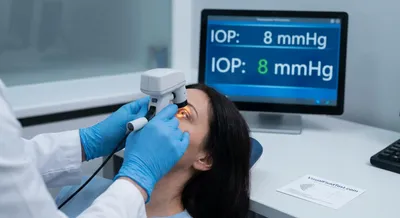
Targeting Very Low IOPs: Achieving Single‑Digit Pressures Safely
Trabeculectomy (filtering surgery) creates a new drainage path for fluid (aqueous humor) to leave the eye under the eyelid. Surgeons remove a small...
Deep research and expert guides on maintaining your visual health.
Trabeculectomy (filtering surgery) creates a new drainage path for fluid (aqueous humor) to leave the eye under the eyelid. Surgeons remove a small...
Our visual field test is inspired by the perimetry methods eye care professionals use. Check for blind spots and track changes over time.
Test Your VisionCyclophotocoagulation is a procedure that uses focused light energy to reduce the eye’s production of fluid, which helps lower internal eye pressure. The energy is aimed at the ciliary body, the part of the eye that makes the fluid called aqueous humor. By partially destroying or altering the ciliary body tissue, the procedure decreases fluid production and can lower pressure in eyes with difficult-to-control pressure. It can be done in different ways, such as through the white of the eye with a laser applied from the outside, or with an internal, endoscopic approach during surgery. Newer approaches use shorter pulses or more precise targeting to reduce side effects while keeping the pressure-lowering effect. This treatment is often considered for people who have not had success with medicines or other surgeries, or for those who need a less invasive option. Benefits include being quick to perform, often in an outpatient setting, and avoiding more complex operations in some patients. Risks can include inflammation, pain, decreased vision, or too-low pressure, and in rare cases the procedure can worsen eye health. Understanding how cyclophotocoagulation works and what it can and cannot do helps patients and doctors choose the right treatment for managing eye pressure.