
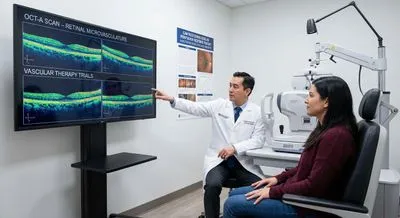
Can Restoring Ocular Perfusion Restore Vision? OCT-A and Vascular Therapies
OCT-Angiography (OCT-A) captures images of blood flow by detecting moving red blood cells in the eye’s capillaries. Two key metrics are often...
Deep research and expert guides on maintaining your visual health.
OCT-Angiography (OCT-A) captures images of blood flow by detecting moving red blood cells in the eye’s capillaries. Two key metrics are often...
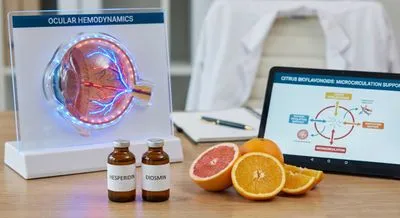
Blood vessels relax when their lining cells (endothelium) make the gas nitric oxide (NO). Hesperidin itself is a sugar-linked molecule that is broken...
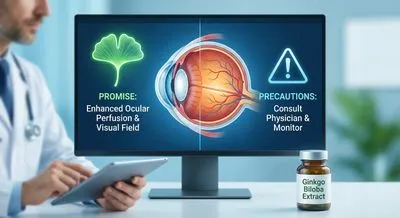
By contrast, larger reviews find no clear benefit on field metrics. A 2025 systematic review of 8 trials (428 subjects) concluded that GBE did not...
Screen your peripheral vision from home — no downloads, no waiting rooms. Sign up for a free trial and test in under 5 minutes.
Microcirculation describes the network of the smallest blood vessels in the body — capillaries, arterioles, and venules — that deliver oxygen and nutrients to tissues and remove waste. This is where the real exchange between blood and cells happens, so how well these tiny vessels work directly determines tissue health, healing, and function. The behavior of microcirculation is controlled by several factors, including vessel wall tone, the number of open capillaries, and the physical properties of the blood. When microcirculation is healthy, organs like the brain, eyes, kidneys, and skin get the oxygen and nutrients they need to function. If it becomes impaired by conditions such as diabetes, inflammation, or high blood pressure, tissues can become starved of oxygen and start to malfunction, leading to symptoms like slow wound healing, vision changes, or organ dysfunction. Clinicians and researchers focus on microcirculation to understand disease mechanisms and to develop treatments that improve blood flow at this tiny but crucial level. Simple actions such as controlling blood sugar, staying active, avoiding smoking, and managing blood pressure can help protect microcirculatory function over time.