
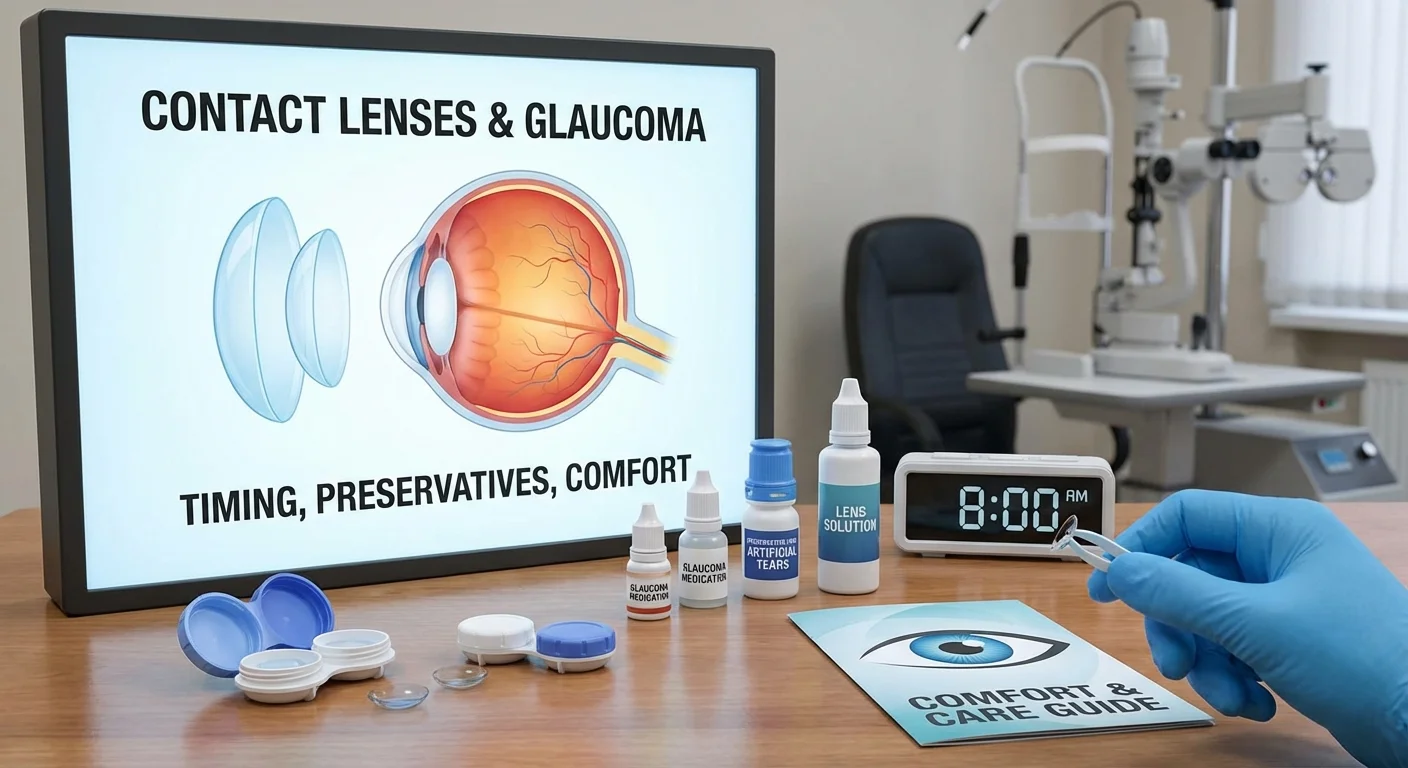
Contact Lenses with Glaucoma: Timing Drops, Preservatives, and Comfort
Effective glaucoma treatment usually means daily eye drops to lower eye pressure. If you wear soft contact lenses for vision, you’ll need extra care when using these drops. Contact lenses can trap medication and preservatives, which may irritate your eyes. This article explains the best way to use glaucoma drops with contacts: removing lenses before dosing, waiting to reinsert them, understanding preservatives, choosing the right lenses, and keeping itchy, dry eyes at bay. We also cover tips for coordinating care between your eye doctors (ophthalmologist and optometrist).
Timing and Contact Lens Use
-
Remove contacts before drops: Always take out your lenses before applying glaucoma eye drops. This keeps the lens from soaking up too much medicine or preservatives and blocking absorption.
-
Wait at least 15 minutes: After you put in the drop, wait at least 15 minutes before putting your lenses back in (www.gavinpublishers.com) (modernod.com). This guidance comes from experts and the FDA. Most eye drops wash out of the eye quickly (often in 5 minutes or less) (modernod.com), so a 15-minute wait ensures the medicine has time to work without being trapped under the lens. In fact, one study found that wearing a lens just 5 minutes after a drop had the same effect as not wearing one at all (modernod.com). In practice, waiting the full 15 minutes is safest, but if needed you’ll usually still get most of the benefit even after 5 minutes.
Waiting also protects your lenses. Soft contact lenses (especially older high-water hydrogel types) can absorb drop preservatives if lenses are left in, so removing them helps prevent comfort problems later (www.gavinpublishers.com) (modernod.com).
-
Do one eye at a time: If you use drops in only one eye, finish that eye completely before removing and then reapplying the lens.
By following this simple routine – remove drops → dose eyes → wait 15 minutes → reinsert lenses – you get the full glaucoma treatment effect while keeping your contacts safe.
Preservatives in Glaucoma Drops
Many glaucoma eye drops use preservatives to keep the bottle sterile. The most common is benzalkonium chloride (BAK). In fact, roughly 70% of glaucoma medications contain BAK (www.gavinpublishers.com). BAK is very effective as an antimicrobial, but it can irritate the eye’s surface. Studies show BAK can disrupt and damage cells on the cornea and conjunctiva (the clear front of the eye and the white part) (pmc.ncbi.nlm.nih.gov) (modernod.com). Side effects of BAK include redness, burning, a broken tear film (dry spots), and inflammation. Over time, chronic exposure to BAK can worsen dry eye and even increase ocular inflammation (www.gavinpublishers.com) (modernod.com).
Contact lenses make the preservative issue more complex. Soft lenses (especially high-water hydrogel lenses) can absorb BAK and other chemicals from your tears (www.gavinpublishers.com). Once absorbed, the lens slowly releases the preservative back onto the eye. This “reservoir” effect means your eyes may get exposed to BAK for a long time, even after you’ve rinsed your eye (www.gavinpublishers.com). That is why lens wearers must remove lenses before drops and wait; it prevents lenses from soaking up extra preservative.
Preservative-free options: If you have chronic irritation or are on multiple drops, ask your doctor about preservative-free glaucoma medications. Preservative-free (PF) drops are available for many glaucoma drugs and can greatly improve comfort (www.gavinpublishers.com) (www.gavinpublishers.com). For example, research notes that switching to PF drops can reduce the dry eye side effects of glaucoma treatment (www.gavinpublishers.com). Some newer drops use gentler preservatives (like Purite or SofZia) that break down into harmless substances on the eye (modernod.com), or they’re packaged in single-use vials with no preservative at all. These “soft preservatives” or PF versions can be much kinder to contact lens wearers. During a discussion with your doctor or pharmacist, make sure to mention that you wear contacts – they may prescribe a PF or gentler formulation for you.
Choosing the Right Contact Lenses
-
Daily-disposable lenses: Many eye care professionals recommend wearing daily disposable contact lenses if you also use glaucoma drops (modernod.com). With daily disposables, you put in a fresh pair each morning and discard them at night. This approach eliminates the need for cleaning solutions (which can also cause irritation) and ensures no old deposits build up on the lens. Studies agree that daily lenses are more convenient and reduce preservative buildup (modernod.com).
-
Monthly or reusable lenses: If you prefer monthly lenses, be extra diligent. Always follow the lens replacement schedule and use the right cleaning solution. A hydrogen-peroxide based cleaning system is a good choice because it disinfects without additional preservatives. Rinse and store lenses as directed each night, and replace them on schedule. Even with monthly lenses, the same rule applies: remove them before drops and wait to rewear.
Research shows that in terms of eye health and comfort, daily and monthly lenses perform similarly (pubmed.ncbi.nlm.nih.gov). A recent clinical study found that after two months of wear, both daily and monthly lens groups had similar levels of eye redness and discomfort (pubmed.ncbi.nlm.nih.gov). In other words, you can choose the type you’re most comfortable with or that fits your budget. The key is how you take care of them.
- Lens material and water content: If you must instill drops while the lenses are in (for example, treating both eyes but wearing only one lens), consider a lens with lower water content. Daily hydrogel lenses with lower water uptake tend to absorb less preservative and resist drying out (modernod.com). Silicone hydrogel lenses also allow more oxygen, which can help overall comfort. Always prioritize high-quality, breathable lenses when using eye medications.
Managing Contact Lens Discomfort
Even with care, glaucoma drops can exacerbate lens-related dryness or irritation. Here are tips to stay comfortable:
-
Lubricating (artificial tear) drops: Use preservative-free rewetting drops made for contact lens wear. These can soothe dry spots and help rehydrate the lens. A Cochrane review found that adding lubricating drops (even just saline) often reduces lens discomfort without causing harm (pmc.ncbi.nlm.nih.gov). Apply these drops while wearing your lenses (not the medicated drops). Wait a minute or two after the lubricating drops for your vision to settle.
-
Blink often and rest: Take natural breaks from staring at screens, and blink frequently to spread your tear film. If your eyes feel tired or sticky, take a short break by removing at least one lens (or both, if needed) and giving your eyes a rest. Sometimes wearing glasses for part of the day can help your eyes recover.
-
Check lens fit: Discomfort can sometimes mean the wrong lens prescription or fit. If your lenses feel tight or loose, or if your vision is blurry even when clean, see your optometrist. They can check that your contacts fit properly and replace them if always causing issues.
-
Watch your environment: Dry air, wind, or smoke can aggravate lens dryness. Using a humidifier or wearing wraparound glasses outside can help protect your eyes.
-
Report severe irritation: If a particular glaucoma drop stings unbearably or redness/inflammation persists, call your eye doctor. You may need a different drop or a lower concentration. Never assume the discomfort is “just normal”; there are usually solutions.
Working with Your Eye Care Team
Good communication between you, your glaucoma specialist (often an ophthalmologist) and your optometrist/contact lens doctor is essential:
-
Share information: Tell each doctor about your full eye care team. For example, inform your optometrist that you are using glaucoma drops and what they are (how often, type). Likewise, remind your glaucoma doctor or specialist that you wear contacts. This ensures all treatment plans consider your contact lens needs.
-
Schedule joint updates: When you go for your regular eye pressure check or visual field test, ask if the ophthalmologist can briefly review your contact lens comfort. Likewise, at your contact lens exam, discuss how your eyes respond to glaucoma therapy. This “team” approach allows adjustments. For example, if your lens specialist notices signs of dry eye, they might recommend switching to preservative-free drops or different lens material.
-
Lens type decisions: Your optometrist can advise which lens type might suit you best given your medications. They might suggest switching to daily disposables, silicone-hydrogel materials, or even specialty lenses if standard ones fail. Always follow their advice on wear schedules and cleaning routines.
-
Monitor ocular health: Even if your pressure is stable, glaucoma drops can affect your ocular surface over time. Regular check-ups should include assessing the tear film and cornea for dryness. Don’t skip your eye exams — managing glaucoma with contacts requires two-pronged care.
By working as a team and keeping both your glasses/contact lens provider and glaucoma doctor in the loop, you’ll find the routine that keeps your eyes clear, comfortable, and well-protected.
Conclusion
Contact lens wear and glaucoma eye drops can coexist safely if you follow some simple rules. Always remove your lenses before putting in drops and wait about 15 minutes to reinsert them (www.gavinpublishers.com) (modernod.com). Be aware of preservatives in your drops (especially BAK) and ask about preservative-free options if you have irritation (www.gavinpublishers.com) (www.gavinpublishers.com). Consider daily disposable lenses and good cleaning for monthlies to minimize deposits and irritation (modernod.com) (pubmed.ncbi.nlm.nih.gov). For lens comfort, use lubricating drops, blink often, and see your doctors if problems arise. By coordinating with your eye care team — telling each provider about the other’s treatments — you can enjoy clear vision and keep your eyes healthy on both fronts.