
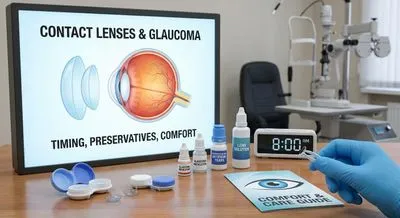
Contact Lenses With Glaucoma: Timing Drops, Preservatives, and Comfort
Remove contacts before drops: Always take out your lenses before applying glaucoma eye drops. This keeps the lens from soaking up too much medicine...
Deep research and expert guides on maintaining your visual health.
Remove contacts before drops: Always take out your lenses before applying glaucoma eye drops. This keeps the lens from soaking up too much medicine...
Blind spots often develop gradually without symptoms. Start a free trial and take a quick visual field test to spot changes early.
Find Out NowLens comfort describes how natural and pleasant contact lenses feel on your eyes while you wear them. It depends on the lens material, its water content, oxygen flow to the cornea, and how the lens fits your eye shape. A smooth lens surface and rounded edges reduce awareness of the lens, while a poor fit can cause rubbing, redness, and a foreign-body sensation. Tear quality and blink pattern matter too: dry eyes or infrequent blinking make lenses feel gritty or sticky. Surface treatments, coatings, and newer silicone hydrogel materials are designed to keep lenses wet and reduce friction. Proper cleaning, replacement schedules, and using compatible eye drops also support comfort by preventing deposits and irritation. Environmental factors like airflow, air conditioning, and screen time can increase dryness and reduce comfort during the day. Comfort affects how long you can wear lenses each day and whether you stick to your eye-care routine, so it has practical health consequences. If lenses are uncomfortable, people may rub their eyes, wear lenses past safe limits, or stop wearing them altogether. Working with an eye-care professional to try different lens types, adjust fit, and address dry-eye issues usually improves comfort and protects eye health.