
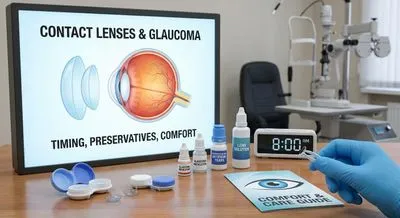
Contact Lenses With Glaucoma: Timing Drops, Preservatives, and Comfort
Remove contacts before drops: Always take out your lenses before applying glaucoma eye drops. This keeps the lens from soaking up too much medicine...
Deep research and expert guides on maintaining your visual health.
Remove contacts before drops: Always take out your lenses before applying glaucoma eye drops. This keeps the lens from soaking up too much medicine...
Screen your peripheral vision from home — no downloads, no waiting rooms. Sign up for a free trial and test in under 5 minutes.
Contact lenses are thin, curved discs made of soft or rigid materials that sit directly on the surface of the eye to correct vision or change appearance. They work by focusing light onto the retina, just like glasses do, but sit on the eye for a fuller field of view and often a more natural look. There are several kinds, including daily disposables, extended-wear lenses, and rigid gas-permeable options, as well as specialty versions for astigmatism or presbyopia. People choose them for convenience, a wider field of vision, sports, or cosmetic reasons. Because they touch the eye, they need careful cleaning, storage, and handling to prevent irritation and infection. Some medications and environmental factors can change how comfortable lenses feel or how much oxygen reaches the eye, so users should check compatibility before combining products. Poor fit, overuse, or lapses in hygiene can lead to redness, blurred vision, and in serious cases, corneal ulcers. Regular checkups with an eye care professional help ensure lenses fit well and the eyes stay healthy. With proper instruction on insertion, removal, and cleaning, contacts are a safe option for many people, and knowing when to remove them and seek help prevents long-term problems.