
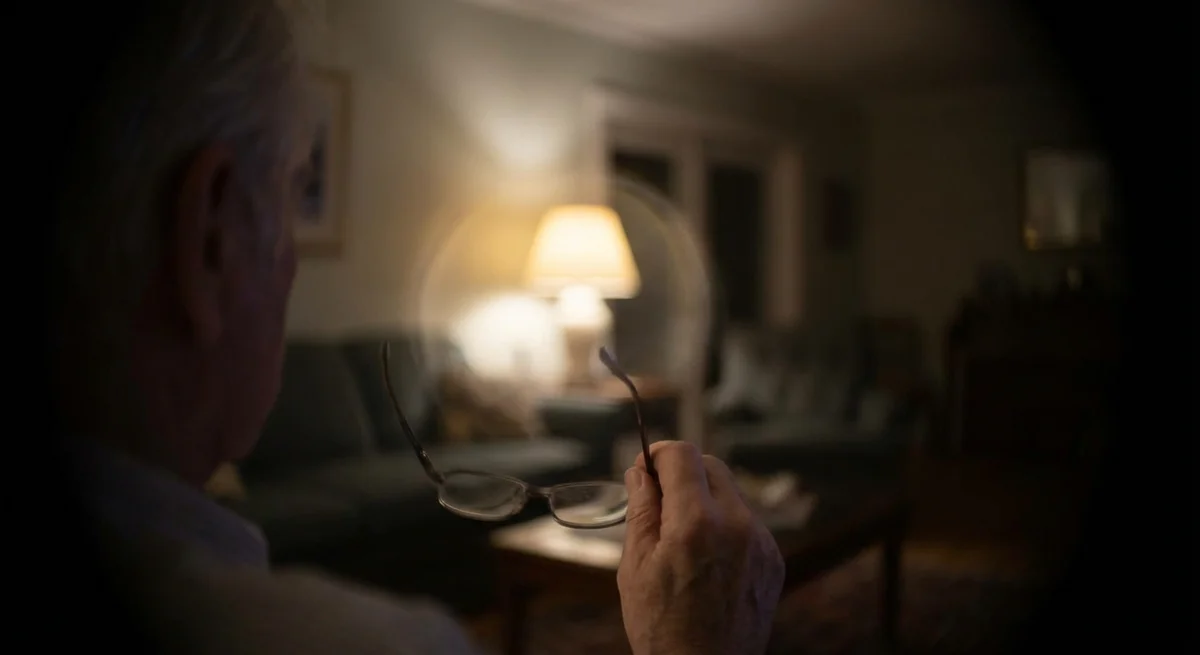
Glaucoma is often called the “silent thief of sight.” In primary open-angle glaucoma (POAG) – the most common form worldwide – patients usually notice nothing at all until the disease is advanced (www.ncbi.nlm.nih.gov). In fact, eye doctors warn that POAG is essentially asymptomatic in early stages. The optic nerve slowly deteriorates over years, chipping away at peripheral vision without causing any pain or obvious change in sharpness. Imagine bumping into objects at the edges of your vision, missing curb steps, or failing to see people approaching from the side – these subtle clues can appear, but often go unnoticed for so long that about 40% of retinal nerve fibers are already lost before patients report any “tunnel vision” or vision loss (www.ncbi.nlm.nih.gov). By then, glaucoma’s real symptom is finally felt: the absence of any warning at all.
As POAG progresses, symptoms emerge only gradually. Patients may describe difficulty discriminating contrast, or an unusual glare or halo around lights – especially when driving at night. In fact, research shows many people with glaucoma have trouble with glare and low-contrast vision (www.brightfocus.org). Bright headlights or sunlit road signs may seem to wash out, and vision transition from dark to light can become jarring. These symptoms are often dismissed as normal aging or unrecognized cataracts. Over time, the visual field continues to constrict like tunnel vision, and central vision can slowly be affected. Reading small print, recognizing faces, or navigating unfamiliar routes then become more challenging. By the late stages of POAG, even straight-ahead vision can blur, greatly impacting daily activities.
Acute Angle-Closure Glaucoma
Unlike POAG’s silent course, acute angle-closure glaucoma presents suddenly and dramatically. This is a true emergency. Patients develop a sprinter’s warning sign of symptoms: intense eye pain, severe headache, and visual disturbances all at once. The affected eye turns red and feels very hard. Vision blurs and patients often see colored halos around lights. The episode may trigger nausea, vomiting, and even abdominal pain. In fact, one eye care protocol notes that acute angle-closure can mimic a neurological or gastrointestinal emergency: patients can be misdiagnosed with migraine, sinus headache or severe stomach sickness (pmc.ncbi.nlm.nih.gov). This is dangerous – without immediate treatment (often within hours) to lower the eye’s pressure, permanent vision loss can result (pmc.ncbi.nlm.nih.gov). In short, sudden eye pain plus headache and nausea demands an immediate emergency response.
Subacute (“Intermittent”) Angle-Closure Glaucoma
Some people experience intermittent angle-closure attacks – shorter, milder episodes that come and go. These attacks can cause dull brow or eye ache, foggy/blurry vision, and exploitable haloes around lights, especially after activities that dim the pupil (for example, moving into a dark room). Each episode may resolve on its own, so patients often ignore it or think it was just a bad headache. Indeed, studies found that many people with subacute angle-closure glaucoma first complain of recurring headaches and are mistakenly treated for migraines (pubmed.ncbi.nlm.nih.gov). Because each attack is brief, it’s easy to blame them on stress or sinus troubles instead of underlying eye pressure spikes. Over time, however, these repeated IOP surges cause adhesions in the angle and lead to chronic glaucoma.
Neovascular Glaucoma
Neovascular glaucoma (NVG) is a painful, secondary glaucoma that usually follows severe retina disease (like advanced diabetic retinopathy or a bad retinal vein occlusion). New abnormal blood vessels grow on the iris and drain angle. The symptoms can include a deep, aching eye pain and a chronically red eye. Many patients report the eye feels persistently sore or irritated. Light sensitivity and worsening blurred vision are common initial complaints. (www.ncbi.nlm.nih.gov) As NVG progresses, the IOP often soars very high (often above 50 mmHg) and the pain can become unbearable. Without treatment, vision rapidly deteriorates in the affected eye.
Uveitic Glaucoma
Glaucoma can also arise from uveitis (inflammation inside the eye). In uveitic glaucoma, the usual signs and symptoms of uveitis appear: the eye may be red and painful, with significant light sensitivity and fluctuating vision (www.mayoclinic.org). Patients with uveitic glaucoma may notice “achy” or sharp pain in the eye during inflammation flares, and their vision can seem to go in and out. Because these episodes come with redness and sensitivity to light, they can look like severe “pink eye” or other causes of red eye. In reality, each bout of inflammation can block fluid drainage or cause scarring in the angle, leading to periods of very high eye pressure. Over months and years, the combined effects of inflammation and pressure damage the optic nerve.
Pigmentary Glaucoma
Pigmentary glaucoma is a form of open-angle glaucoma often seen in young, nearsighted adults. Its hallmark is episodic symptoms triggered by exertion or dilation. When the pupil dilates (such as in dark environments or after exercise), the back of the iris rubs against lens structures and πigment flakes into the eye. These pigment “showers” can cause abrupt spikes in eye pressure. Patients may notice brief episodes of haloes and blurred vision, usually after jogging or a hard workout (www.ncbi.nlm.nih.gov). These episodes might include a short-lasting ache around the eye, redness, and seeing rainbows around lights. Often the symptoms feel like an “eye allergy” or minor irritation, so they are not taken seriously. Over time, however, the chronic pigment scatter clogs the drainage angle and leads to progressive glaucoma.
Congenital (Infantile) Glaucoma
Glaucoma in infants and young children (primary congenital glaucoma) looks very different from adult glaucoma. Babies cannot report vision loss, so parents watch for clues: the classic triad is excessive tearing (epiphora), light sensitivity (photophobia), and eyelid squinting (blepharospasm) (www.ncbi.nlm.nih.gov) (www.ncbi.nlm.nih.gov). The baby’s eyes may look huge or bulging (called buphthalmos) because high pressure has stretched the eye (www.ncbi.nlm.nih.gov). Often the cornea becomes cloudy or hazy, giving a bluish-white appearance to the normally clear window of the eye (www.ncbi.nlm.nih.gov). Parents might notice a whitish reflex when light is shined into the eye. These signs – tearing, baby squeezing eyes shut, cloudy appearance – should never be ignored, as delaying treatment in infants can quickly lead to permanent blindness.
Common Misattributions
Many early glaucoma symptoms are mistakenly blamed on other causes, delaying diagnosis. For example:
- Headaches or brow pain are often put down to migraines or sinus pressure, especially if vision is still 20/20. Neurologists and patients report that subacute angle-closure can masquerade as migraine for years (pubmed.ncbi.nlm.nih.gov).
- Night driving difficulties and glare are chalked up to normal aging or cataracts. People frequently note that headlights and street lights become glaring and disorienting, but assume it’s “just getting old.” In reality, these problems correlate strongly with glaucoma-related visual field loss (www.brightfocus.org).
- Reading or focusing trouble is often dismissed as needing a new glasses prescription. When glaucoma first affects peripheral vision, it can subtly slow reading speed, but patients think their glasses are old (www.brightfocus.org).
- Nausea and vomiting during an eye episode can be written off as food poisoning. In acute angle-closure, these symptoms come from the IOP spike (pmc.ncbi.nlm.nih.gov).
Each misattribution gives more time for glaucoma to damage the optic nerve. By the time vision changes become obvious, many nerve fibers may already be lost.
Side Effects of Glaucoma Treatments
Ironically, some glaucoma treatments themselves can produce symptoms that confuse patients. It’s important to know these so you don’t mistake them for disease progression:
- Prostaglandin analogs (eye drops like latanoprost, travoprost, bimatoprost): Common ocular side effects include eye redness, burning/stinging on application, and changes around the lashes and eyelids (pmc.ncbi.nlm.nih.gov). Patients often notice their eyelashes grow longer or darker, and the eyelid skin can darken. The eye may feel irritated or bloodshot after a drop. These effects are medication-related, not a worsening of glaucoma.
- Beta-blocker eye drops (timolol, betaxolol): These drugs can be absorbed systemically. Side effects may include fatigue, slow heartbeat (bradycardia), and especially breathing difficulty in patients with asthma or lung disease (pmc.ncbi.nlm.nih.gov). For example, timolol can cause bronchospasm and please opioid doctors about dyspnea (pmc.ncbi.nlm.nih.gov). If you feel unusually tired or short of breath after using a beta-blocker eye drop, mention it to your doctor.
- Carbonic anhydrase inhibitors (oral acetazolamide or topical dorzolamide): A very common complaint is a bitter or metallic taste in the mouth after dosing (www.ncbi.nlm.nih.gov). Systemic CAIs (especially pills) can also cause fatigue, tingling in hands/feet, and stomach upset. If you have these symptoms, they are likely drug side effects. They do not mean your glaucoma is worse.
- Alpha-agonist drops (brimonidine, apraclonidine): Often cause dry mouth and drowsiness (pmc.ncbi.nlm.nih.gov). Brimonidine in particular is known to make people sleepy or dizzy. It can also lower blood pressure in sensitive individuals. Blurred near vision can occur transiently from the slight dilation effect. Again, these symptoms come from the medication’s action, not directly from glaucoma itself.
- After glaucoma surgery or laser: Temporary symptoms include eye inflammation (redness, tearing), fluctuations in vision, and discomfort from the healing process. For example, a filtering bleb (small blister on the surface) after trabeculectomy may feel irritated or give a sensation of mild pressure. Medications like steroids and IOP-lowering drops are continued post-op, which can also cause stinging or blurred vision. These expected post-treatment effects should improve over weeks; if they worsen or are severe, that warrants attention.
In each case, knowing what to expect helps you distinguish side effects from warning signs.
When to Act: Symptom Awareness Guide
Awareness of glaucoma symptoms – and differentiating urgent signs from minor ones – is key. Here’s a simple framework:
- Emergency (Call 911 or go to an ER/urgent ophthalmology clinic within an hour): Sudden, severe symptoms such as intense eye pain or headache combined with blurred vision or colored halos in one eye; vision loss with nausea/vomiting (pmc.ncbi.nlm.nih.gov). These point to acute angle-closure or another crisis. Do not wait if your eye is very red, hard, and painful with sudden vision change.
- Prompt Evaluation (Call your eye doctor within a few days to a week): Recurrent episodes of eye soreness, mild headache, or blurred halos – even if they come and go. Also new persistent glare sensitivity or trouble in dim lighting that interferes with driving. These can be warning signs of subacute angle closure or progressing glaucoma. Any new vision field deficit (missing objects on one side) or consistent visual disturbance should be evaluated soon.
- Routine Monitoring (Mention at your next exam): Subtle changes like slight difficulty reading small print, bumping into objects slightly more often, or noticing that you need brighter light to see clearly. These could be early peripheral vision loss. Also report any ongoing side effects from your eye drops. Tracking these small changes helps your ophthalmologist compare visual field tests over time.
In summary, any new symptom beyond ordinary eye strain should be noted. For at-risk individuals (over 40, family history of glaucoma, diabetes, high eye pressure, etc.), a specialist exam is recommended even if you feel fine. Remember – catching glaucoma early means treatment can preserve your vision.
Conclusion: Glaucoma’s defining early “symptom” is often none at all (www.ncbi.nlm.nih.gov). Yet as it advances, a spectrum of clues emerges: missed peripheral details, glare and light transition problems, and finally notable vision loss. Each glaucoma subtype adds its own risk signals – from the red, painful eye of angle-closure, to the tearing and cloudiness in infant glaucoma. By knowing these symptoms and their urgency, patients and doctors can work together for early detection. If you experience any of the red-flag signs above, seek care immediately. For milder but unusual visual changes, document them carefully and discuss them at your next eye appointment. With informed vigilance, you can help thwart glaucoma’s stealthy damage before irreversible sight is lost.
Sources: Authoritative clinical guides and patient resources were used to compile this information (www.ncbi.nlm.nih.gov) (pmc.ncbi.nlm.nih.gov) (pubmed.ncbi.nlm.nih.gov) (www.ncbi.nlm.nih.gov) (www.mayoclinic.org) (www.ncbi.nlm.nih.gov) (www.ncbi.nlm.nih.gov) (www.ncbi.nlm.nih.gov) (pmc.ncbi.nlm.nih.gov) (pmc.ncbi.nlm.nih.gov) (pmc.ncbi.nlm.nih.gov) (www.brightfocus.org).