
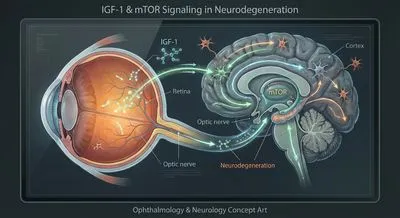
IGF-1, Sinalização mTOR e Neurodegeneração Através do Olho e Cérebro
O IGF-1 é um pequeno hormônio proteico intimamente relacionado à insulina. É produzido no fígado (e em alguns tecidos) sob a influência do hormônio...
Pesquisas aprofundadas e guias de especialistas para manter sua saúde visual.
O IGF-1 é um pequeno hormônio proteico intimamente relacionado à insulina. É produzido no fígado (e em alguns tecidos) sob a influência do hormônio...
Comece seu teste de campo visual gratuito em menos de 5minutos.
Iniciar teste agoramTOR é uma proteína que age como um sensor dentro das células, informando se há nutrientes, energia e sinais de crescimento suficientes. Quando ativado, ele estimula a produção de novas proteínas e o crescimento celular; quando inibido, reduz gasto energético e ativa processos de limpeza celular. Essa "decisão" controla funções essenciais como síntese de proteínas, formação de novas células e autofagia, que é o mecanismo de reciclagem interno. Por regular tanto o crescimento quanto a limpeza, o mTOR tem papel central em saúde, envelhecimento e nas respostas a estresse nutricional. Níveis excessivos de atividade do mTOR são associados a doenças como câncer, obesidade e problemas neurodegenerativos, enquanto sua modulação pode trazer benefícios. Medicamentos que bloqueiam mTOR, como a rapamicina, estão sendo estudados para tratar câncer, melhorar a longevidade e proteger funções cerebrais. Alterações na dieta e no exercício também influenciam esse sistema, mostrando a conexão entre hábitos de vida e sinais celulares. No cérebro, o equilíbrio da atividade do mTOR é importante para memória e sobrevivência de neurônios; um desequilíbrio pode contribuir para perda de função. Entender mTOR ajuda a explicar como células decidem crescer, se adaptar ao ambiente e manter a saúde ao longo da vida.