

Senolytics and the Glaucoma Niche: Clearing Old Cells for Longer-Life Signals
Indeed, multiple studies have found senescence markers in RGCs and optic nerve tissue in glaucoma models. Notably, removing those old RGCs has been...
Deep research and expert guides on maintaining your visual health.
Indeed, multiple studies have found senescence markers in RGCs and optic nerve tissue in glaucoma models. Notably, removing those old RGCs has been...
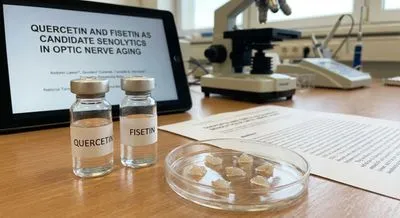
Senescent cells build up in key eye tissues. In the trabecular meshwork (TM), senescence stiffens the meshwork and increases resistance to fluid...
Fisetin is a natural plant compound found in small amounts in fruits and vegetables such as strawberries, apples, onions, and cucumbers. It belongs to a family of molecules called flavonoids, many of which act as antioxidants and help protect cells from damage. Scientists are studying fisetin because it appears to have several biological effects, including reducing inflammation, supporting brain health, and influencing how cells respond to stress. In laboratory studies, fisetin has shown the ability to reduce the number of aged, dysfunctional cells that no longer divide but cause harm to their surroundings. Because of this action, researchers call it a candidate for therapies that aim to improve health during aging. Early animal studies link fisetin to better tissue function and longer healthy spans, but human research is still limited and ongoing. Fisetin is available as a dietary supplement, but optimal doses, long-term safety, and interactions with medications are not yet well established. If someone considers using supplements containing this compound, it is wise to talk with a healthcare professional first. Overall, fisetin matters because it represents a natural, promising lead for new approaches to reduce age-related tissue decline, though more clinical evidence is needed before firm claims can be made.