
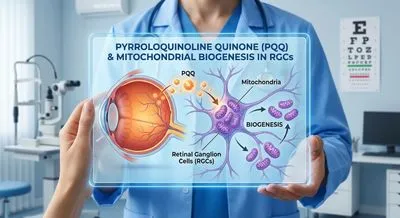
Pyrroloquinoline Quinone (PQQ) and Mitochondrial Biogenesis in RGCs
PQQ was first discovered as a cofactor for certain bacterial enzymes, but later found to be important in animal nutrition. Because animals cannot...
Deep research and expert guides on maintaining your visual health.
PQQ was first discovered as a cofactor for certain bacterial enzymes, but later found to be important in animal nutrition. Because animals cannot...
Visual field loss from conditions like glaucoma can go unnoticed. Start a free trial and screen for potential blind spots in minutes.
Pyrroloquinoline quinone is a small natural compound found in certain bacteria, plants, and foods. It acts like a strong antioxidant, helping to neutralize harmful reactive molecules that can damage cells. In some biological systems it also serves as a redox cofactor, assisting enzymes with energy-related chemical reactions. Researchers are particularly interested in it because it appears to support the health and performance of mitochondria, the tiny structures that make most of a cell’s energy. Some laboratory and animal studies suggest it can stimulate cells to produce more mitochondria, which can improve energy production and resilience. Because of these effects it is available as an over-the-counter dietary supplement and is promoted for energy, brain health, and healthy aging. However, clinical evidence in humans is still limited, and many of the claimed benefits need stronger proof from larger studies. The way individuals respond can vary depending on dose, health status, and product quality. It is generally well tolerated at common doses, but long-term safety is not fully established and interactions with some medications are possible. If someone is thinking about taking it, they should discuss it with a healthcare professional to weigh possible benefits and risks.